
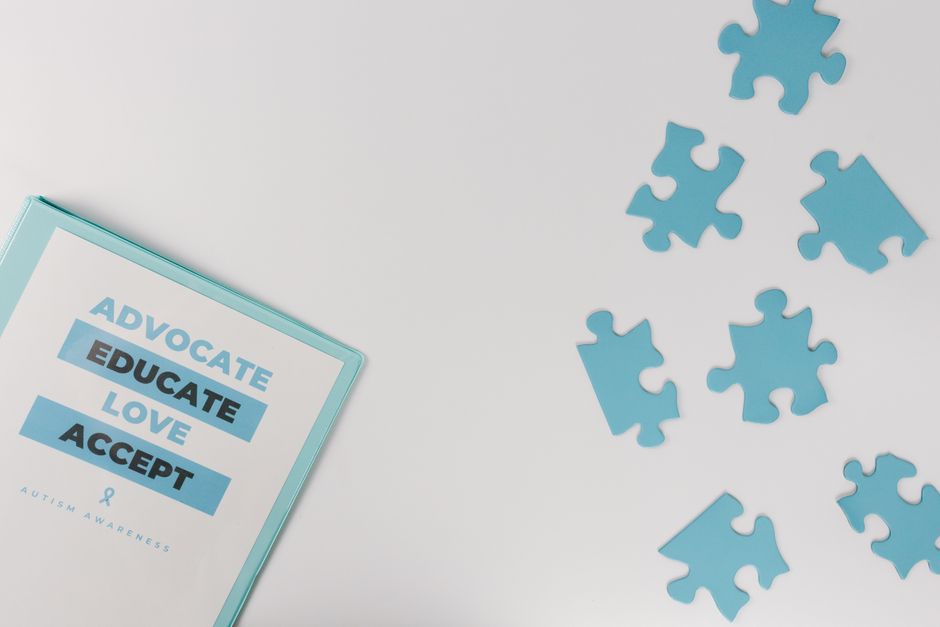
Working with autistic people is not a job most clinicians picture when they start training. It is also the work that has taught me more about communication, patience, and the limits of my own assumptions than any other part of my career. The real reasons I love it are not sentimental. They are specific, practical, and grounded in what autistic people have taught me about how minds actually work. This article is about those reasons — and about the honest, evidence-based picture of autism that makes the work worth doing.
What Is Autism, Really?
Autism is a developmental condition that affects how a person communicates, processes sensory information, and understands social cues. It is not a disease, and it is not caused by poor parenting, vaccines, or diet — those claims have been studied extensively and are not supported by the evidence.
The current clinical understanding is that autism is a spectrum. That word is often misunderstood. It does not mean “a little autistic” to “very autistic.” It means the profile of strengths and support needs varies enormously between individuals. One autistic person may speak fluently and struggle with sensory overload. Another may be nonspeaking and highly skilled at pattern recognition. Both are autistic.
Research consistently shows autism has a strong genetic component, though the exact mechanisms are still being studied. What is clear is that autism is a lifelong neurological difference, not something a person outgrows.
This matters for anyone who works with autistic people. You are not fixing a deficit. You are learning how a different brain experiences the world — and adjusting your approach accordingly.
Why I Love Working With Autism The Real Reasons
The reasons are not about inspiration. They are about what the work actually demands and what it gives back.
Autistic people are honest communicators. Many autistic people say what they mean and mean what they say. For a clinician, that clarity is a gift. You do not have to decode hidden messages. You do not have to guess whether someone is comfortable. When an autistic person tells you something is too loud, too bright, or too much, they are usually right — and you can act on it.
The work forces precision. Vague instructions like “be social” or “pay attention” mean nothing to many autistic people. You have to break tasks down, explain why, and check understanding. That precision makes you a better communicator with everyone, not just autistic clients.
You learn that behavior is communication. When an autistic person is distressed, the distress is real even if the cause is not obvious. The work teaches you to look for the reason — sensory overload, a broken routine, an unmet need — rather than labeling the person as difficult. That is a lesson that applies across all of medicine.
Progress is visible and specific. When a nonspeaking child learns to use a communication device, or an autistic adult finds a workplace accommodation that works, the change is concrete. You see it. That is deeply satisfying in a way that vague “improvement” never is.
Autistic people push back on bad assumptions. They notice inconsistency. They ask why. That keeps me honest. Working with autistic people has made me question practices I once accepted without thinking — and that is exactly what good clinical work should do.
What Does the Evidence Say About Autism and Strengths?
The evidence on autistic strengths is real but often oversimplified. Some autistic people show strong attention to detail, strong memory for facts and patterns, and deep focus on specific interests. Some research suggests these traits are more common in autistic populations than in the general population.
But here is the honest position: strengths vary as much among autistic people as they do among anyone else. Not every autistic person is a math prodigy. Not every autistic person has exceptional memory. The “autistic savant” stereotype is a real phenomenon in a minority of cases, but it is not the norm, and treating it as the norm does real harm. It sets expectations that many autistic people cannot meet and makes their actual strengths harder to see.
The better framing is this: autistic people often have uneven skill profiles. Areas of difficulty sit alongside areas of genuine strength. The work is to find both and build support around them.
What Do Autistic People Teach Clinicians About Communication?
They teach that communication is not one skill. It is many.
Speaking is one. Understanding spoken language is another. Reading facial expressions is another. Knowing when to speak and when to wait is another. Many autistic people are strong in some of these and struggle with others. A person who speaks fluently may still struggle to read sarcasm. A person who does not speak may understand everything and communicate effectively through typing or a device.
This is why the concept of “nonspeaking” matters more than “nonverbal.” Many autistic people who do not speak can and do communicate. The problem is often not the person’s ability to communicate — it is the environment’s failure to offer a method that works.
Clinicians who work with autistic people learn to ask: what is this person’s preferred way to communicate? Then they build around that. It sounds simple. In practice, it requires humility, because it means the clinician adapts, not the patient.
What Are the Common Myths About Autism That the Work Disproves?
Several myths fall apart quickly once you actually work with autistic people.
- “Autistic people lack empathy.” Research suggests many autistic people feel empathy strongly but express it differently. The idea that autism means a lack of caring is not supported by evidence.
- “Autism is caused by vaccines.” This claim has been studied repeatedly and is not supported. The original research behind it was retracted.
- “Autistic people cannot have relationships.” Many autistic people have friendships, partners, and families. Social connection looks different for some, but it exists.
- “Autism can be cured.” No treatment cures autism. Some interventions support skill development and reduce distress, but the underlying neurology does not change. Claims of a cure are not supported by evidence.
- “Autistic people are all the same.” The spectrum is wide. Any statement that starts with “autistic people are…” is usually wrong for some autistic people.
These myths matter because they shape how families and clinicians treat autistic people. Correcting them is part of the work.
What Are the Real Challenges of the Work?
Honesty requires naming the hard parts. Working with autistic people can be demanding, and pretending otherwise does not help anyone.
Sensory environments in clinics and hospitals are often hostile to autistic people. Fluorescent lights, waiting room noise, and unpredictable schedules cause real distress. Fixing this takes effort and sometimes money.
Communication support takes time. A standard appointment slot may not be enough. Clinicians who work with autistic people often need longer visits, written instructions, and follow-up. That is a systems problem, not a patient problem.
Families are often exhausted and misinformed. They have read conflicting advice online. Some have been told their child can be cured. Some have been blamed for their child’s autism. Part of the work is correcting that damage with accurate information and patience.
And the clinician has to manage their own assumptions. The urge to “fix” is strong in medicine. Working with autistic people requires unlearning it.
How Do Support Needs Vary Across the Spectrum?
Support needs are not the same as intelligence or potential. Some autistic people need support with daily living, communication, or sensory regulation. Others need very little. Some need different support at different stages of life.
The clinical approach that has gained the most support is to ask the autistic person — or their family, when appropriate — what support they actually want. Not what the clinician assumes they need. That shift, from prescribing support to asking for it, is one of the most meaningful changes in the field.
It is also not universally practiced. Some services still operate on outdated assumptions. That gap between what the evidence supports and what many autistic people actually receive is a real problem, and it is one reason the work still matters.
Why Does This Work Matter Beyond Autism?
What autistic people have taught the clinical world applies to everyone. Clear communication helps all patients. Sensory awareness helps all patients. Asking what someone needs instead of assuming helps all patients.
Autistic people have pushed medicine to be more precise, more humane, and more honest about what it does not know. That is not a small thing. It is the kind of change that lasts.
That is why I love the work. Not because it is easy. Because it is real, it is specific, and it makes me better at what I do.
Frequently Asked Questions
Is autism a disease?
No. Autism is a developmental condition, not a disease, and it is not something a person outgrows. It is a lifelong neurological difference that affects communication, sensory processing, and social understanding.
Can autism be cured?
No treatment cures autism, and claims of a cure are not supported by evidence. Some interventions support skill development and reduce distress, but the underlying neurology does not change.
Do autistic people lack empathy?
No. Research suggests many autistic people feel empathy strongly but express or process it differently. The idea that autism means a lack of caring is not supported by the evidence.
What is the best way to communicate with an autistic person?
Ask them. Many autistic people communicate best through writing, typing, or a device rather than speech. The most effective approach is to find the method that works for that person and use it.
