
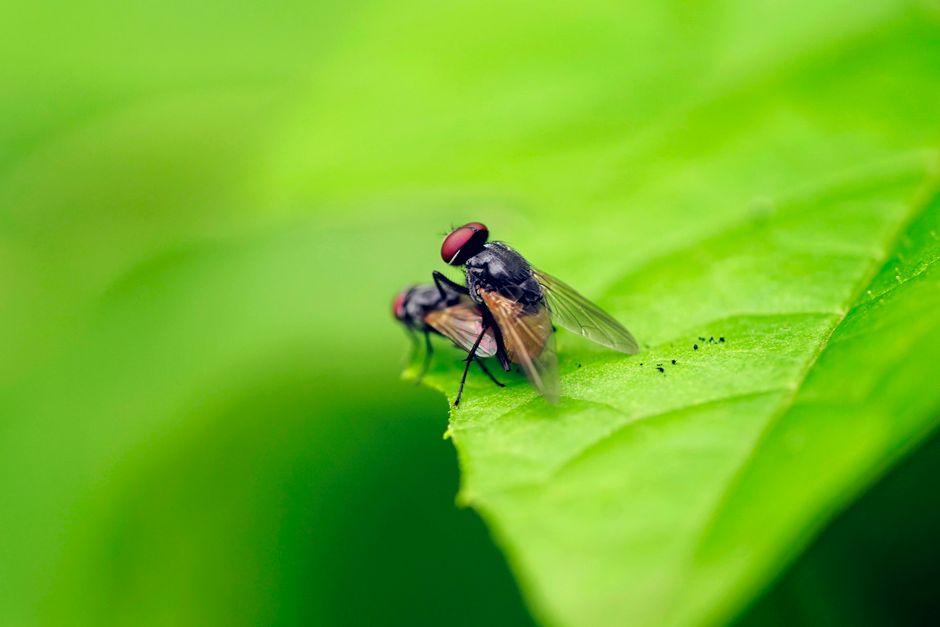
If your house suddenly has more flies than usual, the answer is almost always a nearby food source, moisture, or a breeding site you haven’t found yet. Flies don’t appear at random. A single overlooked bin, a slow drain, or a cracked window screen can turn a quiet home into a gathering place. The type of fly matters too, because different species point to different problems. Once you know which fly you’re dealing with, the cause usually becomes obvious.
Why Have I Got So Many Flies In Your House?
Flies come inside for three things: food, moisture, and a place to lay eggs. If all three exist in your home, a small number can multiply fast.
Most indoor flies fall into a few groups. House flies and blow flies are large and loud. Fruit flies are tiny and hover near produce or drinks. Drain flies are small, fuzzy, and rest on walls near sinks. Fungus gnats look like tiny mosquitoes and cluster around potted plants. Each one tells you where the problem started.
The common thread is organic material that’s breaking down. That could be rotting food, a damp mop head, a wet bag of potting soil, or a film of sludge inside a drain pipe. Flies find these spots by smell, and they can detect them from a distance.
Warm weather speeds everything up. Flies develop faster in heat, so an issue that would stay small in winter can explode in summer. This is why so many people notice a fly problem in late spring and summer rather than in January.
What Actually Attracts Flies Into A Home?
Flies are guided mostly by smell. They have strong odor receptors and can pick up the scent of garbage, rotting fruit, or pet waste from outside your home.
Common attractants include:
- Overripe or rotting fruit and vegetables, including ones hidden at the back of a bowl
- Open garbage, especially food scraps left too long
- Pet food and waste, both indoors and just outside a door
- Sugary drinks, spilled soda, and sticky residue on counters or in recycling
- Moist organic buildup in drains and garbage disposals
- Damp soil in houseplants
- Compost bins kept too close to an entry point
One detail many people miss: recycling containers. A rinsed can is fine, but a sticky bottle or a juice carton left in a bin for days is a strong draw. Flies will find it even if the bin has a lid, because odors escape when the lid opens and closes.
Outdoor conditions push flies inside too. When it gets very hot, dry, or rainy, flies look for shelter. An open door, a torn screen, or a gap under a door is all they need.
How Do Flies Breed Inside A House?
Flies breed in moist, decaying organic matter. If you’re seeing a steady stream of new flies rather than a few stragglers, there’s likely a breeding site inside or right next to your home.
House flies typically lay eggs in garbage, manure, or rotting material. Blow flies prefer meat or animal waste. Fruit flies lay eggs on fermenting fruit and in sugary residues. Drain flies lay eggs in the slime that builds up inside drains. Fungus gnats breed in wet soil and overwatered plants.
The breeding site is often not where you see the flies. Drain flies resting on a bathroom wall are usually coming from the drain itself. Fungus gnats flying around a living room are usually coming from the soil of a plant in that room. Following the fly back to its source is the fastest way to solve the problem.
Here’s a point worth knowing: a slow drain isn’t just a plumbing annoyance. The organic film that coats the inside of a drain pipe is a complete habitat for drain flies. Cleaning the visible part of the sink does nothing if that film stays in place.
Why Do I Suddenly Have So Many Flies?
A sudden jump in fly numbers usually means one of three things happened: a breeding site appeared, a food source was left out, or the weather changed.
Common triggers include:
- A piece of fruit or a potato rolled behind an appliance and started to rot
- A garbage bag sat a day longer than usual in warm weather
- A pet’s food bowl or waste area was missed during cleaning
- A houseplant was overwatered and the soil stayed wet
- A drain was used less often and the trap dried out or built up sludge
- An outdoor bin near a door developed a smell
Flies also arrive in groups when they emerge from a single breeding site at the same time. If you find one hidden source, you may find dozens of flies around it. Removing that source often ends the problem within days, though you may still see adults that were already present.
Seasonal timing matters. Fly activity rises as temperatures climb, and many species become far more active in warmer months. A home that had no issue in winter can develop one quickly in early summer.
Could Flies Be Coming From Outside?
Yes. Sometimes the source isn’t inside your home at all. Flies can breed in outdoor bins, compost piles, animal waste, or standing water near your house and then come in through small openings.
Check these areas if indoor cleaning doesn’t help:
- Outdoor garbage bins, especially if lids don’t seal
- Compost piles kept close to the house
- Pet waste left in the yard
- Standing water or damp leaf litter
- Decaying material under decks or porches
Entry points matter just as much. Torn window screens, gaps around doors, and open vents all let flies in. Sealing these gaps reduces how many get inside, but it won’t fix the problem if a breeding site is already indoors.
Do Flies Spread Disease?
Flies can carry bacteria on their bodies and spread them to surfaces and food. This is a well-established public health concern, not a minor nuisance.
House flies and blow flies feed on and lay eggs in decaying material, including waste. Because they move between that material and your food or counters, they can transfer bacteria along the way. This is one reason food safety guidance stresses keeping flies away from food preparation areas.
The risk is higher when flies have access to both waste and food. Keeping surfaces clean, covering food, and removing waste quickly all reduce that risk. This isn’t about panic. It’s about basic hygiene, the same reason you wash your hands before cooking.
How Do I Find The Source Of The Flies?
Finding the source is the single most effective step. Traps and sprays address adult flies, but if the breeding site stays, new flies keep appearing.
Work through your home room by room:
- Check all produce, including bowls, bags, and the back of the fridge
- Look behind and under appliances for forgotten food
- Inspect garbage bins and recycling for residue and smells
- Check drains in kitchens, bathrooms, and laundry rooms
- Look at the soil of every houseplant for moisture and tiny flies
- Check pet areas, including food bowls and waste
Watch where flies gather. Fruit flies hover near fermenting food. Drain flies rest on walls near sinks. Fungus gnats stay close to plants. The location usually points to the cause.
If you find a breeding site, remove it completely. That means cleaning the drain film, not just the sink. It means replacing wet soil, not just letting it dry. Half-measures tend to leave enough material for flies to return.
How Do I Get Rid Of Flies And Keep Them Out?
Removing the source is the foundation. Everything else supports that step.
Practical steps include:
- Take out garbage frequently, especially food waste, and keep bins clean
- Store produce in the fridge or in sealed containers
- Clean drains with methods that remove organic film, not just surface residue
- Let houseplant soil dry between waterings and repot if soil stays wet
- Seal gaps around doors and windows and repair torn screens
- Keep outdoor bins sealed and away from entry points
For adult flies already inside, sticky traps and fly swatters help reduce numbers. Some over-the-counter traps work well for fruit flies. For drain flies and fungus gnats, traps alone rarely solve the problem because the breeding site stays active.
If flies keep returning after you’ve removed every source you can find, the cause may be in a spot you can’t easily reach, such as inside a wall or under a floor. In that case, a pest control professional can help locate it. This is common with drain flies and with flies breeding in hidden moisture.
When Should I Worry?
For most homes, a fly problem is a hygiene and nuisance issue, not a medical emergency. The main concern is contamination of food and surfaces.
There are situations worth taking more seriously. Flies around food preparation areas in a commercial setting are a regulated health concern. A large, sudden swarm can also point to something like a dead animal inside a wall or attic, which needs removal. If you can’t find the source after a thorough search, or if flies keep coming back despite cleaning, it may be time to bring in help.
For most households, the fix is unglamorous: find the source, remove it fully, and block the ways flies get in. That approach works because it addresses the actual cause rather than just the flies you can see.
Frequently Asked Questions
Why do I suddenly have so many flies in my house?
A sudden increase usually means a breeding site or food source appeared, such as rotting produce, an overdue garbage bin, or wet plant soil. Warm weather can make an existing problem worse quickly.
What attracts flies into a house the most?
Smells from rotting food, garbage, pet waste, and sugary residue are the strongest draws. Moisture and damp organic material also attract flies looking for a place to breed.
How do I find where flies are coming from?
Watch where the flies gather, then check that area for a source. Fruit flies point to fermenting food, drain flies to sink or shower drains, and fungus gnats to wet houseplant soil.
Do flies in the house spread disease?
Flies can carry bacteria on their bodies and transfer them to food and surfaces. Keeping waste contained and food covered reduces that risk.
