
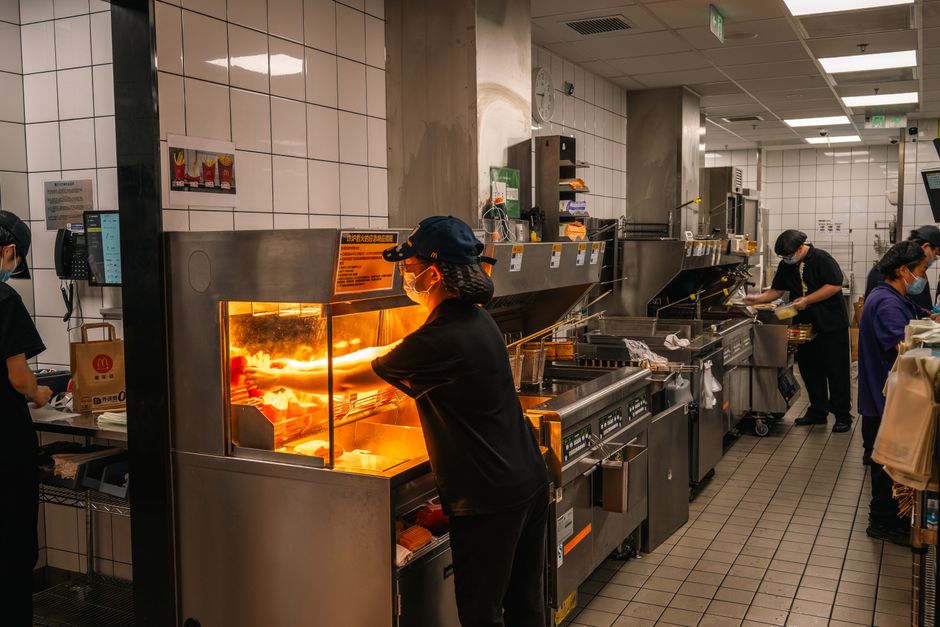
Fast food is loaded with sodium for a simple reason: it makes food taste better and costs almost nothing. Salt is cheap, and it masks the flavor of ingredients that may not be fresh. But the amount of sodium in a single fast food meal can exceed what your body needs for an entire day, and that has real effects on your blood pressure, heart, and kidneys. Understanding why the salt is there and what it does once you eat it can help you make better choices without giving up fast food entirely.
Why does fast food contain so much sodium?
Salt does more than make food salty. It enhances other flavors, suppresses bitterness, and acts as a preservative. Fast food restaurants rely on these properties because their business model depends on food that stays consistent and tastes the same at every location.
Most of the sodium in fast food is not from the salt shaker. It is already built into the ingredients. Buns are made with salt. Pickles are brined in salt. Sauces and dressings are loaded with it. The meat is often injected with a salt solution to keep it moist during cooking. By the time all these components are combined, a single burger and fries can contain more than 1,500 milligrams of sodium.
The federal dietary guidelines recommend limiting sodium to 2,300 milligrams per day, which is about one teaspoon of salt. Many fast food meals exceed half of that in one sitting. A meal of a double cheeseburger, large fries, and a soft drink can easily reach 2,000 milligrams before you add anything else.
What does sodium do inside your body?
Sodium is not inherently bad. Your body needs it to maintain fluid balance, transmit nerve signals, and help muscles contract. The problem is the amount. Most Americans consume far more sodium than their bodies need.
When you eat a high-sodium meal, your body holds onto water to dilute the sodium in your bloodstream. This increases the total volume of blood in your circulatory system. More blood volume means more pressure against your artery walls. That is why blood pressure rises after a salty meal.
For most healthy people, the kidneys eventually filter out the excess sodium and the extra water, and blood pressure returns to normal. But if you eat high-sodium meals regularly, your blood pressure may stay elevated. Over time, that sustained pressure damages the inner lining of your arteries, making them stiffer and less flexible.
High blood pressure is often called a silent condition because it causes no symptoms. You cannot feel it. Many people with high blood pressure do not know they have it until it is measured. This is why the effects of chronic sodium overload are so dangerous — they accumulate quietly over years.
How much sodium is actually in fast food?
Sodium content varies widely by restaurant and menu item. A plain hamburger might have around 400 to 500 milligrams. A chicken sandwich with sauce can exceed 1,000 milligrams. A large order of fries adds another 300 to 400 milligrams. A breakfast sandwich with sausage and cheese can contain more than 1,200 milligrams before you order anything else.
Some fast food chains publish their nutrition information online and on in-store posters. The numbers are often surprising. Items that do not taste salty — like milkshakes, muffins, or some salads — can still contain significant sodium. A salad with grilled chicken, cheese, and dressing can easily contain more sodium than a cheeseburger.
Here is a rough comparison of typical sodium ranges:
- Burger with cheese: 800 to 1,200 milligrams
- Fried chicken sandwich: 1,000 to 1,500 milligrams
- Large fries: 300 to 500 milligrams
- Breakfast sandwich with meat: 1,000 to 1,500 milligrams
- Salad with chicken and dressing: 700 to 1,200 milligrams
These are general ranges, not exact figures. Always check the specific restaurant’s nutrition guide for precise numbers. The key takeaway is that a single fast food meal often provides half or more of the daily recommended sodium limit.





What happens to your heart and kidneys over time?
Chronic high sodium intake is linked to high blood pressure, and high blood pressure is a major risk factor for heart disease, stroke, and kidney disease. The relationship between sodium and blood pressure is one of the most consistent findings in nutritional science. Studies have shown that reducing sodium intake lowers blood pressure in most people, especially those who already have elevated readings.
Your kidneys work hard to regulate sodium. Each day, they filter your blood and excrete excess sodium in urine. When you consistently consume more sodium than your kidneys can handle, the filtering system works under strain. Over many years, this can contribute to kidney damage, particularly in people with diabetes or existing kidney conditions.
The effects are not limited to people with pre-existing conditions. Even young, healthy adults can develop elevated blood pressure from years of high-sodium eating. The damage is gradual, which makes it easy to ignore. There is no pain, no warning sign, no moment where you feel the salt hurting you.
Does everyone react to sodium the same way?
No. Sodium sensitivity varies from person to person. Some people’s blood pressure rises significantly in response to sodium. Others are relatively resistant and see little change. This variability makes sodium research complicated and sometimes confusing.
Age matters. Older adults tend to be more sodium-sensitive than younger people. People with diabetes, kidney disease, or a family history of high blood pressure are also more likely to experience blood pressure increases from sodium. African American adults, on average, show greater blood pressure responses to sodium than other groups.
This means two people can eat the same fast food meal and have very different physiological responses. One person’s blood pressure may spike noticeably. Another person’s may barely move. But the lack of an immediate response does not mean there is no long-term effect. The cumulative load still matters.
Can you eat fast food and still limit sodium?
Yes, but it takes planning. The most effective strategy is to check nutrition information before you order. Most major chains provide this data online. Look for items under 700 milligrams of sodium.
Some practical adjustments can make a meaningful difference:
- Skip the sauce. Sauces and dressings are often the single largest source of sodium in a meal.
- Choose a single patty instead of a double. More meat often means more sodium, especially if the meat is pre-seasoned.
- Skip the cheese. Cheese adds flavor but also adds significant sodium.
- Drink water instead of soda. Soda does not contain sodium, but this swap avoids added sugar and helps your kidneys process the salt load.
- Do not add table salt. Fast food is already salted. Adding more is unnecessary.
One meal will not ruin your health. The concern is the pattern. If fast food is an occasional choice and you eat mostly whole, minimally processed foods the rest of the time, your overall sodium intake can remain within a healthy range.
If you eat fast food several times per week, the sodium adds up quickly. Over time, that pattern is associated with higher blood pressure and increased cardiovascular risk. The evidence for this link is strong and consistent across multiple large studies.
What about salt substitutes and low-sodium options?
Some fast food chains have introduced lower-sodium menu items or offer salt-free seasoning alternatives. These options can help, but they are not a complete solution. A lower-sodium burger is still a burger with a salty bun, salty cheese, and salty sauce.
Potassium-based salt substitutes can be helpful for some people, but they are not appropriate for everyone. People with kidney disease or those taking certain blood pressure medications should not use potassium salt substitutes without consulting a doctor. Never assume a salt substitute is safe for your specific situation.
The most reliable way to control sodium is to cook at home. When you prepare food yourself, you control the salt. That does not mean every home-cooked meal must be bland. Herbs, spices, citrus, and vinegar can add flavor without adding sodium. But if you are not used to cooking without salt, it takes time for your taste buds to adjust.
Frequently Asked Questions
Is all fast food high in sodium?
Most fast food items are high in sodium, but the amount varies widely. A plain hamburger or grilled chicken sandwich may be lower in sodium than items with multiple sauces, cheeses, or processed meats.
How much sodium is too much in one meal?
There is no official single-meal limit, but the daily recommended maximum is 2,300 milligrams. A fast food meal that approaches or exceeds half of that amount is considered high.
Can drinking water flush out sodium from fast food?
Water helps your kidneys excrete sodium, but it does not undo the meal. Your body will still absorb the sodium, and blood pressure will still respond accordingly.
Are low-sodium fast food options actually low sodium?
Some are lower than the standard versions, but they are rarely truly low sodium. Check the nutrition information for the specific item and compare it to the regular version.
