
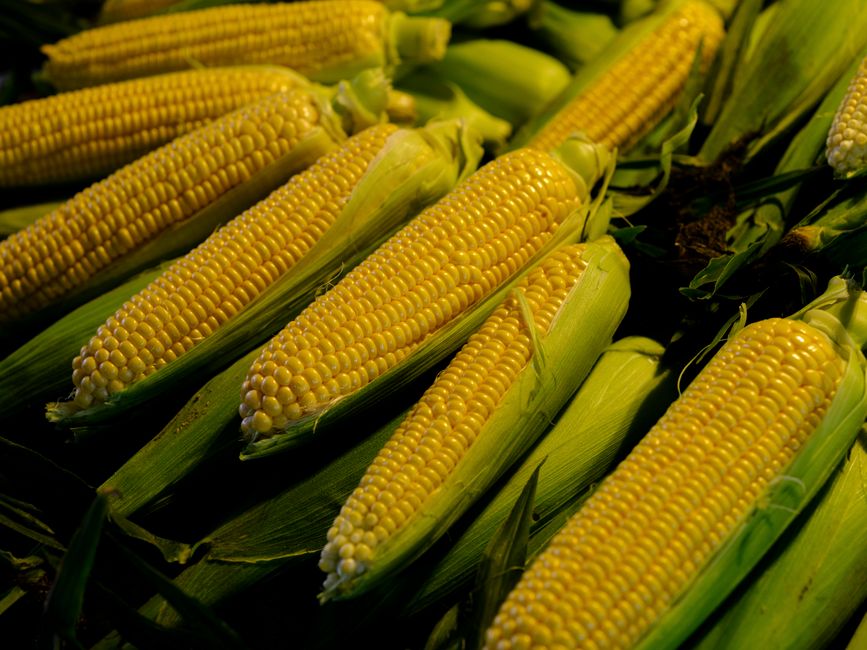
You eat corn on the cob, and hours later you see whole yellow kernels in the toilet. It looks like your body skipped them entirely. That is not quite what happens. What you are seeing is the outer shell of each kernel, a tough layer called the pericarp, passing through your digestive tract mostly intact. The soft inside, the part with the starch and nutrients, does get digested.
So corn is not undigestible. It is partly indigestible, and the part that survives is the part your body cannot break down. That distinction explains almost everything about this common experience.
Why does corn come out looking whole if it’s digested?
The kernel has two main parts that behave very differently in your gut. The outside is the pericarp, a hard shell made mostly of cellulose and other fibers. The inside holds starch, protein, and small amounts of vitamins and minerals.
Human digestive enzymes cannot break down cellulose. We do not make cellulase, the enzyme that would do it. Cows and termites can digest cellulose because microbes in their guts do the work for them. We have some fiber-fermenting bacteria in the colon, but they handle a small fraction of what we eat.
Chewing is the first real defense. A good chew cracks the pericarp and releases the starchy inside, which your small intestine then digests and absorbs. Swallow kernels whole, and the shell stays sealed. Digestive juices and enzymes cannot get inside, so the inside passes through with the shell.
Here is the part that surprises people. The yellow color you see in the bowl is the pericarp itself. It is not stained by anything. That shell is naturally yellow, and it keeps its color because nothing in your gut breaks it down.
What does “doesn’t corn get digested” actually mean for your body?
It means you absorb less from whole kernels than from ground corn products. The starch inside a sealed kernel never reaches your bloodstream. That is a real difference, not a small one.
Think about what corn products look like on a plate. Popcorn, cornmeal, masa, tortillas, and cornflakes all involve breaking the kernel open. Once the pericarp is cracked or ground, your enzymes get access to the starch. Whole kernels keep that door closed.
This is also why corn shows up in stool studies. Researchers sometimes use corn as a marker to estimate how fast food moves through the gut, precisely because the shells are easy to spot and pass at a predictable pace. That is a research use, not a medical test you should try at home.
The fiber in the pericarp is not wasted, though. It reaches the colon, where some gut bacteria ferment it. That process produces short-chain fatty acids, which the cells lining your colon use for energy. So the shell does something for you even though you cannot digest it.
Is corn bad for digestion or hard on your gut?
For most people, corn is not hard on the gut. It is a source of insoluble fiber, which adds bulk to stool and can help with regularity. The kernels you see are a sign of normal transit, not a digestive problem.
Some people do notice corn more than others. If you have a condition that speeds up transit, like a flare of irritable bowel syndrome or an acute bout of diarrhea, food moves through faster and less gets broken down. You may see more whole kernels than usual. That reflects speed, not a problem with corn itself.
A few groups should pay closer attention. People with a corn allergy, which is uncommon but real, need to avoid it. People with celiac disease or gluten sensitivity sometimes react to corn, though this is not the same mechanism as gluten and is not universal.
If you regularly see undigested food of many kinds, not just corn, and you also have weight loss, cramping, or changes in bowel habits, that is worth a conversation with a doctor. Seeing corn alone is not a warning sign.


Does chewing more change anything?
Yes, and this is the most practical takeaway. Chewing breaks the pericarp. More chewing means more kernels get opened, which means more starch gets digested and absorbed.
You do not need to chew to a paste. Just slow down and chew each bite more than you might by habit. People who bolt their food tend to swallow more intact kernels and see more of them later.
That said, no amount of chewing will make corn fully digestible. The cellulose in the shell stays cellulose. You will always pass some shell fragments. That is normal and expected.
How does corn compare to other foods people notice in stool?
Corn is not unique. Several foods have parts that resist digestion, and people notice them for the same reason — a tough outer layer or a fibrous structure that survives the trip.
- Corn: Pericarp shell passes intact; inside digests if the shell is cracked.
- Tomato and pepper skins: Made of tough fibers that resist breakdown.
- Nuts and seeds: Hard outer coatings can pass whole, especially if not chewed well.
- Mushrooms: Contain chitin, a fiber humans cannot digest.
- Beans and lentils: Skins and some starches resist digestion, which is partly why they cause gas.
- Sesame seeds: Tiny and hard, often swallowed whole and passed intact.
The pattern is the same across all of them. If a food has a tough outer layer and you swallow it without breaking that layer, part of it will come out looking much like it went in.
Does seeing corn in your stool mean something is wrong?
No. For most people, it means you ate corn and did not chew it thoroughly. It is one of the most normal things stool can contain.
The concern would come from a pattern, not a single food. If you see large amounts of undigested food across many meals, or you have persistent diarrhea, oily stool, or weight loss, those are reasons to get checked. Conditions that affect how you absorb nutrients can cause food to pass through less digested. But corn by itself does not point to any of them.
One clarification worth making: corn is not “indigestible.” That word gets used loosely. Corn is partly digestible, and the part you cannot digest is fiber, which is a normal and useful part of a healthy diet. The confusion comes from the fact that the shell is visible and the inside is not. You see the part that survived, so it looks like nothing happened. In reality, most of the kernel’s calories were likely absorbed.
Frequently Asked Questions
Why doesn’t corn get digested in the human body?
Human digestive enzymes cannot break down cellulose, the main fiber in the kernel’s outer shell. That shell passes through mostly intact while the starchy inside digests if the shell has been cracked by chewing.
Is it normal to see whole corn in your poop?
Yes, it is completely normal and usually just means you swallowed some kernels without chewing them well. It is not a sign of a digestive problem on its own.
Does corn have any nutritional value if it passes through?
Yes. The starch inside a cracked kernel is digested and absorbed, and the indigestible shell acts as fiber that feeds some gut bacteria. You absorb less from whole kernels than from ground corn products like cornmeal or masa.
Should I worry if I see other undigested foods too?
Seeing an occasional food fragment is normal. If you regularly see large amounts of undigested food along with diarrhea, weight loss, or cramping, talk to a doctor about it.
