
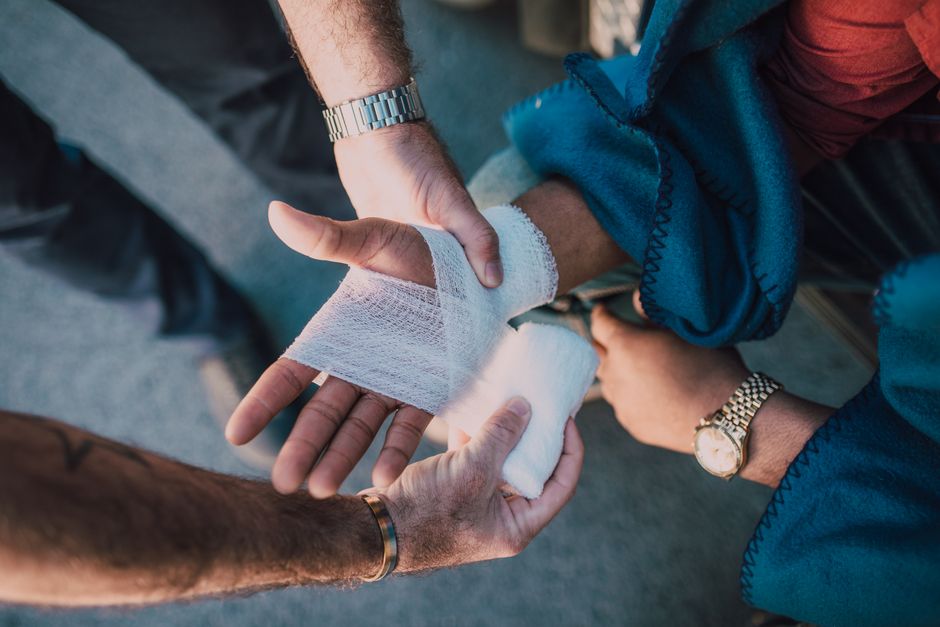
Bending your wrist should be a simple, painless motion. When it hurts, the cause usually comes down to one of a few structures: tendons, ligaments, cartilage, bones, or nerves. The wrist is not a single joint. It is a stack of small bones, a web of ligaments, and several tendon tunnels packed into a space roughly the size of a matchbox. That tight anatomy is why bending can trigger sharp, specific pain.
Doctors call the motion of bending your wrist forward flexion and bending it backward extension. Both movements stretch and compress different tissues. If one of those tissues is inflamed, torn, or pinched, the bend exposes it. In many cases, the location of the pain tells you more than the motion itself.
Why Does Your Wrist Hurt When I Bend It?
Pain on bending almost always means a specific structure is being loaded in a way it cannot tolerate. The most common culprits are tendon inflammation, ligament sprains, cartilage wear, and nerve compression.
Tendons connect muscle to bone and slide through narrow tunnels at the wrist. When a tendon or its sheath becomes irritated, bending pulls it through that tunnel and produces pain. This is the basic mechanism behind most tendon-related wrist pain.
Ligaments connect bone to bone. A sprain stretches or tears these fibers. Bending the wrist puts tension directly on the injured ligament, so the pain is often sharp and tied to a specific direction of movement.
Cartilage covers the ends of bones and cushions the joint. When cartilage thins or wears down, bending brings bone surfaces closer together and can cause a deep, aching pain.
Nerves pass through the wrist on their way to the hand. If a nerve is compressed or irritated, bending can compress it further and produce tingling, burning, or electric-shock sensations alongside the pain.
What Are the Most Common Causes of Wrist Pain When Bending?
Several conditions account for the majority of cases. They differ in where the pain sits, what makes it worse, and how it behaves over time.
De Quervain’s tenosynovitis affects the tendons on the thumb side of the wrist. It causes pain when you bend the wrist toward the pinky or grip objects. It is common in people who do repetitive thumb and wrist motions, and it can also appear after pregnancy, though the exact reason is not fully understood.
Wrist sprains follow a fall onto an outstretched hand or a sudden twist. The pain is usually tied to a specific injury event and worsens with movement in the direction that stretches the damaged ligament.
Tendinitis is inflammation or irritation of a wrist tendon. It tends to build gradually with repeated activity. Bending the wrist against resistance often reproduces the pain.
Carpal tunnel syndrome is compression of the median nerve as it passes through a narrow channel at the wrist. It typically causes numbness and tingling in the thumb, index, and middle fingers, often worse at night. Bending the wrist can increase pressure in that channel and bring on symptoms.
Osteoarthritis is cartilage breakdown in the wrist joint. It is more common after an old wrist injury or with age. The pain is often a deep ache, and bending can make it worse.
Ganglion cysts are fluid-filled lumps that commonly appear on the back of the wrist. They are usually harmless, but if one presses on a nerve or sits near a joint, bending can cause pain.
Wrist fractures, including a scaphoid fracture, can cause pain with bending. A scaphoid fracture is easy to miss because it may not show up on early X-rays, and untreated it can lead to long-term problems. Any wrist pain after a fall that does not improve within a few days deserves medical attention.
Why Does the Location of the Pain Matter?
Where the pain sits narrows the list of likely causes faster than almost any other clue. The wrist has distinct zones, and each zone has its own set of structures.
Pain on the thumb side often points to De Quervain’s tenosynovitis or to the joint at the base of the thumb. Pain on the pinky side can involve a ligament injury or a tear in the triangular fibrocartilage complex, a cushioning structure on that side of the wrist.
Pain in the center of the wrist that feels deep and achy may relate to cartilage wear or to the joint between the forearm and wrist bones. Pain with tingling in the fingers points toward a nerve issue rather than a tendon or ligament problem.
This is a general guide, not a diagnosis. Several conditions can produce pain in overlapping areas, and only an exam can sort them out.





When Should You See a Doctor for Wrist Pain?
Most mild wrist pain from a minor strain settles on its own within a few days to a couple of weeks. Certain signs mean you should not wait.
- Pain after a fall or injury, especially if you cannot move the wrist normally
- Numbness, tingling, or weakness in the hand that does not go away
- Visible deformity, swelling that keeps getting worse, or a lump
- Pain that is severe, wakes you at night, or is getting worse over time
- Inability to grip or hold objects
- Fever, redness, or warmth around the wrist
Fever with a hot, swollen wrist is a red flag. It can signal an infection in the joint or tendon sheath, which is a medical emergency. Seek care right away.
For pain that lingers without these warning signs, a primary care doctor or a hand specialist can examine the wrist, test specific movements, and order imaging if needed.
How Is Wrist Pain When Bending Treated?
Treatment depends entirely on the cause, which is why an accurate diagnosis matters before you start treating yourself.
For many mild tendon and ligament problems, the general approach is to rest the wrist, avoid the activity that triggered it, and use ice for short periods to reduce swelling. Over-the-counter pain relievers may help with discomfort. Some clinicians recommend a wrist splint to limit movement while the tissue calms down, though the evidence for splinting is stronger for some conditions than others.
For carpal tunnel syndrome, treatment can include wrist splinting at night, activity changes, and in some cases steroid injections or surgery. The choice depends on severity and how long symptoms have lasted.
For De Quervain’s tenosynovitis, avoiding the aggravating motion, splinting, and sometimes injection are common approaches. Surgery is reserved for cases that do not improve.
For osteoarthritis, the focus is on managing pain and maintaining function. Physical therapy, activity modification, and pain relief are typical. No treatment currently reverses cartilage loss.
Physical therapy plays a role in many wrist conditions. It can help restore strength and movement once the acute pain settles. It is not a substitute for treating a fracture or an infection.
What does not have strong evidence behind it: most wrist braces marketed for general “support,” magnets, copper bands, and topical products claiming to repair tendons. No large human trials confirm these work for wrist pain.
Can You Prevent Wrist Pain When Bending?
You cannot prevent every cause, but you can reduce strain on the wrist from repetitive motion.
Take breaks from activities that keep the wrist bent for long periods, such as typing or using tools. Change your grip and hand position rather than holding one posture. Keep your wrist in a neutral position, roughly straight, rather than bent up or down for extended periods.
Strengthening the forearm and hand muscles can support the wrist, though it will not prevent pain from an injury or a structural problem. If a task causes pain, stopping and adjusting is more useful than pushing through it.
After a wrist injury, following through with rehabilitation matters. Returning to full activity too soon can lead to ongoing problems.
Does Cracking Your Wrist Cause Pain Later?
No good evidence shows that cracking your knuckles or wrist causes arthritis. The cracking sound comes from gas bubbles forming and collapsing in the joint fluid, not from bones grinding together.
That said, if bending or cracking your wrist causes pain, the motion may be aggravating an underlying problem. The cracking itself is not the cause.
Frequently Asked Questions
Why does my wrist hurt when I bend it but there is no swelling?
Pain without swelling often points to a tendon or nerve issue rather than a fresh injury. Tendon irritation and nerve compression commonly cause pain or tingling without visible swelling.
Can wrist pain when bending go away on its own?
Mild pain from a minor strain often improves within a few days to a couple of weeks with rest. Pain that lasts longer, gets worse, or comes with numbness should be checked by a doctor.
Is wrist pain when bending a sign of arthritis?
It can be, but arthritis is only one of many causes. Osteoarthritis tends to cause a deep ache that builds over time, often after an old injury, while tendon and nerve problems are more common overall.
Should I wear a wrist brace for pain when bending?
Some clinicians recommend a splint to rest the wrist while irritated tissue calms down, especially for carpal tunnel syndrome. Evidence for general wrist supports is limited, so it is best to get a diagnosis first.
