
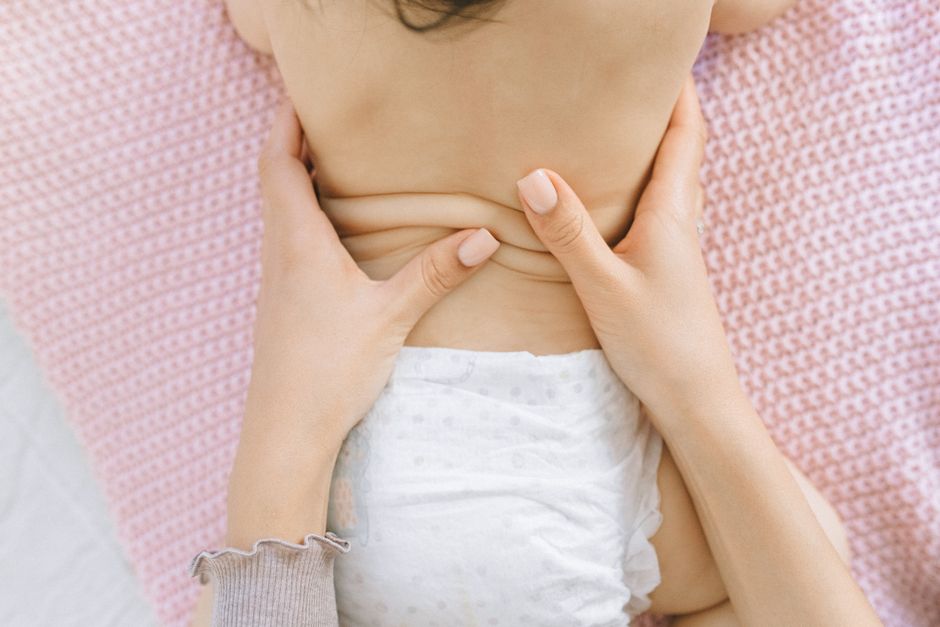
Newborn hiccups are one of the most common and least harmful things your baby will do. They happen because a newborn’s nervous system is still maturing, and the diaphragm — the muscle that controls breathing — is easily triggered. Most bouts of newborn hiccups are completely normal, usually stop on their own within a few minutes, and are not a sign of any underlying health problem.
What Causes Hiccups in Newborns?
Hiccups are an involuntary spasm of the diaphragm. This is the large dome-shaped muscle at the base of the lungs that helps us breathe. When the diaphragm spasms, the vocal cords snap shut quickly, producing the classic “hic” sound.
In newborns, this reflex is very sensitive. The brain circuits that control the diaphragm are still developing. This means even minor triggers can set off a spasm. The most common trigger is a full stomach. When a baby feeds, the stomach expands and presses against the diaphragm, which can easily irritate it.
Another major factor is swallowed air. Babies often gulp air while feeding, especially if the latch is not perfect or the milk flow is fast. This extra air distends the stomach, which again pushes on the diaphragm and triggers the reflex. Temperature changes can also play a role. A sudden shift from warm milk to cooler air can cause the diaphragm to twitch.
Why Do Newborns Hiccup More Than Older Children?
Newborns hiccup far more frequently than toddlers or adults for a few clear reasons. First, their nervous system is immature. The vagus nerve and the phrenic nerve, which control the diaphragm, are still learning to communicate properly with the brain. The signal coordination is not precise yet, so spasms happen easily.
Second, the newborn stomach is tiny. It can only hold about 1 to 2 ounces (30 to 60 milliliters) at birth. Even a normal feeding fills it quickly. A full stomach pressing on the diaphragm is the single most reliable trigger for hiccups in this age group.
Third, newborns spend most of their time lying flat. This position makes it easier for the stomach contents to push upward against the diaphragm. As babies grow, gain head control, and start sitting up more, the frequency of hiccups naturally declines. Most infants outgrow frequent hiccups by the time they are 3 to 6 months old.
Are Newborn Hiccups Dangerous?
No. In the vast majority of cases, newborn hiccups are completely harmless. They are a normal reflex, much like sneezing or yawning. Hiccups do not cause pain, do not interfere with breathing, and do not harm the baby.
It is important to know that hiccups are not a sign of choking or respiratory distress. A baby who is hiccuping is getting plenty of air. The hiccup sound comes from the vocal cords snapping shut, which is a protective reflex, not a blockage.
There is one situation where frequent hiccups deserve more attention: reflux. Gastroesophageal reflux (GER) is common in infants because the valve between the stomach and esophagus is immature. In some babies, reflux can trigger hiccups more often. If your baby hiccups very frequently and also shows signs like arching the back, crying during or after feeds, spitting up large amounts, or coughing, talk to your pediatrician. This does not mean hiccups are dangerous. It just means the hiccups may be a symptom of an underlying feeding issue worth checking.
How to Stop Newborn Hiccups
You cannot always stop newborn hiccups, and you do not need to. Most episodes resolve on their own within 5 to 10 minutes. If the hiccups are bothering you or seem to be interfering with your baby’s feeding or sleeping, there are a few gentle techniques that may help.
The most reliable approach is to interrupt the trigger. If your baby hiccups during a feed, stop and burp them. Burping releases trapped air that is pushing on the diaphragm. A gentle pat on the back for a minute or two often resolves the spasm.
You can also try a brief pause in feeding. Take the bottle away or unlatch the baby for a moment. Let them settle and catch their breath. Sometimes simply changing position helps. Hold your baby upright against your chest for a few minutes. This reduces the pressure of the stomach against the diaphragm.
For a persistent bout, some parents find that offering a pacifier helps. Sucking can reset the breathing rhythm and relax the diaphragm. You can also try gently rubbing your baby’s back in a circular motion. The physical stimulation can interrupt the nerve signal causing the spasm.
What Not to Do for Newborn Hiccups
There are several old-fashioned remedies for hiccups that are dangerous and should never be used on a newborn. Do not startle your baby. Do not pull their tongue. Do not press on their eyeballs. Do not give them water or any liquid other than breast milk or formula.
Giving a newborn water is particularly risky. It can cause water intoxication, which dilutes sodium in the blood and can lead to seizures. It can also interfere with formula or breast milk intake, which means the baby misses out on essential calories and nutrients.
There is no evidence that any home remedy works reliably for newborn hiccups. The safest and most effective strategy is patience. If the hiccups do not stop after 15 to 20 minutes and the baby seems distressed, contact your pediatrician. But in most cases, they will pass on their own.
When Should You Call the Doctor About Newborn Hiccups?
Hiccups alone are almost never a reason to call the doctor. However, there are some patterns that warrant a conversation with your pediatrician. Call if your baby has hiccups that last longer than 30 minutes without stopping. This is unusual and could indicate a nerve issue that needs evaluation.
Call if the hiccups are accompanied by other symptoms. These include forceful or projectile vomiting, green or yellow vomit, blood in the vomit, a fever, or breathing difficulties. Also call if your baby is refusing to feed, losing weight, or showing signs of dehydration such as fewer wet diapers than usual.
Frequent hiccups combined with excessive spitting up, arching of the back, or irritability during feeds could point to gastroesophageal reflux disease (GERD). This is more than normal spit-up and may require treatment. Your pediatrician can assess whether your baby’s symptoms meet the criteria for GERD and recommend appropriate management.
In rare cases, persistent hiccups can be a sign of a neurological or metabolic condition. But this is extremely uncommon. The key takeaway is that isolated hiccups in an otherwise healthy, thriving newborn are normal. Trust your instincts. If something feels wrong, call your doctor. But do not worry about a typical bout of hiccups after a feed.
Why Does Your Newborn Hiccup So Much During Feeding?
Feeding is the most common time for newborn hiccups, and there is a simple mechanical explanation. When a baby sucks and swallows, they also swallow air. This air collects in the stomach, which sits directly below the diaphragm. As the stomach expands, it pushes upward on the diaphragm, triggering a spasm.
Fast milk flow can make this worse. If your milk lets down forcefully or the bottle nipple hole is too large, your baby may gulp quickly, taking in more air with each swallow. A slow, paced feeding with frequent burping breaks can reduce the amount of air swallowed.
There is also a nerve connection at play. The vagus nerve runs from the brain down through the chest and abdomen, passing near the esophagus and stomach. During feeding, the stretching of the esophagus and stomach stimulates this nerve. In a newborn, this stimulation can easily trigger the hiccup reflex. This is not a sign of a problem. It is simply an immature nervous system overreacting to a normal stimulus.
Can You Prevent Newborn Hiccups?
You cannot completely prevent newborn hiccups, but you can reduce how often they happen. The most effective strategy is to pace feedings and burp frequently. Burp your baby after every 1 to 2 ounces of formula or after each breast if you are nursing. This releases trapped air before it builds up enough to press on the diaphragm.
Keep your baby upright for 20 to 30 minutes after a feeding. This uses gravity to keep the stomach contents down and reduces pressure on the diaphragm. Avoid vigorous play or bouncing immediately after a feed, as this can jostle the stomach and trigger a spasm.
Pay attention to feeding position. Your baby’s head should be higher than their stomach, and they should be latched deeply onto the breast or bottle nipple. A good latch reduces air swallowing. If you bottle feed, consider a slow-flow nipple and hold the bottle at an angle so the nipple is always full of milk, not air.
Even with perfect technique, your newborn will still hiccup sometimes. That is normal. The reflex is simply part of early development. As your baby’s nervous system matures over the first few months, the hiccups will become less frequent and less intense.
Frequently Asked Questions
How long do newborn hiccups usually last?
Most newborn hiccup episodes last 5 to 10 minutes and stop on their own. Episodes lasting longer than 30 minutes are uncommon and worth mentioning to your pediatrician.
Should I feed my baby more to stop the hiccups?
No, feeding more usually makes hiccups worse by further expanding the stomach. Stop the feed, burp your baby, and hold them upright until the hiccups pass.
Can hiccups hurt my newborn?
No, hiccups do not cause pain or harm to a newborn. They are a normal reflex and do not interfere with breathing.
Do hiccups mean my baby has reflux?
Not necessarily. Hiccups are normal in all newborns. However, very frequent hiccups combined with excessive spit-up, arching, or irritability during feeds may indicate reflux and should be discussed with a pediatrician.
