
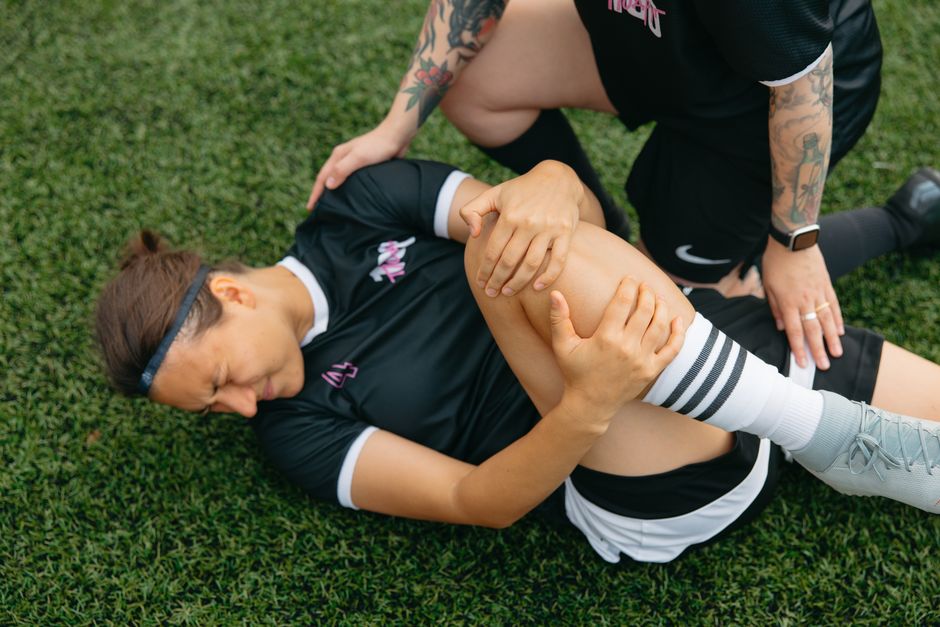
Straightening your knee is something you do dozens of times a day without thinking. You stand up, you walk, you stretch. So when that simple motion sends a sharp pain through your joint, it gets your attention fast. The pain usually comes from one of a few specific places: the kneecap, the tendons above it, or the cartilage inside the joint. Knowing which one is hurting you matters because the fixes are different. Here is what is likely happening and what you can do about it.
What Structures Get Stressed When You Straighten Your Knee?
Your knee is a hinge joint. When you straighten it, the kneecap (patella) slides up in a groove at the end of the thigh bone. The quadriceps muscle in your front thigh pulls on the patella through a tendon. That tendon connects to the shin bone through the patellar tendon. All of these parts work together during that final few degrees of extension.
The last 15 degrees of straightening are where most problems show up. That is when the kneecap is fully engaged in its groove and the tendons are under maximum tension. If any of these structures are irritated, inflamed, or damaged, the motion will hurt. The pain location often tells you which structure is the problem.
Pain above the kneecap usually points to the quadriceps tendon. Pain below the kneecap points to the patellar tendon. Pain behind or around the kneecap itself often points to cartilage wear or tracking problems.
Why Does Your Knee Hurt When You Straighten It: Patellofemoral Pain Syndrome
This is the most common cause of front knee pain in active adults. Patellofemoral pain syndrome means the kneecap is not tracking smoothly in its groove. Instead of gliding evenly, it rubs against the thigh bone. The cartilage behind the kneecap gets irritated. Straightening the leg increases the pressure between those surfaces.
The pain is usually a dull ache behind or around the kneecap. It often hurts more after sitting for a long time with the knee bent. Going downstairs can hurt more than going up. Straightening the knee against resistance, like kicking your leg out, often reproduces the pain.
Weak hip and gluteal muscles are a common contributor. When those muscles are weak, the thigh rotates inward during movement. That changes how the kneecap tracks. Many people improve significantly when they strengthen the hips and glutes rather than focusing only on the knee itself.
Patellar and Quadriceps Tendon Issues
Tendons connect muscle to bone. The patellar tendon connects the kneecap to the shin. The quadriceps tendon connects the thigh muscle to the kneecap. Both can become painful with overuse.
Patellar tendinopathy, sometimes called jumper’s knee, causes pain just below the kneecap. It is common in people who run, jump, or squat frequently. The pain is often sharp when you straighten the knee fully or when you land from a jump. The tendon becomes painful to touch and may feel thickened.
Quadriceps tendinopathy causes pain just above the kneecap. It is less common than patellar tendinopathy but follows the same pattern. Overuse leads to tendon irritation. Straightening the knee puts tension on the tendon, which triggers pain.
Tendon pain is different from muscle soreness. It often takes longer to warm up with activity. It may hurt more the day after exercise than during it. Rest alone rarely fixes tendon problems. A gradual loading program under professional guidance is the standard approach.



Cartilage Wear and Osteoarthritis
Osteoarthritis is wear and tear of the cartilage that covers the ends of the bones. It is common in adults over 50 but can start earlier, especially after a knee injury. When cartilage wears down, the bones get closer together. Straightening the knee can cause a grinding sensation or a sharp pain deep in the joint.
The pain from osteoarthritis often feels like it is inside the knee rather than on the surface. You may notice stiffness in the morning that loosens up after a few minutes of movement. The knee may swell after activity. Catching or locking sensations can occur when loose cartilage fragments get between the bones.
Arthritis pain typically worsens over time. It does not resolve with rest alone. Weight management, muscle strengthening, and low-impact exercise are the mainstays of management. If the pain becomes severe and limits daily life, surgical options exist, but they are not the first step.
Meniscus Tears and Locking Sensations
The meniscus is a C-shaped piece of cartilage that acts as a shock absorber between the thigh bone and shin bone. A tear can happen from a sudden twist or from gradual wear. When you straighten the knee, a torn meniscus fragment can get pinched between the bones.
This often causes a sharp pain on the inner or outer side of the knee. You may feel a click or catch during the motion. Some people experience a sensation that the knee is locked or cannot fully straighten. Swelling often develops within 24 hours of the injury.
Not all meniscus tears cause symptoms. Many are found incidentally on MRI scans in people with no pain. When symptoms do occur, they may settle with rest and physical therapy. Surgery is reserved for tears that cause persistent locking or that fail to improve with conservative care.
What to Do Right Now for the Pain
For sudden pain, the first step is to reduce activity that makes it worse. Avoid deep squats, lunges, and high-impact exercise. Ice the knee for 15 to 20 minutes a few times a day if there is swelling. Over-the-counter anti-inflammatory medication can help if you have no medical reasons to avoid it.
If the pain is mild and came on gradually, you can try a few days of modified activity. Walking on flat ground is usually fine. Avoid stairs and hills temporarily. If the pain settles within a week, you can gradually return to normal activity.
If the pain is sharp, comes with swelling, or follows a specific injury, see a clinician. The same goes for pain that does not improve after a week of modified activity. A clinician can determine whether you need imaging or a referral to physical therapy.
When to See a Doctor
Some knee pain needs prompt medical attention. You cannot bear weight on the leg. The knee looks deformed or is severely swollen. You cannot fully straighten the knee. The knee gives way or locks. You have redness and warmth around the joint with a fever. These signs warrant an evaluation sooner rather than later.
For chronic pain that has lasted more than a few weeks, a medical evaluation is also reasonable. Many knee problems respond well to physical therapy. The earlier you start, the better the outcome. Waiting for months while the pain persists often means more muscle weakness and a longer recovery.
Preventing Knee Pain When Straightening
Prevention focuses on strength and movement quality. Strong quadriceps, hamstrings, and glutes support the knee from all sides. You do not need heavy weights. Bodyweight squats, step-ups, and bridges are effective starting points.
Maintaining a healthy weight reduces load on the knee joint. Every pound of body weight puts several pounds of force through the knee during walking. Weight loss, when needed, is one of the most effective ways to reduce knee pain.
Wearing appropriate footwear matters. Shoes with worn-down soles change how your foot lands and how forces travel up your leg. Replacing worn shoes and choosing supportive footwear for your activity helps.
Frequently Asked Questions
Why does my knee hurt when I straighten it fully?
Full straightening puts maximum tension on the kneecap, the tendons around it, and the cartilage inside the joint. Pain at this point usually means one of those structures is irritated or damaged.
Can knee pain when straightening go away on its own?
Mild pain from overuse often settles within a week of reduced activity and ice. Pain that lasts longer than a week or comes with swelling usually needs a professional evaluation.
Is it better to rest or exercise a painful knee?
Complete rest is rarely the answer. Modified activity that avoids painful motions, combined with gentle strengthening, works better for most knee problems. A physical therapist can guide the right level of activity for your specific condition.
What does a meniscus tear feel like when straightening the knee?
A meniscus tear often causes a sharp pain on the inner or outer side of the knee with a catching or clicking sensation. Some people feel like the knee cannot fully straighten.
