
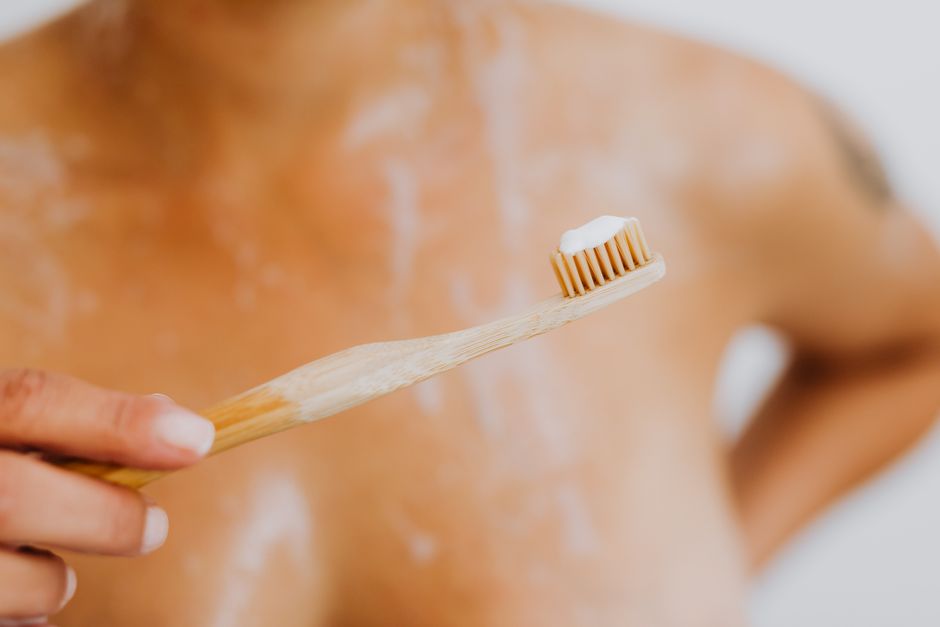
Toothpaste stains clothes because most toothpaste is not just paste. It contains pigments, whiteners, and fluoride compounds that bond to fabric fibers, and many formulas also include bleaching agents that can lift or shift dye. The stain is usually white, chalky, or gray on dark fabric and pale yellow on light fabric. Most fresh toothpaste stains come out with cool water and a mild detergent, but set stains and whitening formulas can be much harder to remove.
The good news: toothpaste is designed to be rinsed away with water, not to permanently dye anything. The bad news: some ingredients in modern toothpaste behave more like paint than soap once they dry into a cotton or polyester weave.
Why Does Toothpaste Stain Clothes And How To Remove It?
Toothpaste leaves marks on fabric for three separate reasons, and understanding which one is at work tells you how to treat the stain.
The first is simple residue. Toothpaste contains abrasives — calcium carbonate, silica, and aluminum compounds — that are meant to scrub plaque off enamel. Those same particles lodge in the gaps between fibers. On dark clothing, dried white abrasive looks exactly like a stain even though no dye has changed color.
The second is pigment and dye. Whitening toothpastes often contain titanium dioxide, the same white pigment used in paint and sunscreen. It is intensely opaque and does not dissolve in water. Once it dries inside a fabric, water alone will not lift it out.
The third is chemical. Some whitening formulas include hydrogen peroxide or similar bleaching compounds. On colored fabric, these can strip dye rather than add color. That kind of damage is not a stain at all — it is a bleached patch, and no stain remover will restore it.
Fluoride compounds, particularly stannous fluoride, can also react with fabric and leave a faint residue that is stubborn to rinse. This is more common with older or higher-concentration formulas.
Does Toothpaste Actually Bleach Fabric?
Some whitening toothpastes can lighten colored fabric, but most regular toothpaste does not bleach clothing in the way household bleach does.
The distinction matters. A true bleach stain shows up as a lighter patch where dye has been chemically destroyed. It will not respond to washing, stain removers, or re-dyeing in a predictable way. A toothpaste mark that looks white is more often dried abrasive and pigment sitting on top of the fibers.
Hydrogen peroxide in whitening toothpaste is usually present at low concentrations, and the contact time on clothing is short. That makes significant bleaching less likely than the marketing around “whitening” might suggest. Still, the risk is not zero, especially on dark or brightly dyed fabrics and especially if the paste sits on the fabric for hours before washing.
If a mark does not fade after proper stain treatment, and the fabric around it looks thinner in color rather than coated, assume dye loss rather than residue. That changes what you do next.
How Do You Remove a Fresh Toothpaste Stain?
Act fast and use cool water. Heat sets protein and polymer residues into fabric, and hot water can make a fresh mark much harder to lift.
- Scrape off excess paste with a spoon or dull knife. Do not rub it in.
- Rinse the back of the fabric under cool running water so the water pushes the paste out the way it came in.
- Apply a small amount of liquid laundry detergent directly to the mark and let it sit for about 15 minutes.
- Wash on the coolest setting the care label allows.
- Check the garment before drying. Heat from a dryer can lock in anything left behind.
For most fresh stains, this is enough. The key step people skip is rinsing from the back. Rubbing the front of the fabric pushes abrasive particles deeper into the weave.
How Do You Remove Dried or Set-In Toothpaste Stains?
Dried toothpaste is a different problem. The abrasives have bonded to the fibers, and the pigment has had time to settle. You need to rehydrate the residue before you can lift it.
Soak the garment in cool water with a scoop of oxygen-based bleach (the color-safe powder sold as OxiClean and similar products) for several hours or overnight, following the package directions. Oxygen bleach is gentler on colored fabric than chlorine bleach and works well on pigment-based marks. Then wash as normal.
For white cotton, a diluted chlorine bleach soak can work, but check the care label first and never mix bleach with other cleaners. For colored fabric, skip chlorine bleach entirely.
If the mark persists after one soak and wash, do not dry the garment. Repeat the soak. Drying between attempts is what turns a removable stain into a permanent one.
One clarification worth knowing: toothpaste stains are not the same as grease stains, so dish soap and degreasing tricks are less effective here than a standard enzymatic laundry detergent. The residue is mineral and polymer-based, not oil-based.
What If the Toothpaste Already Bleached the Fabric?
If the toothpaste contained a bleaching agent and the dye is gone, no cleaner will bring it back. The color has been chemically removed from those fibers.
Your options are limited. A fabric marker matched to the garment color can disguise small spots on solid colors. Re-dyeing the whole garment is possible for some fabrics but rarely matches the original shade exactly. For small marks on dark clothing, some people simply retire the item to casual wear.
This is why it helps to treat any toothpaste mark on colored clothing promptly, before you know whether it is residue or dye damage. A quick cool-water rinse costs nothing and settles the question.
How Can You Prevent Toothpaste From Getting On Clothes?
Most toothpaste stains happen in the same two places: at the sink while brushing, and in a toiletry bag or suitcase where a tube leaks.
At the sink, the biggest culprit is the flick. Brushing too vigorously or squeezing a loaded brush sends flecks onto a shirt. Brushing before you dress, or wearing an apron or towel over your clothes, removes most of the risk.
For travel, store the tube upright with the cap tight, and put it in a sealed plastic bag. Pressure changes during flights and jostling in a bag can force paste out of a loose cap.
For laundry, check shirt collars and cuffs after brushing. Small amounts of toothpaste transferred from hands to fabric are easy to miss until they dry.
Which Fabrics Are Most Vulnerable?
Natural fibers like cotton and linen absorb water-based residue readily, which makes them prone to pigment staining. Synthetic fabrics like polyester are less absorbent, so residue tends to sit on the surface and is often easier to rinse away — but polyester also holds oily compounds more stubbornly, and some toothpaste formulas include moisturizers and surfactants that behave that way.
Dark colors show white abrasive residue most clearly. Light colors show yellowing from dried paste and from any reaction with fabric sizing. Delicate fabrics like silk and wool need gentler treatment: cool water, mild detergent, no chlorine bleach, and no vigorous rubbing.
Frequently Asked Questions
Does toothpaste permanently stain clothes?
Most fresh toothpaste marks come out with cool water and mild detergent, so they are not permanent. Set-in stains and marks from bleaching formulas can be permanent, especially on colored fabric.
Can I use white vinegar to remove toothpaste stains?
White vinegar can help loosen mineral residue, but it is not a reliable stain remover for pigment-based toothpaste marks. A standard enzymatic laundry detergent or oxygen bleach soak is more effective.
Why does whitening toothpaste leave a white mark on dark clothes?
Whitening toothpaste often contains titanium dioxide, an opaque white pigment that does not dissolve in water. It dries inside fabric fibers and looks like a white stain until it is physically lifted out.
Should I wash toothpaste-stained clothes in hot or cold water?
Use cold water first, because heat can set residue into the fabric. Only move to warmer water if the care label allows it and cold treatment has not worked.
