
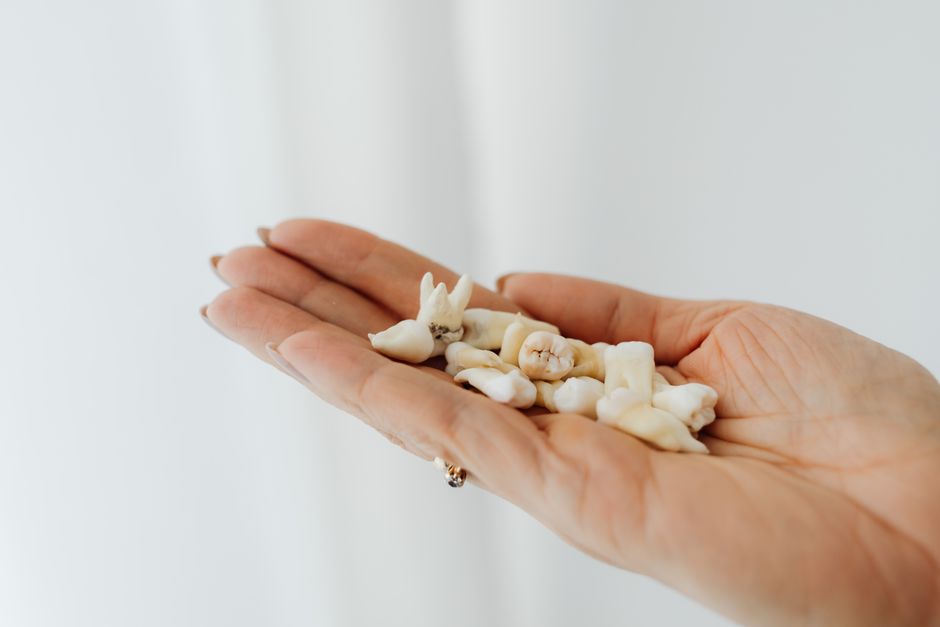
Wisdom teeth hurt because they are trying to push through a jaw that often does not have room for them. The pressure of a tooth moving into crowded space irritates the surrounding gum and bone, and that irritation is what you feel as pain. When the tooth breaks partway through the gum and then stalls, the tissue around it can become swollen, tender, and sometimes infected — which turns a dull ache into something much sharper.
Why Does The Wisdom Teeth Hurt?
Pain from a wisdom tooth almost always traces back to one of two situations: the tooth is moving through tissue, or the tissue around it has become inflamed or infected. Often it is both at once.
Wisdom teeth are the third and last set of molars. They usually begin forming in the early teens and typically try to erupt between the late teens and the mid-twenties. That timing is where the “wisdom” name comes from, not from any connection to intelligence.
When a wisdom tooth has room and comes in straight, it may cause little more than temporary soreness. When it does not have room, the trouble starts. The tooth can tilt, stay trapped under the gum, or break through only part of the way. Each of these creates a different kind of pain, and each has a different explanation.
What Is an Impacted Wisdom Tooth?
An impacted wisdom tooth is one that cannot fully erupt into its normal position. Something is in the way — usually other teeth, the jawbone, or the gum itself.
Dentists describe impaction in a few ways:
- Fully impacted: the tooth stays completely under the gum and bone.
- Partially impacted: part of the tooth breaks through the gum, but not all of it.
- Soft tissue impaction: the tooth has moved through bone but not through the gum.
- Bony impaction: the tooth is still blocked by jawbone.
A fully impacted tooth can sit quietly for years without any symptoms. A partially impacted tooth is a different story. The moment part of a tooth pokes through the gum, it creates a small opening where food and bacteria can collect — and that opening is hard to clean.
Impacted wisdom teeth are common. Many people have at least one. Not all of them cause problems, which is why some dentists monitor them rather than remove them right away.
Why Partial Eruption Causes So Much Pain
A tooth that breaks through only partway leaves a flap of gum tissue sitting over it. That flap is called an operculum, and it is the source of a lot of wisdom tooth misery.
Here is what happens. The operculum traps food particles and bacteria against the tooth surface. Because the area is at the very back of the mouth, a toothbrush often cannot reach it well. Bacteria multiply in that pocket, the gum becomes inflamed, and the tissue swells.
The swollen gum then gets bitten down on by the upper teeth when you chew. That repeated trauma keeps the tissue irritated and slows healing. The result is a cycle: swelling, biting, more swelling, more pain.
When that trapped bacteria cause a true infection in the gum flap, the condition is called pericoronitis. It is one of the most common reasons people end up in a dental chair with severe wisdom tooth pain. Symptoms can include:
- Sharp or throbbing pain near the back of the jaw
- Swollen, red, or bleeding gum tissue over the tooth
- Bad taste or bad breath
- Pain when biting down
- Difficulty opening the mouth fully
- Swelling in the cheek or jaw on that side
If the infection spreads, it can cause fever, swollen lymph nodes in the neck, and general feelings of being unwell. Swelling that moves toward the throat or floor of the mouth is a medical urgency and needs prompt care.




Why Wisdom Teeth Hurt Even Before They Break Through
Pain does not require a tooth to be visible. A wisdom tooth moving through bone and gum tissue puts pressure on nerves and surrounding structures, and that pressure registers as pain even when nothing has erupted yet.
Think of it as a slow, persistent push against tissue that was not designed to stretch that way. The sensation is often described as a deep ache rather than a sharp sting. Some people feel it in the jaw, some feel it near the ear, and some feel it as a headache on one side.
This is also why wisdom tooth pain can come and go. The tooth does not move at a constant rate. There are periods of activity and periods of rest. Pain tends to flare during the active phases.
Other Causes of Pain Near the Wisdom Teeth
Not every ache in that part of the mouth comes from the wisdom tooth itself. Several other problems produce pain in the same area, and telling them apart matters because the treatment is different.
Pressure on neighboring teeth. A wisdom tooth pushing sideways can crowd the molar next to it. That molar can shift, and the ligaments holding it in place can become sore. Sometimes the second molar develops a cavity on its back surface because the wisdom tooth makes it nearly impossible to clean.
Referred pain. Problems elsewhere in the mouth or jaw can feel like they are coming from the wisdom tooth area. A cavity in another molar, a sinus infection, or a temporomandibular joint (TMJ) problem can all produce pain that seems to sit at the back of the jaw.
Sinus pressure. The roots of the upper wisdom teeth sit close to the sinus cavity. Sinus inflammation can create pressure that feels like tooth pain, and tooth problems can sometimes feel like sinus pain. This overlap is a known source of diagnostic confusion.
Cysts or other growths. Rarely, a wisdom tooth that stays buried can be associated with a fluid-filled sac called a cyst that forms around the tooth. These often cause no symptoms and are found on X-rays. Some can enlarge and damage nearby bone or teeth, which is one reason dentists sometimes recommend removal of impacted teeth that are not currently causing pain.
What Makes Wisdom Tooth Pain Worse
Certain things reliably make the pain more noticeable. Knowing them can help you understand what is happening and when to seek care.
- Chewing. Pressure on an inflamed gum flap is a direct trigger.
- Opening your mouth wide. If the surrounding muscle is inflamed, this can hurt.
- Hot or cold foods. Temperature changes can irritate exposed tooth surfaces.
- Lying down. Blood flow to the head increases when you lie flat, which can make throbbing worse.
- Stress and poor sleep. These do not cause the problem, but they can lower your pain tolerance and make the same stimulus feel worse.
None of these are causes. They are amplifiers. The underlying issue is still the tooth and the tissue around it.
When Wisdom Tooth Pain Needs Prompt Attention
Most wisdom tooth discomfort is not an emergency. Some signs are.
Get care quickly if you have swelling that is spreading toward your eye, jaw, or neck, if you cannot open your mouth, if you have trouble swallowing or breathing, or if you have a fever along with the pain. These can signal that an infection is spreading beyond the tooth, and that situation can become serious.
For pain that is manageable but persistent, a dentist can examine the area, take an X-ray, and see exactly what the tooth is doing. That image is the only way to know whether a tooth is impacted, how its roots are shaped, and how close it sits to nerves or sinuses.
Some clinicians recommend removing wisdom teeth that are impacted or causing repeated problems. Others take a watch-and-wait approach for teeth that are not causing symptoms. The evidence on when removal is clearly necessary is not uniform, and recommendations vary. This is a decision worth discussing with a dentist who can see your specific situation rather than relying on general rules.
Why the Pain Often Comes and Goes
Many people notice their wisdom tooth pain flares for a few days and then fades. That pattern is real and has a simple explanation.
When the gum flap is inflamed, the body’s immune response works to calm it. Swelling goes down, the tissue heals, and the pain eases. Then the tooth shifts slightly, or food gets trapped again, or the upper teeth bite down on the flap once more — and the cycle restarts.
This on-and-off pattern is one reason people put off seeing a dentist. The pain goes away, so it seems solved. But the underlying condition has not changed. The tooth is still in the same position, and the same trigger can set it off again.
Recurring episodes are worth mentioning to a dentist even if the pain is gone by the time of your appointment. The history itself is useful information.
Frequently Asked Questions
Why do wisdom teeth hurt so much?
Wisdom teeth often hurt because they are trying to erupt into a jaw that has no room, which puts pressure on surrounding tissue. When the gum flap over a partially erupted tooth becomes inflamed or infected, the pain can become severe.
How long does wisdom tooth pain usually last?
There is no fixed timeline. Some episodes ease within a few days as inflammation settles, while others persist or keep returning until the tooth is treated or removed.
Can wisdom teeth hurt without being impacted?
Yes. A wisdom tooth that is coming in normally can still cause soreness as it moves through the gum and bone. Impacted teeth are more likely to cause ongoing or recurring pain, but they are not the only source.
When should I see a dentist for wisdom tooth pain?
See a dentist if the pain lasts more than a few days, keeps coming back, or comes with swelling, fever, or trouble opening your mouth. Those signs can point to an infection that needs treatment.
