
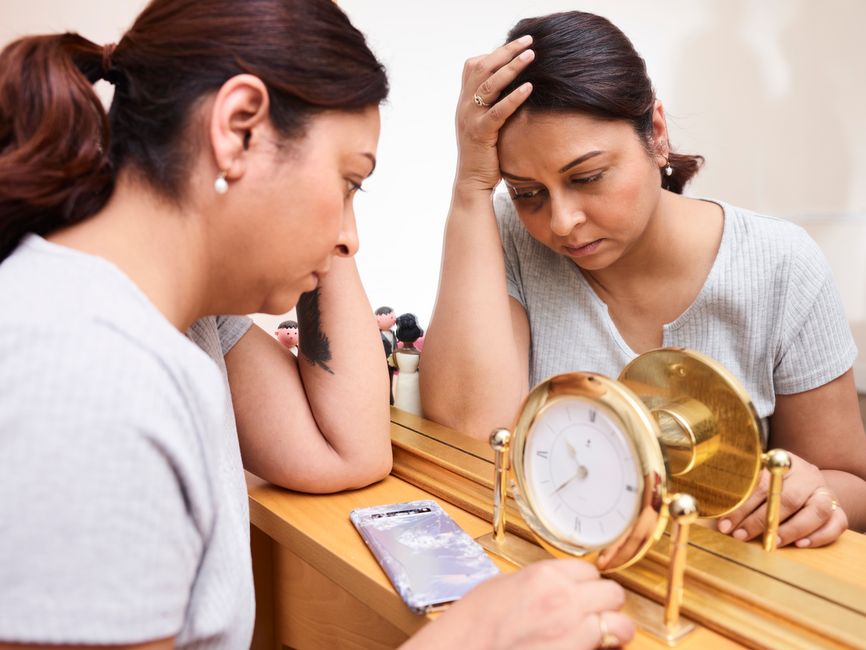
Perimenopause can feel like your body has been rewired overnight. Anxiety that never used to bother you shows up out of nowhere, sometimes alongside a racing heart, a tight chest, or a wave of dread that seems to have no trigger. The reason is largely hormonal. As estrogen and progesterone rise and fall unevenly during perimenopause, they disrupt the brain’s stress-response system and the chemicals that regulate mood, which can produce anxiety even in people who have never struggled with it before.
Why Does Perimenopause Cause Anxiety? Hormones Explained
Estrogen is not just a reproductive hormone. It also acts on the brain, where it helps regulate serotonin, dopamine, and the stress hormone cortisol. When estrogen levels swing unpredictably during perimenopause, those systems can become less stable.
Two things happen at once. First, estrogen’s effect on mood-regulating brain chemicals becomes inconsistent. Second, the hormonal fluctuations themselves trigger the body’s fight-or-flight response more easily. The result is a nervous system that reacts to ordinary stress as if it were a threat.
Progesterone matters too. It binds to receptors in the brain that have a calming effect. When progesterone drops, that calming signal weakens. Many people notice anxiety worsening in the days before their period, when both hormones are at their lowest.
This is why perimenopause anxiety can feel different from the anxiety you may have experienced earlier in life. It often arrives without an obvious psychological cause, and it can be more physical — a pounding heart, sweating, or a sense of internal buzzing — than a feeling of worry.
What Are the Most Common Anxiety Symptoms in Perimenopause?
Perimenopausal anxiety tends to show up in both the mind and the body. Recognizing the physical signs can help you understand that what you are feeling has a physiological basis.
- A racing or pounding heartbeat, sometimes at rest
- A sudden sense of dread or impending doom with no clear trigger
- Tightness in the chest or throat
- Difficulty concentrating or a feeling of mental fog
- Irritability or feeling easily overwhelmed
- Sleep problems, especially waking around 3 or 4 a.m.
- Hot flashes or night sweats that overlap with anxious feelings
These symptoms can also be caused by other conditions, including thyroid problems, heart conditions, and some medication side effects. That overlap is exactly why new or worsening anxiety in this stage of life deserves a conversation with a clinician rather than self-diagnosis.
How Do Hormonal Changes Affect the Brain and Mood?
The brain depends on stable hormone levels to regulate mood, sleep, and stress. During perimenopause, those levels become erratic rather than simply low. Estrogen might spike high one week and drop sharply the next.
This instability affects several systems at once:
- Serotonin, a brain chemical involved in mood and calm, is influenced by estrogen. When estrogen fluctuates, serotonin signaling can become less predictable.
- Cortisol, the body’s main stress hormone, may stay elevated longer than it should after a stressful event.
- The autonomic nervous system, which controls heart rate and sweating, can become more reactive.
There is also a practical layer. Sleep disruption, which is common in perimenopause, makes anxiety worse on its own. Poor sleep lowers the brain’s ability to regulate emotion, so a hormonal trigger and a sleep problem can feed each other.





Is Perimenopause Anxiety Different From Regular Anxiety?
In some ways, yes. The key difference is the trigger. Ordinary anxiety usually has a source — a worry, a fear, a stressful situation. Perimenopausal anxiety often appears without one.
Another difference is the physical intensity. Because hormonal shifts act directly on the autonomic nervous system, the bodily symptoms can be more pronounced. Some people describe it as anxiety that starts in the body and moves to the mind, rather than the other way around.
That said, perimenopause does not replace other forms of anxiety. If you had an anxiety disorder before perimenopause, hormonal changes can make it worse. And if you have never had anxiety, perimenopause can bring it on for the first time.
The distinction matters for treatment. Anxiety driven mainly by hormonal fluctuation may respond to different approaches than anxiety rooted in a longstanding pattern of thinking or life circumstances. In practice, the two often overlap, and a clinician will consider both.
What Helps With Perimenopausal Anxiety?
Treatment depends on how severe the anxiety is and how much it interferes with daily life. For mild symptoms, lifestyle adjustments sometimes help. For moderate to severe symptoms, professional support is usually needed.
Approaches that clinicians commonly discuss include:
- Hormone therapy. For some people with significant perimenopausal symptoms, hormone therapy can reduce anxiety by stabilizing estrogen levels. It is not right for everyone, and it carries its own risks that need to be weighed with a clinician.
- Antidepressant medications. Certain antidepressants are used to treat anxiety disorders and may help with perimenopausal anxiety, though response varies.
- Cognitive behavioral therapy. This is a well-established treatment for anxiety and can help even when hormones are the trigger.
- Sleep support. Because poor sleep worsens anxiety, addressing sleep problems can reduce symptoms.
- Regular physical activity. Exercise is associated with reduced anxiety symptoms in general, though it is not a substitute for treatment when symptoms are significant.
No single approach works for everyone, and the evidence for some options is stronger than for others. Hormone therapy has the most direct evidence for reducing perimenopausal symptoms overall, but its effect on anxiety specifically varies between individuals. Talk with a clinician who understands perimenopause before starting or stopping anything.
When Should You Seek Professional Help?
Seek help if anxiety is interfering with your sleep, work, relationships, or ability to function day to day. You do not need to wait until things feel unmanageable.
Get medical attention promptly if you have chest pain, shortness of breath, or a rapid heartbeat that does not resolve, since these can signal a heart problem rather than anxiety. Anxiety and heart conditions can produce similar symptoms, and only a clinician can tell them apart.
Also reach out if you have thoughts of harming yourself. In the US, you can call or text 988 to reach the Suicide and Crisis Lifeline at any time.
Perimenopause is a real physiological transition, not a character flaw or a sign of weakness. The anxiety it can cause is a symptom of hormonal change, and it is treatable. A clinician familiar with perimenopause can help you sort out what is hormonal, what is situational, and what treatment makes sense for you.
Frequently Asked Questions
Can perimenopause cause anxiety for the first time?
Yes. Many people experience anxiety for the first time during perimenopause, even without a prior history. The hormonal fluctuations that affect mood-regulating brain chemicals can trigger it.
How long does perimenopausal anxiety last?
Perimenopause itself can last several years, and anxiety often eases once hormone levels stabilize after menopause. Individual timelines vary widely, so a clinician can help you understand what to expect in your case.
Does hormone therapy help with perimenopausal anxiety?
Hormone therapy can reduce perimenopausal symptoms for some people, and anxiety sometimes improves along with them. It is not appropriate for everyone, so the decision should be made with a clinician who can weigh the benefits and risks.
Is perimenopausal anxiety the same as a panic attack?
No. Anxiety is a broader feeling of worry or unease, while a panic attack is a sudden, intense surge of fear with strong physical symptoms. Perimenopause can contribute to both, and a clinician can help distinguish them.
