
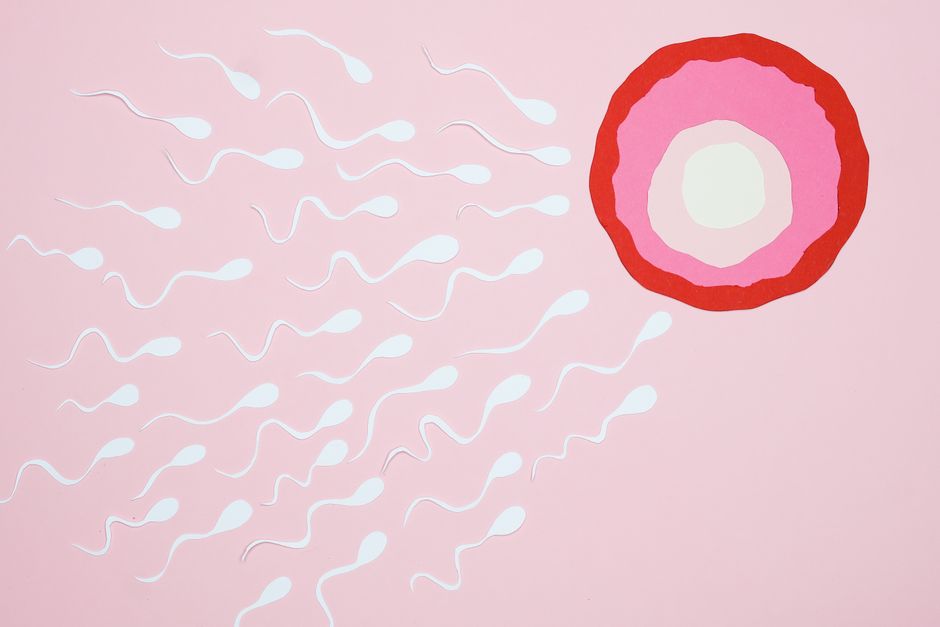
If you have ever felt a sharp twinge on one side of your lower belly, roughly two weeks after your period, you have likely felt ovulation pain. Doctors call it mittelschmerz — German for “middle pain” — and it happens when a mature egg is released from an ovary. The discomfort is real, it is common, and in most cases it is a normal part of the menstrual cycle rather than a sign that something is wrong.
Why Does Ovulation Hurt?
The short answer: the pain comes from the events surrounding the release of an egg, not from the egg itself. The egg has no nerve endings, so it cannot hurt on its own. What you feel is the tissue around it.
Each month, a fluid-filled sac called a follicle grows on one ovary. When the egg inside is mature, the follicle ruptures and releases it. That rupture stretches and irritates the surface of the ovary. A small amount of blood and follicular fluid also leaks into the pelvic cavity, and that fluid can irritate the lining of the abdomen. Both of these events can produce a dull ache, a sharp pinch, or a cramp on the side where the egg was released.
Some researchers think the muscular contractions of the fallopian tube and ovary play a role too. The ovary and tube have smooth muscle, and they move to help guide the egg. That movement may add to the sensation.
What ovulation pain is not is a sign that your ovary is damaged or that your hormones are out of balance. For most people, it is simply the body doing something it does every cycle.
When Does Ovulation Pain Happen in Your Cycle?
Ovulation typically occurs about 14 days before your next period starts, not necessarily on day 14 of your cycle. This is a detail many people get wrong.
If you have a 28-day cycle, ovulation usually falls around day 14. If your cycle is 35 days, it is more likely around day 21. If your cycle is 24 days, it may be closer to day 10. The timing of ovulation is tied to the end of your cycle, not the beginning.
The pain itself can show up in a few patterns:
- A sudden sharp twinge that lasts a few minutes to a few hours
- A dull ache that lingers for a day or two
- Mild cramping that comes and goes over 24 to 48 hours
Some people feel it every cycle. Others feel it only occasionally. Some never feel it at all. All of these are normal variations.
What Does Ovulation Pain Feel Like and Where Do You Feel It?
Most people describe it as a one-sided pain in the lower abdomen, roughly halfway between the belly button and the hip bone. It can be sharp, dull, crampy, or a mix. Some feel it on the right side one month and the left the next, which makes sense — the ovaries usually take turns releasing an egg.
Less commonly, ovulation pain can be felt:
- In the lower back
- In the pelvic area closer to the center
- Radiating down into the thigh
Some people also notice light spotting or a small amount of discharge around the same time. A change in cervical mucus — becoming clearer, wetter, and stretchy — often happens near ovulation too, though it is not a reliable stand-alone sign of exactly when ovulation occurs.



How Can You Tell Ovulation Pain From Other Causes?
Timing is the biggest clue. Ovulation pain tends to show up in the middle of your cycle, about two weeks before your period. It usually lasts a short time and resolves on its own.
Other conditions can cause similar pain, and it is worth knowing the differences:
| Condition | Typical timing | Typical pattern |
|---|---|---|
| Ovulation pain | Mid-cycle, ~14 days before period | One-sided, brief, resolves in hours to 2 days |
| Appendicitis | Any time | Right lower belly, worsens, often with fever or nausea |
| Ovarian cyst | Any time | Can be sharp and sudden, sometimes persistent |
| Endometriosis | Often with periods | Cyclical, can be severe, may worsen over time |
| Ectopic pregnancy | After a missed period | Sharp, one-sided, can be severe, needs urgent care |
If the pain is severe, lasts more than a couple of days, comes with fever, vomiting, or fainting, or happens after a missed period, it is not ovulation pain and you should get medical care. That distinction matters. Ovulation pain is uncomfortable but not dangerous. Some of the other causes on that list can be.
Is Ovulation Pain a Sign of Fertility?
Ovulation pain means an egg was released, which means ovulation happened. In that narrow sense, it can be a rough signal that you are in your fertile window.
But it is not a reliable method of tracking fertility on its own. Here is why: the pain can occur before, during, or after the actual release of the egg. Sperm can survive in the reproductive tract for several days, while the egg lives only about 12 to 24 hours after release. So by the time you feel the twinge, the window may already be closing.
If you are trying to conceive or avoid pregnancy, ovulation pain alone is not enough. Methods like basal body temperature tracking, cervical mucus monitoring, ovulation predictor kits, or clinical guidance from a healthcare provider are more dependable.
What Helps With Ovulation Pain?
For mild discomfort, most people do not need treatment. The pain passes on its own. If it is bothersome, a few general measures are commonly used:
- A warm bath or heating pad on the lower belly
- Over-the-counter pain relievers such as ibuprofen or acetaminophen, used according to the label
- Rest or light activity, whichever feels better
If you take ibuprofen regularly around ovulation, it is worth knowing that some research suggests NSAIDs may interfere with ovulation in certain cases. This is not a reason to avoid them for occasional pain, but if you are trying to conceive and using them every cycle, it is a reasonable thing to discuss with your doctor.
Hormonal birth control is sometimes prescribed when ovulation pain is severe or disruptive. Combined oral contraceptives prevent ovulation, so if there is no ovulation, there is no ovulation pain. This is a well-established effect, though it is a decision to make with a clinician who knows your health history.
There is no strong evidence that supplements, herbal remedies, or dietary changes reduce ovulation pain. If you see products marketed for this, treat the claims with caution.
When Should You See a Doctor?
Ovulation pain is usually harmless. But pelvic pain has many possible causes, and some of them need prompt attention. See a healthcare provider if:
- The pain is severe or getting worse
- It lasts more than two or three days
- You have fever, chills, vomiting, or fainting
- You have pain during sex or when urinating
- You have unusual bleeding or discharge
- The pain pattern changes from what is normal for you
- You might be pregnant
Tracking when the pain happens, how long it lasts, and what it feels like can help your doctor figure out what is going on. A simple calendar or notes app is enough.
Does Ovulation Pain Mean Something Is Wrong?
No. For most people, ovulation pain is a normal sensation that comes with a normal cycle. It does not mean your ovaries are unhealthy, your hormones are off, or that you cannot get pregnant.
That said, “normal” does not mean “ignore it.” Pain is information. If it is new, severe, or different from what you usually experience, that change is worth paying attention to. The body is usually consistent, and when it is not, it is worth asking why.
One thing that surprises many people: the side of the pain does not always match the side of the ovary that released the egg. The discomfort can be referred from nearby structures, so the location is a rough guide at best. It is a clue, not a map.
Frequently Asked Questions
How long does ovulation pain usually last?
Most ovulation pain lasts from a few minutes to about 24 to 48 hours. If it continues beyond two or three days, it is likely something else and worth checking with a doctor.
Can you get pregnant on the day you feel ovulation pain?
It is possible, but the timing is not guaranteed. The egg lives only about 12 to 24 hours after release, so the fertile window may already be closing by the time you feel the pain.
Is ovulation pain always on the same side?
No. The ovaries usually alternate, so the pain often switches sides from month to month. Some people notice it more on one side than the other, which can be normal.
Does ovulation pain mean you are more fertile?
It means ovulation occurred, which is necessary for pregnancy. But it does not indicate how fertile you are or guarantee that conception will happen.
