
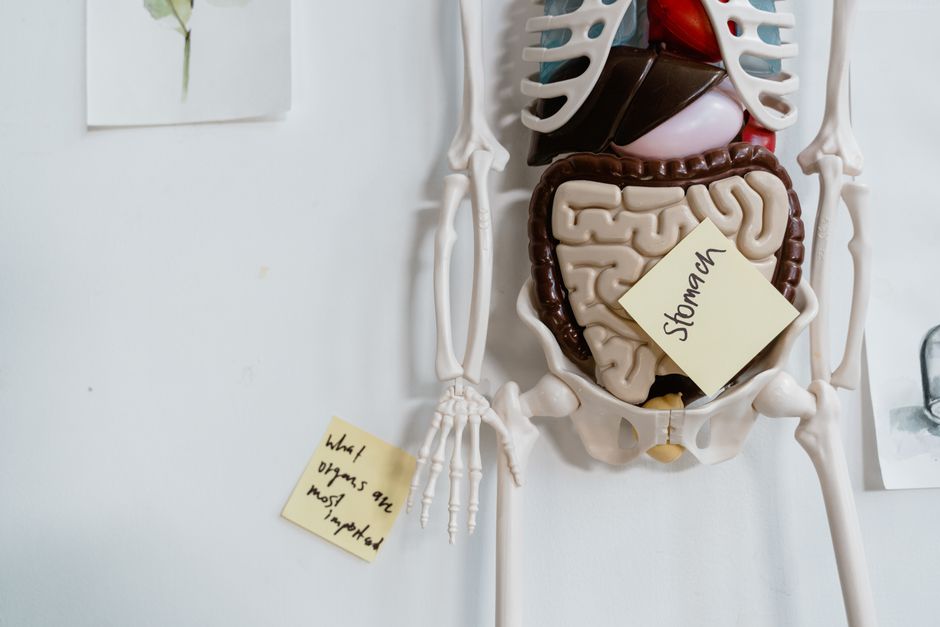
Look down while standing relaxed in front of a mirror. If one side of your stomach sits out farther than the other, you are almost certainly seeing normal anatomy, not a sign that something is wrong. The abdomen is not a symmetrical container. Your liver fills the upper right side, your spleen sits on the upper left, and your intestines loop and fold differently on each side. On top of that, most people have a slight natural curve in the spine and carry their weight unevenly, which shifts how the belly looks from the outside.
In other words, a small difference between left and right is expected. The question worth asking is whether the difference is new, growing, painful, or accompanied by other symptoms. That distinction matters far more than which side looks bigger.
Why Does One Side Of My Stomach Stick Out More?
Because the organs underneath are not arranged symmetrically. The liver is the largest internal organ and occupies most of the upper right abdomen, which is why the right upper belly often looks fuller, especially after a large meal. The stomach and spleen sit on the left. The colon frames the abdomen like an upside-down U, and the descending colon on the left side tends to hold more stool than the right, which can create a visible bulge on that side.
Add the musculoskeletal layer and the picture gets clearer. The spine has a gentle side-to-side curve called scoliosis in some people, and even a mild curve changes how the abdominal wall projects. Pelvic tilt, leg length differences, and habitual posture — leaning on one hip, carrying a bag on one shoulder — all pull the trunk slightly off-center. Fat distribution is rarely perfectly even either. Fat cells do not deposit in mirror-image patterns, and the way skin and fascia drape over the underlying organs varies from person to person.
None of this is a defect. It is what a human torso looks like when you stop expecting it to be symmetrical.
When Is A One-Sided Belly Bulge Normal?
It is normal when the difference is small, stable over time, painless, and changes with posture, breathing, or eating. Many people notice that one side looks flatter when they lie down and fuller when they stand. That is gravity and organ position at work, not a medical problem.
Several everyday factors make the asymmetry more visible:
- Bloating from gas or digestion, which can be uneven because gas collects in different loops of bowel
- Constipation, which often causes fullness on the left where the descending colon sits
- Muscle development, since the abdominal muscles on one side may be larger or tighter than the other
- Pregnancy or recent pregnancy, where the abdominal wall stretches and can heal unevenly
- Prior surgery, where scar tissue changes how the abdominal wall moves and looks
A useful rule: asymmetry that has been there for years and has not changed is rarely a concern. Asymmetry that is new is worth a conversation with a clinician.
What Causes A Bulge That Is Not Just Anatomy?
A true one-sided bulge can have a structural cause. The most common is a hernia, where part of the intestine or abdominal tissue pushes through a weak spot in the abdominal wall. Hernias usually appear as a soft lump that may disappear when you lie down and become more obvious when you cough, strain, or stand. They can be tender.
Other structural causes include an enlarged organ, a fluid collection, a cyst, or a mass. These are far less common than hernias or simple anatomy, but they are the reason a new or growing bulge deserves evaluation rather than reassurance.
Some clues point away from normal anatomy and toward something that needs a doctor’s attention:
- The bulge is new or has grown over weeks to months
- It is painful, tender, or warm to the touch
- It comes with fever, vomiting, blood in the stool, or unexplained weight loss
- It does not change when you lie down or change position
- It is accompanied by changes in bowel habits that last more than a few weeks
These signs do not confirm a diagnosis. They simply mean the asymmetry should be looked at by someone who can examine you and, if needed, order imaging.





Could It Be Bloating Or Gas Instead?
Often, yes. Bloating is one of the most common reasons a belly looks uneven on a given day. Gas does not distribute evenly through the intestines. It collects in whichever segment is slowest to move it along, and that segment can be on one side. The result is a belly that looks lopsided for a few hours and then returns to normal.
Bloating that comes and goes with meals, improves after passing gas or a bowel movement, and does not come with pain or other symptoms is usually not a sign of disease. Bloating that is persistent, painful, or paired with weight loss, vomiting, or a change in bowel habits is different. That pattern warrants medical evaluation rather than dietary guesswork.
One clarification worth making: bloating and abdominal fat are not the same thing. Bloating is gas and fluid in the gut, and it shifts hour to hour. Fat is stored tissue and changes slowly. If one side looks fuller at night and flatter in the morning, that is more consistent with gas than with fat.
Does The Side You Sleep On Matter?
Not in any way that would permanently change the shape of your abdomen. Sleeping position affects how fluid shifts in the body overnight and can make the belly look slightly different in the morning, but it does not reshape the abdominal wall or redistribute fat to one side.
What does affect appearance is posture and movement over the long term. Sitting with a consistent lean, favoring one leg, or holding the trunk in a fixed position can make one side of the abdominal muscles tighter and the other looser. That is a muscular and postural effect, not an organ effect, and it tends to respond to general movement and strengthening rather than to any specific fix.
Should You Worry About A Lopsided Stomach?
Most of the time, no. A mild, stable difference between the two sides is normal and does not need treatment. The body is not built symmetrically, and expecting the abdomen to look even is expecting something the anatomy does not deliver.
The situation changes when the asymmetry is new, growing, painful, or accompanied by other symptoms. In that case, the right step is a medical evaluation, not a search for exercises or diets that promise to even things out. No exercise targets one side of the belly to match the other, and no diet redistributes fat to a chosen location. Claims that a specific routine can “fix” a one-sided belly are not supported by evidence.
If you are unsure whether what you are seeing is normal, the simplest test is time and observation. Note whether it changes with position, whether it has changed over months, and whether it comes with any other symptoms. Bring those observations to a clinician. That information is more useful than any single measurement.
Frequently Asked Questions
Is it normal for one side of my stomach to stick out more?
Yes, a mild and stable difference between the two sides is normal because the organs inside the abdomen are not arranged symmetrically. The liver on the right and the spleen and stomach on the left create natural unevenness.
Can a hernia cause one side of the belly to bulge?
A hernia is one of the more common structural causes of a one-sided bulge, and it often becomes more visible when you cough, strain, or stand. If a new lump appears or is painful, it should be examined by a clinician.
Does sleeping on one side make your stomach lopsided?
No. Sleeping position can change how fluid shifts overnight, but it does not permanently reshape the abdomen or move fat to one side.
When should I see a doctor about a one-sided belly bulge?
See a clinician if the bulge is new, growing, painful, or comes with fever, vomiting, blood in the stool, or unexplained weight loss. A stable difference that has been present for years without other symptoms is rarely a concern.
