
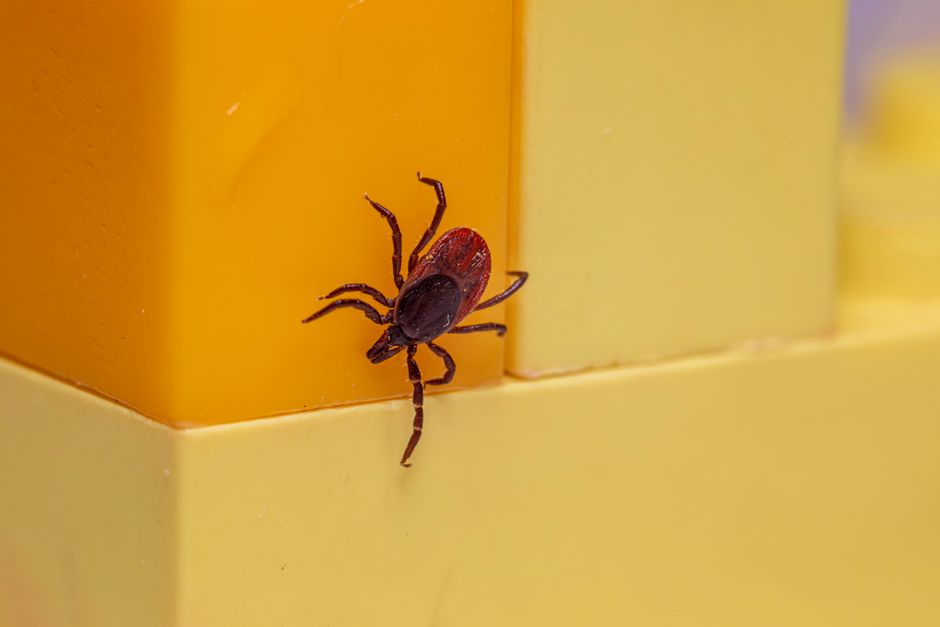
A tick bite hurts because the tick’s mouthparts are cutting into your skin and, in some cases, because your immune system is reacting to proteins in the tick’s saliva. Most bites cause only a small, itchy bump that clears up on its own. The bite becomes a concern when it brings a rash, fever, or flu-like symptoms in the days or weeks that follow — those are signals to see a doctor.
Ticks are not insects. They are arachnids, close relatives of spiders and mites, and that matters for understanding the bite. Their mouthparts are built for anchoring into skin and feeding slowly over days, not for a quick sting. That is why a bite can stay sore or itchy longer than a mosquito bite.
Why Does My Tick Bite Hurt And When Should You Worry?
Most tick bites do not hurt much at all, and many people never feel the bite happen. When pain does occur, it usually comes from two sources: physical damage to the skin from the tick’s mouthparts, and an immune reaction to saliva.
A tick does not jab and withdraw. It inserts a structure called the hypostome — a barbed, tube-like part of its mouth — and anchors itself. It also secretes a cement-like substance that helps it stay attached. Removing a tick pulls against that anchor, which is why the spot can be tender afterward.
Tick saliva contains proteins and mild anticoagulants that keep blood flowing while the tick feeds. Your immune system recognizes these as foreign. The result is a small red bump, itching, and sometimes a bit of swelling — a normal local reaction, similar in principle to a mosquito bite but often slower to appear.
Some people have a stronger local allergic response to tick saliva and develop more swelling or itching than usual. A rare condition called tick-borne allergy to red meat (alpha-gal syndrome) is linked to certain tick bites and can cause delayed allergic reactions after eating red meat. That is a distinct immune phenomenon, not the same as the bite site itself hurting.
What Does a Normal Tick Bite Look and Feel Like?
A typical uncomplicated tick bite leaves a small red spot or bump at the site. It may itch. It may be slightly tender for a day or two. There is often no other symptom at all.
The bite mark itself is not a reliable way to identify which tick bit you or whether it carried a disease. Different tick species and different people produce different-looking reactions. A small red bump is common and usually harmless.
One clarification worth knowing: the well-known “bullseye” rash of Lyme disease is not caused by the bite wound. It is a later skin response to the bacteria spreading, and it typically appears days to weeks after the bite — not immediately. A red mark within hours of a bite is usually just the local reaction, not the Lyme rash.
When Should You Worry About a Tick Bite?
The bite itself is rarely the danger. The concern is what the tick may have transmitted. Watch for symptoms in the days and weeks after a bite, especially if you were in an area where ticks are common.
Seek medical care if you notice any of the following:
- A rash that expands over days, especially one that looks like a bullseye or a solid red patch that grows
- Fever, chills, or feeling generally unwell
- Fatigue that is unusual for you
- Muscle aches or joint pain
- Headache
- Swollen lymph nodes
- Facial drooping, confusion, or severe headache (these are emergency signs)
These symptoms can overlap with many common illnesses, so a tick bite in your recent history is important information to give a doctor. Tell them when and where you may have been bitten, even if you never saw a tick.
Not every tick carries disease, and not every bite transmits one. But because early treatment of some tick-borne illnesses is more effective, it is reasonable to contact a healthcare provider early rather than wait for symptoms to worsen.
How Do You Remove a Tick Properly?
Remove the tick as soon as you find it. The longer it stays attached, the greater the chance it can transmit certain pathogens — though transmission timing varies by disease and tick species.
Use fine-tipped tweezers. Grasp the tick as close to the skin as possible and pull straight up with steady, even pressure. Do not twist or jerk. Do not crush the tick. Do not apply petroleum jelly, nail polish, alcohol, or a hot match — these folk methods are not supported by evidence and can cause the tick to release more saliva.
After removal, clean the bite area and your hands with rubbing alcohol or soap and water. Save the tick in a small container or sealed bag if you can, and note the date. Some health departments can identify the species, which helps assess risk.
If part of the tick’s mouthparts remains in the skin and you cannot remove it easily, leave it and let the skin heal. Attempting to dig it out can cause more damage than the fragment itself. Watch for signs of infection.
Can You Prevent Tick Bites?
Prevention is the most reliable way to reduce tick-borne illness risk. The evidence for protective measures is strongest for avoiding tick habitat and doing thorough tick checks.
Practical steps with reasonable support:
- Walk in the center of trails and avoid tall grass and brush where ticks wait
- Wear light-colored clothing so ticks are easier to spot
- Tuck pants into socks in high-risk areas
- Use EPA-registered insect repellents according to label directions
- Shower soon after being outdoors and do a full-body tick check
- Check children, pets, and gear thoroughly
There is no vaccine currently available for Lyme disease in humans in the United States. Prevention relies on avoidance and prompt removal.
Does a Tick Bite Always Mean Disease?
No. Most tick bites do not transmit disease. Many ticks are uninfected, and even an infected tick does not always pass on the pathogen, especially if removed quickly.
The risk depends on the tick species, the region, how long it was attached, and whether the tick carried a pathogen. This is why knowing the local tick situation matters — risk varies significantly by geography.
It is also worth separating two ideas: the pain or itch of the bite and the risk of disease. A bite that hurts more is not necessarily more dangerous, and a bite that never hurt can still transmit infection. The two are not reliably linked.
What About a Lingering Itchy Bump?
Some people develop a persistent itchy bump that lasts for weeks after a tick bite. This is often a local hypersensitivity reaction to tick saliva or retained mouthpart fragments. It is usually not a sign of infection on its own.
However, a bump that grows, becomes increasingly red, or is accompanied by systemic symptoms should be evaluated. A healthcare provider can distinguish a harmless reaction from something that needs attention.
Over-the-counter hydrocortisone or an oral antihistamine may ease itching, but check with a pharmacist or clinician, especially for children or if you have other health conditions. These treat the symptom, not any underlying infection.
Frequently Asked Questions
How long after a tick bite do symptoms appear?
Symptoms of tick-borne illness usually appear within days to a few weeks after the bite, depending on the disease. Lyme disease rash typically shows up within about 3 to 30 days. Watch closely during this window.
Should I see a doctor after every tick bite?
Not necessarily. A bite with no symptoms and a tick removed promptly often needs only monitoring. Contact a provider if you develop a rash, fever, or flu-like symptoms, or if you are unsure.
Can a tick bite hurt for days?
Yes, mild tenderness or itching can last several days, especially if the tick was firmly attached. Pain that worsens, spreads, or comes with other symptoms should be checked.
What does an infected tick bite look like?
There is no single appearance. A spreading rash, especially a bullseye pattern, is a classic sign of Lyme disease, but many infections cause no rash at all. Systemic symptoms matter just as much as the skin.
