
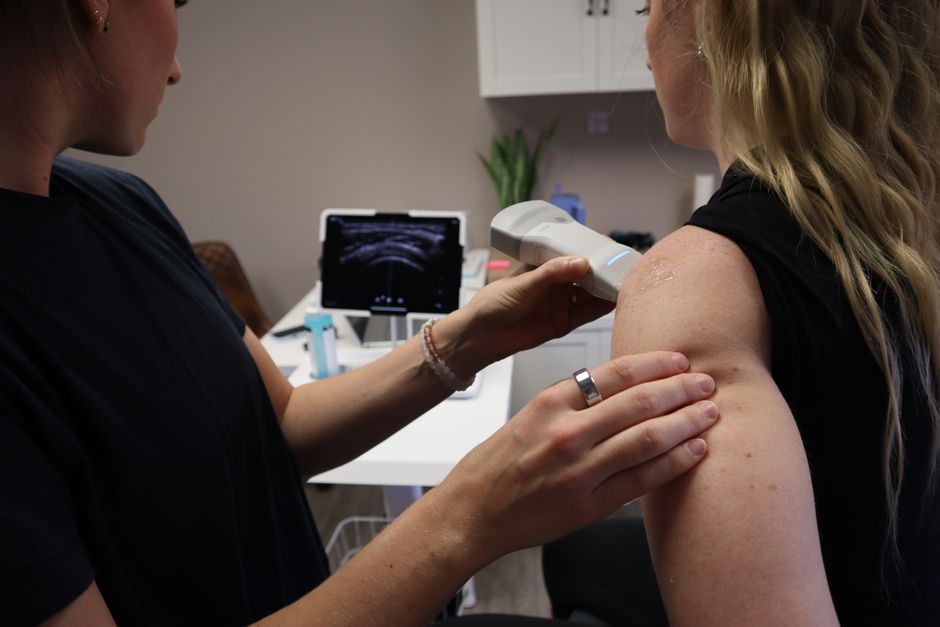
Tendon pain is one of the most common reasons people visit a doctor for a muscle or joint problem, and one of the most misunderstood. The short answer: most ongoing tendon pain is not caused by active inflammation. It is caused by a tendon that has become structurally worn and weakened over time. Inflammation does play a role in sudden injuries and in the early hours after a strain, but it is usually not what is driving pain that has lingered for weeks or months.
That distinction matters more than most people realize. It changes what treatments make sense, what recovery looks like, and why rest alone often fails to fix the problem.
What Is the Difference Between Tendon Inflammation and Tendon Damage?
Tendinitis means inflammation of a tendon. Tendinosis means degeneration of the tendon tissue without significant inflammation. They describe two different processes, and the second one is far more common in chronic tendon pain.
In acute tendinitis, the tendon is genuinely inflamed. This typically follows a sudden overload, a direct injury, or a sharp increase in activity. Immune cells move into the area, blood flow increases, and the tendon becomes swollen, warm, and painful. This phase is real, and it is usually short-lived.
In tendinosis, the picture is different. The tendon has been repeatedly loaded beyond what it can handle, and the tissue has started to break down faster than the body can repair it. Under a microscope, the collagen fibers are disorganized rather than neatly aligned. The tendon may be thicker or have small tears. What is often missing is the crowd of inflammatory cells you would expect in true inflammation.
This is why the older term “tendinitis” has largely fallen out of favor for long-term tendon problems. Many clinicians now use the broader term tendinopathy, which covers tendon pain and breakdown without assuming inflammation is the cause.
Why Does My Tendon Hurt If There Is No Inflammation?
Pain does not require inflammation. The nervous system can generate a pain signal from a tendon that is structurally compromised, even when no inflammatory process is active.
When tendon tissue breaks down, the surrounding nerves become more sensitive. Small mechanical changes in the tendon, changes in how the tissue handles load, and signals from the local chemical environment can all activate pain fibers. Over time, the nervous system itself can become more reactive in that area, so a movement that once felt fine now registers as painful.
This helps explain a pattern many people notice. The tendon hurts most when it is first loaded after rest, then it may ease as activity continues, and it often aches again afterward. That pattern is not typical of classic inflammation, which tends to be more constant and is often worse with heat, swelling, and rest.
It also explains why pain and tissue condition do not always match. Some people with visible tendon changes on imaging have no pain at all, and some people with significant pain have relatively modest changes on a scan. Pain is a complex output of the nervous system, not a simple readout of tissue damage.
How Can You Tell Which One You Have?
You usually cannot tell on your own with certainty, and that is an honest limitation. A physical exam and sometimes imaging can help, but the two conditions overlap and the timeline often gives the clearest clue.
Acute tendinitis tends to follow a clear trigger, comes on within hours to a few days, and is accompanied by swelling or warmth. Chronic tendinopathy tends to build gradually over weeks or months, is tied to a repetitive activity or a recent increase in training, and produces pain that is worse with loading and often stiff in the morning.
A few general patterns can help you think about it:
- Sudden onset after a specific injury or a single hard effort points more toward acute inflammation or a tear.
- Gradual onset over weeks, linked to repetitive use, points more toward tendinopathy.
- Morning stiffness that eases with movement is common in tendinopathy.
- Swelling, warmth, and redness are more consistent with inflammation or infection.
One important exception: if a tendon becomes red, hot, and swollen along with fever or you cannot bear weight or use the limb at all, that needs prompt medical evaluation. It could signal infection or a significant tear, and those are not conditions to manage at home.





Why Does the Treatment Differ?
Because the underlying problem is different, the approaches differ. Treating a worn tendon as if it were inflamed often leads to frustration, and treating an inflamed tendon as if it were worn can delay proper care.
For acute inflammation, the focus is on calming the acute response and protecting the tissue. Relative rest, ice in the early period, and avoiding the movement that triggered it are common. Anti-inflammatory medications are widely used here, and for short-term acute inflammation they can reduce pain and swelling. That said, the evidence on whether they speed long-term healing is mixed, and some research suggests they may not improve tendon healing and could interfere with it in certain contexts. This is a genuine area of debate, not a settled question.
For chronic tendinopathy, the picture is different. Anti-inflammatory drugs may ease pain in the short term, but they do not address the underlying tissue breakdown, and relying on them long term is not a fix. The treatment that has the strongest support is progressive loading exercise — controlled, gradually increasing stress on the tendon that prompts it to rebuild and tolerate load again. This is sometimes called eccentric training or heavy slow resistance training, depending on the protocol.
This can feel counterintuitive. Rest feels safer when something hurts. But for a degenerated tendon, complete rest often makes it weaker and more sensitive over time, while careful loading is what drives adaptation. The key word is careful. Loading a tendon too aggressively, too soon, tends to flare it.
Does the Tendon Actually Heal?
Tendons heal slowly, and in chronic cases they often do not return to their original state. This is an important thing to be honest about.
Tendons have limited blood supply compared with muscle, which is part of why they heal slowly. In tendinopathy, the tissue can improve with the right loading program, and many people see meaningful reductions in pain and gains in function. But the structural changes may not fully reverse. What often improves is the tendon’s capacity to handle load and the nervous system’s sensitivity in that area, which together reduce pain.
Recovery timelines vary widely and depend on the tendon involved, how long the problem has been present, and how consistently the loading program is followed. Some people improve in a matter of weeks. Others take several months. There is no reliable way to predict an individual timeline, and anyone who promises a fixed recovery window is overstating what is known.
What About Injections and Other Treatments?
A range of treatments exist beyond exercise, and the evidence for them varies from moderate to weak.
Corticosteroid injections can reduce pain in the short term for some tendon problems. The catch is that they do not appear to improve long-term outcomes, and repeated use may weaken the tendon. Some clinicians use them to create a window for rehabilitation, not as a standalone cure.
Platelet-rich plasma, or PRP, has been studied for several tendon conditions. Results have been mixed, and it is not established as reliably effective across the board. Some studies suggest benefit in certain tendons, while others show little difference from placebo.
Shockwave therapy and other physical treatments have some supporting evidence for specific tendons, but the quality of that evidence varies. No single add-on treatment has been shown to outperform a well-designed loading program for chronic tendinopathy.
Surgery is generally reserved for cases that do not improve with conservative care over a substantial period. It is not a first-line option and does not guarantee a better result than exercise.
The honest summary is this: for chronic tendon pain, exercise-based loading has the most consistent support. Most other treatments are either adjuncts, debated, or supported by weaker evidence. Anyone presenting a single injection or device as a proven cure is going beyond what the research shows.
What Should You Actually Do?
Start by matching your approach to what you are dealing with. If this is a fresh injury with swelling and a clear trigger, protect the area, ease off the aggravating activity, and give it a short period to settle. If it has been grumbling for weeks or months, the answer is usually not more rest but the right kind of gradual loading.
Do not push through sharp pain, and do not assume that pushing harder will speed things up. Tendons respond to progressive, tolerable stress, not to punishment. A physical therapist can help design a loading plan matched to the specific tendon, which matters because different tendons tolerate different programs.
If the pain is severe, if you cannot use the limb, if there is fever or spreading redness, or if it is not improving after a reasonable period of self-care, see a clinician. Those signs point to something that needs a proper evaluation.
Understanding whether inflammation or damage is driving your pain is not a technicality. It is the difference between treatments that help and treatments that waste your time.
Frequently Asked Questions
Is tendon pain always caused by inflammation?
No. Most long-term tendon pain is driven by tendon degeneration and increased nerve sensitivity rather than active inflammation. Inflammation is more typical of sudden injuries and the early phase after a strain.
How long does tendonitis take to heal?
Acute tendon inflammation often settles within days to a few weeks with relative rest and load management. Chronic tendinopathy typically takes longer, often weeks to months, and timelines vary too widely to predict for any one person.
Should I rest a painful tendon or keep moving it?
For acute inflammation, a short period of relative rest helps. For chronic tendinopathy, complete rest often makes things worse, and progressive loading exercise is the approach with the strongest evidence.
Do anti-inflammatory pills help tendon pain?
They can reduce short-term pain and swelling, especially in acute cases. For chronic tendinopathy they do not address the underlying tissue problem, and the evidence on whether they help long-term healing is mixed.
