

That hollow, gnawing ache that shows up hours after your last meal has a name and a mechanism. When your stomach is empty, it keeps working. Strong muscular contractions sweep through it, and the acid inside has nothing to buffer it. That combination is what most people feel as hunger pain. It is normal up to a point. When the pain is sharp, wakes you at night, or improves right after you eat and then returns, it can point to something that needs medical attention.
Why Does My Stomach Hurt When Its Empty?
Your stomach does not shut down between meals. Roughly every couple of hours during fasting, it produces a wave of strong contractions known as the migrating motor complex. This is sometimes called the “housekeeper” of the gut. Its job is to sweep leftover food, fluid, and bacteria down toward the small intestine.
Those contractions are powerful. People often describe them as a gnawing or cramping sensation in the upper middle abdomen. At the same time, the stomach lining keeps releasing acid. With no food present to absorb and dilute it, that acid sits against the stomach wall.
In a healthy stomach, the lining is built to handle acid. But if the protective layer is weakened, or if acid production is high, the same acid that normally causes no trouble starts to irritate. That irritation is what turns ordinary hunger into pain.
So the short answer is this: an empty stomach hurts because it is contracting hard and because acid is present without food to buffer it. Whether that is harmless or a sign of disease depends on the pattern, the location, and what makes it better or worse.
What Is The Difference Between Hunger Pains And Something More Serious?
Ordinary hunger is a mild, diffuse sensation. It builds gradually, sits in the upper middle of your belly, and fades within minutes of eating. It does not wake you from sleep, and it does not come with vomiting, weight loss, or blood.
Pain that behaves differently deserves a closer look. Clinicians pay attention to specific patterns because different conditions produce different timing.
- Pain that improves with food and returns hours later. This pattern is classic for peptic ulcer disease, particularly ulcers in the first part of the small intestine. Eating neutralizes acid briefly, then the stomach makes more.
- Pain that gets worse with food. This can suggest a gastric ulcer or gallbladder problems, depending on the location.
- Pain that wakes you at night. Nighttime pain is a recognized warning sign for ulcer disease and should be evaluated.
- Pain with vomiting, black stools, or unintended weight loss. These are red flags that require prompt medical assessment.
Location matters too. Pain in the upper middle abdomen points toward the stomach or the first part of the small intestine. Pain in the upper right, especially after fatty meals, points more toward the gallbladder. Pain that is crampy and moves around can come from the intestines.
You cannot reliably diagnose yourself from the pattern alone. But the pattern is real information, and it is worth describing to a doctor in detail.
Can An Empty Stomach Cause Acid Reflux Or Gastritis?
An empty stomach does not cause these conditions on its own, but it can make them feel worse. The relationship is worth understanding clearly.
Gastritis means inflammation of the stomach lining. When the lining is inflamed, it is more sensitive to acid. An empty stomach means acid is present without food to dilute it, so the irritation feels stronger. This is why people with gastritis often report that hunger itself is painful.
Gastroesophageal reflux is different. It happens when stomach contents move backward into the esophagus. The esophagus, unlike the stomach, has no protective mucus layer. Acid that reaches it causes burning. Reflux is often worse after meals and when lying down, but some people notice it when the stomach is empty and contracting.
These are separate problems with overlapping symptoms. A doctor distinguishes them through history, examination, and sometimes endoscopy, which is a camera test that looks directly at the stomach lining.



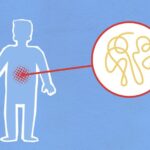

What Is Helicobacter Pylori And Why Does It Matter Here?
Helicobacter pylori is a bacterium that lives in the stomach lining of a large share of the world’s population. It is one of the most common chronic infections in humans. Most people who carry it never develop symptoms. Others develop gastritis or peptic ulcers.
The connection to empty-stomach pain is direct. H. pylori damages the protective layer of the stomach and the first part of the small intestine. That damage makes the tissue more vulnerable to acid. The result is often the classic pattern of pain when hungry, relief with eating, and pain returning a few hours later.
Testing is straightforward. It can be done through a breath test, a stool test, or a blood test, though blood tests cannot distinguish current infection from past exposure. If H. pylori is found, it is treatable with a combination of antibiotics and acid-suppressing medication. The specific regimen and duration should come from a clinician, because treatment guidelines are updated periodically and resistance patterns vary by region.
This is one of the more useful clarifications in this whole topic. Many people assume hunger pain is just something to live with. When H. pylori is the cause, treating the infection can resolve the pain entirely.
When Should You See A Doctor About Empty Stomach Pain?
See a doctor if the pain is severe, wakes you at night, or has changed from its usual pattern. Also seek care if you notice any of the following:
- Vomiting blood or material that looks like coffee grounds
- Black, tarry stools, which indicate digested blood
- Unintended weight loss
- Difficulty swallowing
- Pain that no longer responds to food or antacids
- Anemia found on a blood test
These signs do not confirm a specific diagnosis, but they are recognized reasons to be evaluated rather than to wait. Bleeding from an ulcer, for example, can be serious and needs urgent care.
For milder, long-standing hunger pain without red flags, a routine appointment is reasonable. Bring notes about when the pain occurs, what makes it better or worse, and how long it has been going on. That history often guides the next step more than any single test.
What Helps Empty Stomach Pain?
What helps depends entirely on the cause, which is why self-treatment has limits. For ordinary hunger, eating resolves it. For an ulcer or gastritis, food may help briefly but does not treat the underlying problem.
Some general measures are widely recommended by clinicians for stomach pain related to acid:
- Avoiding known triggers such as alcohol, tobacco, and regular use of NSAID pain relievers like ibuprofen and naproxen, which can damage the stomach lining
- Eating smaller, more frequent meals rather than large ones
- Avoiding meals close to bedtime if reflux is a factor
- Limiting caffeine and spicy foods if they reliably make symptoms worse
These steps reduce irritation for many people. They are not a substitute for diagnosing the cause. Over-the-counter acid reducers can ease symptoms, and some clinicians recommend them while testing is arranged. But masking pain without identifying its source can delay treatment for something like an ulcer or H. pylori infection.
One point worth stating plainly: a common belief holds that eating often will “soothe” an ulcer and let it heal. Food may relieve pain for a while, but it does not cure an ulcer. Only treating the underlying cause does.
How Do Doctors Figure Out The Cause?
Doctors start with your history. The timing of pain, its location, and what relieves it narrow the possibilities quickly. They will also ask about medications, alcohol use, smoking, and any family history of ulcers or stomach cancer.
From there, common steps include:
- Testing for H. pylori infection
- Blood tests to check for anemia or other abnormalities
- Acid-suppressing medication as a trial, sometimes called a test-and-treat approach
- Endoscopy, in which a thin tube with a camera examines the stomach and upper intestine directly, often with a biopsy
Endoscopy is not needed for everyone. It is usually reserved for people with warning signs, those over a certain age with new symptoms, or those whose pain does not improve with initial treatment. The decision rests on the full picture, not on any single symptom.
The good news is that most causes of empty-stomach pain are identifiable and treatable. The pattern your body is showing you is a clue, and it is worth following.
Frequently Asked Questions
Why does my stomach hurt more when it is empty?
An empty stomach still contracts and still produces acid, and with no food to buffer it, that acid can irritate the lining. This is normal for many people, but pain that is severe or follows a specific pattern can signal an ulcer or gastritis.
Is hunger pain a sign of an ulcer?
Pain that improves with eating and returns a few hours later is a classic pattern for peptic ulcer disease, especially ulcers in the small intestine. It is not proof on its own, so testing is needed to confirm the cause.
Can an empty stomach cause nausea?
Yes, an empty stomach can cause nausea in some people, particularly when acid irritation or strong contractions are present. Persistent nausea with pain, vomiting, or weight loss should be evaluated by a doctor.
When should I worry about stomach pain when hungry?
Worry is warranted if the pain wakes you at night, is severe, or comes with vomiting blood, black stools, trouble swallowing, or unintended weight loss. Those signs call for prompt medical care rather than waiting.
