
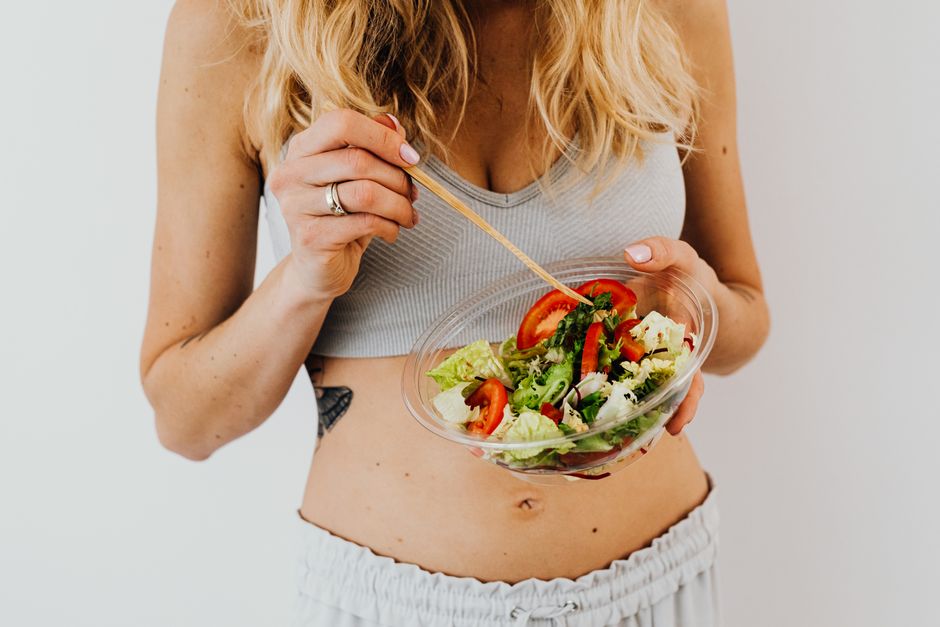
A salad is supposed to be the safe choice. So when your stomach swells up after eating one, it feels like a betrayal. The most common reason is not the lettuce itself but what comes with it: raw cruciferous vegetables, beans, and large portions of fiber that your gut has to ferment. That fermentation produces gas. In some people, that gas builds up faster than the body can clear it, and the belly distends.
There is a second layer to this that most people never hear. Bloating after salad is sometimes not about gas volume at all. It can be a motility problem, a salt-and-fluid shift, or a reaction to a specific sugar alcohol in a “healthy” dressing. Sorting out which one applies to you is the difference between guessing and actually fixing it.
Why Does My Stomach Bloat After I Eat Salad?
Gas production from fiber fermentation is the leading explanation, and it is well established in digestive physiology.
Your small intestine cannot digest most fiber. It passes into the colon, where bacteria break it down and release hydrogen, methane, and carbon dioxide as byproducts. This is normal and happens in everyone. The difference is how much gas is produced and how efficiently your gut moves it along.
Raw vegetables are a bigger trigger than cooked ones for a simple reason. Cooking softens plant cell walls, which makes fiber easier for gut bacteria to access in a controlled way and reduces the volume of fermentable material that arrives undigested. A large raw salad delivers a concentrated load of fermentable fiber all at once.
Two other mechanisms matter just as much:
- Rapid eating and swallowed air. Salads are often eaten fast, and chewing with your mouth open or drinking through a straw adds air to the stomach. This is called aerophagia.
- Fluid shifts in the gut. A high-fiber meal pulls water into the intestinal lumen. In people with sensitive guts, this alone can create a full, stretched feeling.
Bloating is a symptom, not a diagnosis. It describes a sensation of abdominal fullness or visible distension. The two do not always go together — you can feel bloated without your belly looking larger, and you can have visible distension with minimal discomfort.
Which Salad Ingredients Cause the Most Gas?
Certain vegetables and legumes are well documented gas producers because they contain specific fermentable carbohydrates.
The main culprits fall into a group called FODMAPs — fermentable oligosaccharides, disaccharides, monosaccharides, and polyols. These are short-chain carbohydrates that draw water into the gut and ferment quickly in the colon. Not everyone reacts to them, but people with irritable bowel syndrome are far more sensitive.
Common salad ingredients high in these compounds include:
- Chickpeas, kidney beans, and other legumes
- Raw onion and garlic, including in dressings
- Cauliflower, broccoli, and cabbage
- Mushrooms
- Apples, pears, and dried fruit
- Avocado in large amounts
Lettuce itself is generally low in fermentable carbohydrates. So is cucumber, carrot, and bell pepper. If a plain lettuce-and-cucumber salad bloats you, the fiber load is probably not the whole story.
Could It Be Something Other Than Gas?
Yes, and this is where most self-diagnosis goes wrong.
Bloating that comes with visible belly distension, especially later in the day, is often linked to abdominal distension from a motility or gut-brain interaction disorder rather than excess gas. Research using imaging has shown that in some people with IBS, the abdomen distends without a corresponding increase in gas volume. The diaphragm and abdominal wall muscles change position instead. That is a nervous system and muscle response, not a fermentation problem.
Other possibilities worth knowing about:
- Lactose intolerance. Creamy dressings, cheese, and yogurt-based dressings contain lactose.
- Sorbitol and other polyols. These appear in “sugar-free” dressings and some low-calorie products.
- Celiac disease. Bloating after meals is a common presentation, though it is not specific to salad.
- Small intestinal bacterial overgrowth (SIBO). This is a real condition, but diagnosis is debated and testing is imperfect. It is frequently over-diagnosed in wellness settings.
- Gastroparesis. Delayed stomach emptying can cause fullness and bloating, particularly with high-fiber meals.
If bloating is new, persistent, or comes with weight loss, blood in stool, or vomiting, that warrants medical evaluation rather than dietary experimentation.





Does Washing or Cooking Vegetables Help?
Cooking helps. Washing does not.
Washing removes dirt and pesticide residue. It does not remove fiber or fermentable carbohydrates, because those are structural components of the plant itself. This is a common misconception worth correcting.
Cooking, on the other hand, does change the picture. Heat breaks down cell walls and, in the case of legumes, reduces some fermentable compounds. Cooked broccoli, for example, tends to cause less gas than raw broccoli for many people. Roasting, steaming, or sautéing your salad vegetables is a reasonable experiment.
If you want to keep eating raw salads, portion size matters more than anything else. A small side salad is a very different fiber load than a large bowl with six different raw vegetables and a cup of chickpeas.
How Can You Reduce Salad-Related Bloating?
Start by changing one variable at a time so you can actually identify the trigger.
Practical steps that are supported by general digestive guidance:
- Shrink the portion. Halve your usual salad for a week and see what changes.
- Cook some of the vegetables. A mix of raw greens and cooked vegetables lowers the total fermentable load.
- Chew slowly and eat without rushing. This reduces swallowed air.
- Check your dressing. Onion, garlic, honey, and sugar alcohols are common hidden triggers.
- Rinse canned beans thoroughly. This removes some of the oligosaccharides that leach into the liquid.
- Spread fiber across the day rather than concentrating it in one meal.
What does not have a strong evidence base: digestive enzyme supplements marketed for bloating. Some products contain alpha-galactosidase, which breaks down certain legume sugars, and there is limited evidence for that specific enzyme with bean-heavy meals. Most other “bloat relief” supplements have not been confirmed in large human trials. Be skeptical of anything promising fast, broad relief.
When Should You See a Doctor About Bloating?
Occasional bloating after a high-fiber meal is normal and not a medical concern.
See a clinician if bloating is:
- New and persistent, lasting more than a few weeks
- Accompanied by unintentional weight loss
- Accompanied by blood in the stool or black stools
- Accompanied by vomiting, fever, or severe pain
- Severe enough to interfere with daily life
- Accompanied by changes in bowel habits that last more than a few weeks
These signs do not point to one specific condition, but they are reasons to get evaluated rather than self-treat. In women over 50, persistent bloating is one of the symptoms sometimes associated with ovarian cancer, though bloating alone is very common and usually has a benign cause. The point is not to alarm — it is to say that persistent, unexplained bloating deserves a conversation with a doctor.
Is Bloating After Salad a Sign of a Gut Problem?
Not necessarily. It is often a sign of a normal gut doing normal work with an unusually large substrate.
That said, if you bloat after almost every meal, not just salads, that pattern is more consistent with a gut-brain interaction disorder such as IBS, or with a motility issue. IBS affects a meaningful share of adults and is diagnosed by symptom pattern, not by a single test. The Rome criteria are the standard framework clinicians use.
The relationship between fiber and IBS symptoms is genuinely complicated. Some people with IBS do better with more soluble fiber, like oats and psyllium. Others do worse with insoluble fiber, which is what most raw salad vegetables provide. There is no single answer that fits everyone, and anyone who tells you otherwise is oversimplifying.
Frequently Asked Questions
Why does salad bloat me but other vegetables don’t?
Raw salad vegetables deliver a large, concentrated dose of fermentable fiber in one sitting, which produces more gas than the same vegetables spread across a day. Cooking also breaks down cell walls, so raw forms tend to cause more bloating than cooked ones.
Is it normal to feel bloated after eating salad?
Occasional bloating after a large high-fiber salad is common and generally not a medical concern. Persistent bloating after most meals, or bloating with weight loss or blood in the stool, should be evaluated by a doctor.
What salad ingredients should I avoid if I bloat easily?
Legumes, raw onion, garlic, cauliflower, broccoli, cabbage, and mushrooms are the most common triggers because they are high in fermentable carbohydrates. Lettuce, cucumber, carrot, and bell pepper are generally lower-risk options.
Does drinking water with salad help with bloating?
Water does not reduce gas production, but staying hydrated helps fiber move through the digestive tract and can ease the discomfort that comes with a high-fiber meal. Sipping slowly rather than gulping also reduces swallowed air.
