
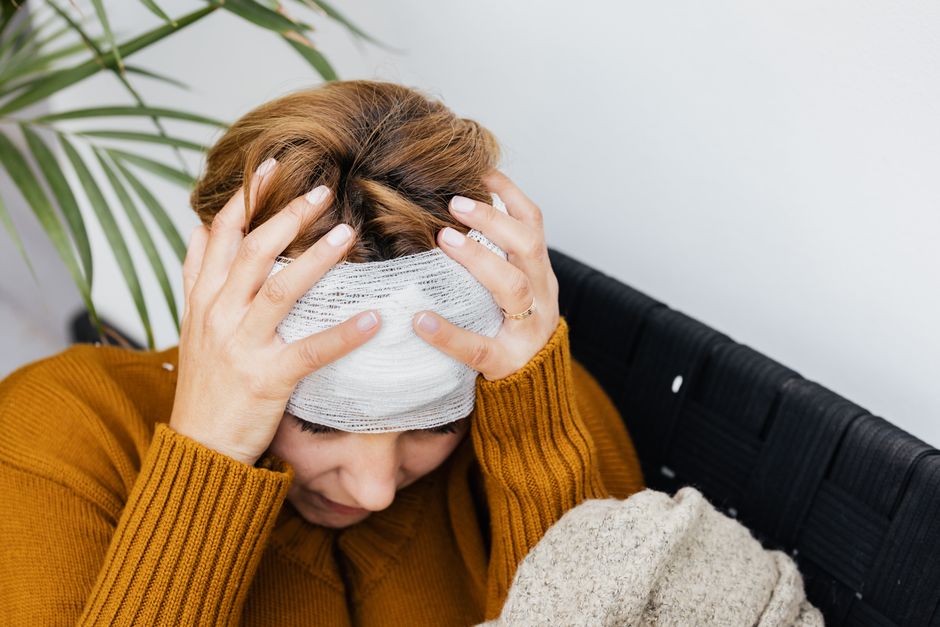
If your scalp starts to ache within minutes of pulling your hair into a ponytail, bun, or braid, the cause is usually mechanical rather than medical. Tight hairstyles pull on the roots of your hair, and each root sits in a small pocket of tissue called a hair follicle. The follicle is wrapped in a network of tiny nerve endings and small blood vessels, so when the hair is pulled in one direction and held there, those nerve endings send pain signals. Loosen the style and the ache usually fades.
That is the short answer. The longer answer explains why some people feel it in minutes, why it can spread across the whole scalp, and when a headache from a hairstyle is worth mentioning to a doctor.
Why Does My Head Hurt When My Hair Is Up?
The pain comes from sustained tension on the scalp, not from anything happening inside your brain. Your scalp is packed with sensory nerves. Every hair follicle is surrounded by them. When hair is pulled taut and held in that position, those nerves keep firing.
Most people call this a ponytail headache. Some clinicians use the term external-traction headache, which describes a headache triggered by pulling or pressing on structures outside the skull. The brain itself has no pain receptors. Every sensation you feel as a headache is generated by nerves, blood vessels, and muscles around the skull, in the scalp, or in the neck.
There is a second factor that surprises many people. When tension is applied to one patch of scalp, the discomfort often spreads. Researchers who have studied this describe a pattern where pulling hair in one area produces soreness well beyond the spot being pulled. This is thought to involve sensitization of nearby nerve pathways — the nerves become more responsive after being stimulated for a while. That is why a tight bun at the crown can leave your whole scalp feeling bruised by evening.
Some research suggests the pain signal travels along the same pathways involved in tension-type headache. That would explain why a ponytail ache can feel like a band tightening around the head rather than a sharp, pinpoint pain.
How Tight Does a Hairstyle Have to Be to Cause Pain?
There is no standard threshold. The pull needed to trigger pain varies from person to person, and it depends on how long the style stays in place.
What matters more than tightness alone is duration. A firm ponytail worn for a ten-minute workout often causes nothing. The same ponytail worn for eight hours can leave the scalp tender. The nerves respond to sustained tension, so time is a big part of the equation.
Hair type plays a role too. People with thicker, heavier, or longer hair place more load on each follicle. Styles that concentrate weight in one spot — a high bun, a tight braid close to the scalp, or extensions anchored at the roots — tend to cause discomfort faster than a loose low ponytail.
Individual sensitivity also matters. Some people feel scalp pain from a hairstyle within a few minutes. Others wear tight styles all day with no discomfort. Neither response is abnormal on its own.
Is a Ponytail Headache a Real Medical Condition?
Yes, traction-type headache is recognized in headache classification systems. The international classification of headache disorders includes a category for headaches caused by external traction or pressure on the head — pulling hair among them.
The key feature is the relationship to the trigger. The pain appears when the hair is pulled and goes away when the pull is removed. That pattern is what separates it from other headache types. If your scalp aches only while your hair is up and resolves within a short time after you take it down, the explanation is mechanical.
What traction headache is not: it is not a sign of a brain problem. It is also not the same as a migraine, though the two can overlap in how they feel. A migraine typically brings throbbing pain, often on one side, along with nausea or sensitivity to light and sound. A ponytail headache is usually a steady ache or soreness tied directly to the hairstyle.
Can Tight Hairstyles Cause Permanent Hair Loss?
This is where the concern shifts from discomfort to something more lasting. Repeated, prolonged pulling on hair can damage the follicles themselves. The medical term is traction alopecia.
Traction alopecia is well documented, particularly in people who wear tight braids, dreadlocks, extensions, or chemically straightened hair pulled back tightly for years. The early stage usually involves soreness, small bumps, and thinning at the edges of the scalp — often along the hairline and temples.
The important detail is that early traction alopecia is often reversible. If the pulling stops, hair frequently grows back. Once follicles are scarred, regrowth may not happen. This is why scalp pain from a hairstyle is worth paying attention to rather than pushing through.
Anyone can develop traction alopecia, but it appears more often in people whose styling practices involve consistent tension over long periods. The pattern matters more than any single tight style. An occasional tight updo is unlikely to cause lasting harm. Years of daily tight pulling is a different situation.
How Do You Stop the Pain Without Giving Up Updos?
You do not have to abandon hairstyles. You have to reduce the load on individual follicles and give the scalp recovery time.
- Change the position of the pull. A low loose ponytail strains different follicles than a high tight one. Rotating where the tension sits gives areas a break.
- Loosen the base. If you can slide a finger under the band at the scalp, the style is not pulling hard at the roots.
- Take it down when you can. Removing the style lets the tension off the nerves. Many people find the ache fades within a short time once the hair is loose.
- Skip the style for a day after a sore episode. Repeated tension on already-irritated scalp tends to feel worse, not better.
- Watch the hairline. Thinning or small bumps along the edges are an early warning sign worth acting on.
Some people find that alternating between loose styles and wearing hair down reduces how often they get these headaches. Others find that certain accessories — metal clips, tight elastics, heavy extensions — are worse than others. Paying attention to which styles trigger pain is more useful than following a general rule.
When Should Scalp Pain From a Hairstyle Worry You?
Pain that appears with a tight style and disappears when you loosen it is not a red flag. Pain that behaves differently deserves a closer look.
See a doctor if scalp tenderness persists after you take your hair down, if it comes with a headache that does not respond to loosening the style, or if you notice patches of hair loss, scaling, or visible irritation on the scalp. Scalp pain has many possible causes — skin conditions, nerve conditions, and other headache disorders among them — and a hairstyle is only one explanation.
Seek prompt medical care for a headache that is sudden and severe, comes with fever, confusion, vision changes, weakness, or follows a head injury. Those symptoms point away from a mechanical cause and need evaluation.
For the common case — a scalp that aches after a long day with hair pulled back — the fix is straightforward. Loosen the style, give the scalp a rest, and pay attention if the soreness keeps returning to the same spots.
Frequently Asked Questions
Why does my head hurt when my hair is up?
Tight hair pulls on the roots, and each follicle is surrounded by nerve endings that send pain signals when held under tension. The ache usually fades once the style is loosened.
How long does a ponytail headache last?
Most people feel relief within a short time after taking the style down. If scalp soreness lingers well after your hair is loose, that is worth mentioning to a doctor.
Can wearing tight hairstyles every day cause hair loss?
Yes. Repeated, prolonged pulling can cause traction alopecia, which often starts with soreness and thinning along the hairline. Early cases frequently reverse when the pulling stops, but scarring can make loss permanent.
Is a ponytail headache a sign of something serious?
No. Pain that appears with a tight style and goes away when you loosen it is mechanical, not a sign of a brain problem. Headaches that are sudden and severe or come with fever, confusion, or weakness need prompt medical care.
