
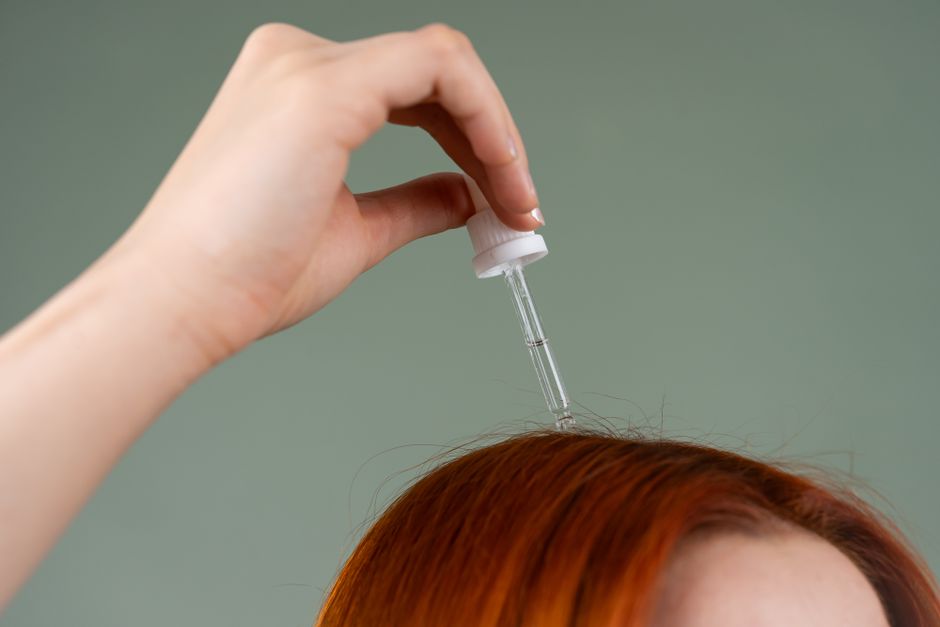
An itchy scalp is one of the most common reasons people ask a doctor or pharmacist about their hair. The most frequent causes are seborrheic dermatitis (dandruff), scalp psoriasis, fungal infections like tinea capitis, contact reactions to hair products, and head lice. Less often, nerve-related conditions or underlying health issues are involved. Most cases are treatable once you know which one you are dealing with.
Why Does My Hair Itch So Much Common Causes?
The scalp has a dense network of nerve endings and a rich blood supply, which is why irritation there can feel intense and hard to ignore. When something disrupts the skin barrier or triggers inflammation, those nerves fire more readily.
Common causes fall into a few broad groups:
- Inflammatory skin conditions — seborrheic dermatitis and psoriasis are the two most common.
- Infections — fungal infections of the scalp and head lice.
- Contact reactions — irritation or allergy from shampoos, dyes, and styling products.
- Dry scalp — often from cold weather, overwashing, or harsh products.
- Nerve-related itching — less common but real, sometimes called neuropathic itch.
The pattern of itching, where it appears, and what the skin looks like all help narrow it down. A flaky, greasy scalp points one direction. Scaly plaques that extend past the hairline point another. Sudden intense itching with no visible rash suggests something else entirely.
What Is Seborrheic Dermatitis and Why Does It Cause Itching?
Seborrheic dermatitis is the medical term for what most people call dandruff when it is mild. It is the single most common cause of an itchy scalp.
The condition involves inflammation driven partly by Malassezia, a yeast that naturally lives on everyone’s scalp. In some people, the immune system reacts to it more strongly, producing redness, greasy yellowish flakes, and itching. It tends to appear where oil glands are densest — the scalp, eyebrows, sides of the nose, and behind the ears.
Itching in seborrheic dermatitis is usually persistent rather than sharp. It often worsens with stress, cold dry weather, and infrequent shampooing. The flakes tend to be greasy rather than dry and white.
Treatment typically involves medicated shampoos containing ingredients like ketoconazole, zinc pyrithione, selenium sulfide, or coal tar. These are available over the counter in many cases. A doctor may recommend a prescription-strength option if over-the-counter products do not help. It is a chronic condition that tends to come and go, so ongoing management is often needed rather than a one-time fix.
How Can You Tell Scalp Psoriasis From Dandruff?
Scalp psoriasis and seborrheic dermatitis can look similar, but a few features usually separate them. Psoriasis tends to produce thicker, silvery-white scales on well-defined patches of red skin. Those patches often extend beyond the hairline onto the forehead, neck, or behind the ears. Seborrheic dermatitis flakes are typically thinner, greasier, and more yellow.
Itching in psoriasis can be significant. Some people describe it as burning or stinging rather than a simple itch. Scratching can cause bleeding and temporary hair thinning at the site, though psoriasis itself does not usually cause permanent hair loss.
Psoriasis is an autoimmune condition, not an infection, so it is not contagious. It often appears alongside psoriasis elsewhere on the body, such as the elbows, knees, or nails. If you have those signs, that is a useful clue.
Treatment for scalp psoriasis usually involves topical corticosteroids, vitamin D analog products, or medicated shampoos. Severe cases may need systemic treatment or biologics prescribed by a dermatologist. Over-the-counter dandruff shampoos alone often are not enough.





Can a Fungal Infection or Lice Cause Scalp Itching?
Yes, and both are worth knowing about because they require specific treatment.
Tinea capitis is a fungal infection of the scalp. It is more common in children but can affect adults. It causes itching, scaling, and sometimes round patches of hair loss with broken hairs. The scalp may look inflamed. It is contagious and spreads through shared combs, hats, and close contact. Treatment requires oral antifungal medication prescribed by a doctor — topical treatments alone do not reach the hair follicle where the fungus lives.
Head lice are tiny insects that live on the scalp and feed on blood. Their bites cause itching, which is actually an allergic reaction to louse saliva rather than the bite itself. It can take a few weeks after infestation for itching to start. Lice are most common in children and spread through direct head-to-head contact. Live lice or nits (eggs) attached to hair shafts near the scalp are the telltale sign. Treatment involves over-the-counter or prescription pediculicides, plus combing and washing bedding and clothing.
Both conditions are treatable, but neither resolves on its own without appropriate treatment.
Could Your Hair Products Be Causing the Itch?
Contact dermatitis of the scalp is more common than many people realize. It happens when a product irritates the skin directly or triggers an allergic reaction.
Common culprits include:
- Paraphenylenediamine (PPD) in permanent hair dyes
- Fragrances and preservatives in shampoos and conditioners
- Coconut diethanolamide and other foaming agents
- Propylene glycol in styling products
- Formaldehyde-releasing preservatives
Irritant contact dermatitis tends to cause burning and stinging shortly after use. Allergic contact dermatitis is delayed, often appearing 24 to 72 hours after exposure, and can spread beyond the scalp to the face, ears, and neck.
If you suspect a product is the problem, stopping it is the first step. A dermatologist can perform patch testing to identify specific allergens. This is more reliable than guessing.
One detail worth knowing: hair dye reactions can sometimes be severe. Anyone with a known PPD allergy should avoid permanent hair dyes entirely.
When Is Scalp Itching a Sign of Something Else?
Most scalp itching has a straightforward cause. But some cases point to something less obvious.
Neuropathic itch happens when nerves themselves are irritated or damaged, rather than the skin. It can occur after shingles, with diabetes, or with certain neurological conditions. It often feels different from ordinary itching — sometimes burning, tingling, or shooting. No visible rash may be present.
Thyroid disorders can cause dry skin and itching, including on the scalp. Hypothyroidism in particular is associated with dry, flaky skin.
Iron deficiency and other nutritional deficiencies can contribute to generalized itching, though scalp-specific itching from this cause alone is less common.
Anxiety and stress can amplify itching through the nervous system. Stress does not create a skin condition out of nothing, but it can make an existing one noticeably worse.
If itching is severe, persistent, unresponsive to standard treatments, or accompanied by hair loss, rash, or other symptoms, it is worth seeing a doctor. A dermatologist can examine the scalp directly and, if needed, take a scraping or biopsy.
What Actually Helps an Itchy Scalp?
Treatment depends entirely on the cause, so identifying it matters more than trying products at random.
For seborrheic dermatitis, medicated shampoos with ketoconazole, zinc pyrithione, or selenium sulfide are the standard first step. Using them consistently — often two to three times per week initially — works better than occasional use.
For psoriasis, topical corticosteroids or vitamin D analogs prescribed by a doctor are typically needed. Over-the-counter products alone rarely control it well.
For fungal infections, oral antifungals are required. Topical products are not sufficient.
For lice, pediculicides plus manual removal of nits is the standard approach.
For contact dermatitis, removing the offending product is essential. Until you know what is causing it, switching to fragrance-free, dye-free products can reduce irritation.
A few general measures may help regardless of cause:
- Avoid scratching, which can damage the skin and worsen inflammation.
- Wash hair regularly but not excessively — frequency depends on your scalp type.
- Avoid very hot water, which strips oils and can increase irritation.
- Manage stress where possible, since it can worsen many scalp conditions.
It is worth being honest about one thing: no single shampoo or home remedy treats all causes of scalp itching. Products marketed as universal fixes for scalp itch are not supported by evidence for every cause. Matching treatment to the actual diagnosis is what works.
When Should You See a Doctor About an Itchy Scalp?
See a doctor if the itching is severe enough to disrupt sleep or daily life, if it has lasted more than a few weeks without improvement, or if you notice hair loss, open sores, or signs of infection like pus or swelling.
You should also seek care if over-the-counter treatments have not helped after a reasonable trial. That usually means the diagnosis is wrong or the treatment is not strong enough — both are reasons to get a proper evaluation.
A doctor can often diagnose the cause by looking at the scalp, asking about your history, and sometimes taking a small sample for testing. In many cases, the answer is clear once someone examines it directly.
Frequently Asked Questions
Why does my scalp itch so much at night?
Itching often feels worse at night because distractions are gone and the body’s cortisol levels drop, which can allow inflammation to flare. It may also be related to the cause itself — conditions like seborrheic dermatitis and lice tend to be more noticeable when you are lying still.
Can an itchy scalp cause hair loss?
Itching itself does not cause hair loss, but scratching hard enough can damage hair follicles and lead to temporary thinning. Some underlying causes, like tinea capitis, can cause hair loss if left untreated.
What is the fastest way to stop an itchy scalp?
There is no single fast fix because treatment depends on the cause. For dandruff, a medicated shampoo containing ketoconazole or zinc pyrithione used consistently often reduces itching within a week or two. For other causes, a doctor’s evaluation is the fastest route to the right treatment.
Is an itchy scalp a sign of a vitamin deficiency?
It can be in some cases, particularly iron deficiency, but this is not the most common cause. Most scalp itching is related to skin conditions, infections, or product reactions rather than nutritional deficiencies.
