
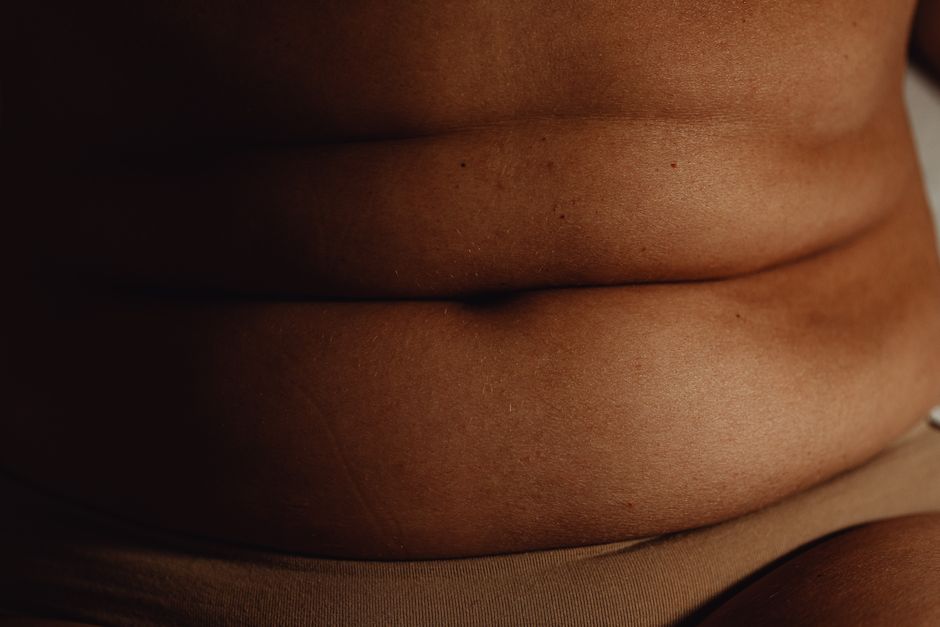
Where your body stores fat is not random, and it is not simply a matter of willpower. Fat collects around the belly for specific biological reasons, and the main driver is how your body responds to a hormone called insulin. When cells become less responsive to insulin, the body tends to store more fat in the abdominal area rather than under the skin elsewhere. This is why belly fat often builds up even when weight stays the same.
Belly fat is not one single thing. The fat you can pinch just under the skin behaves differently from the fat packed deep inside the abdomen. That deeper fat is the one most closely tied to health risks, and it is also the one most stubborn to lose.
What Is the Difference Between Subcutaneous and Visceral Belly Fat?
There are two distinct types of fat in the belly area, and they behave very differently. Subcutaneous fat sits directly under the skin. You can grab it with your fingers. It is the soft, jiggly fat on the surface. Visceral fat lies deeper, wrapped around the organs in the abdomen. You cannot pinch it. It sits behind the abdominal muscle wall.
Visceral fat is more metabolically active than subcutaneous fat. It releases more inflammatory signals and free fatty acids into the bloodstream. This is why visceral fat is linked to a higher risk of type 2 diabetes, heart disease, and other metabolic conditions. Subcutaneous fat is not harmless, but it does not carry the same metabolic risks.
You cannot tell how much visceral fat someone has just by looking at them. A person with a flat belly can still carry visceral fat. A person with a larger belly may carry more subcutaneous fat than visceral. Imaging such as MRI or CT scan is the only way to measure visceral fat directly. Waist circumference is a practical estimate used in clinical settings.
This distinction matters because the two fat types respond differently to diet, exercise, and other factors. Visceral fat tends to respond more readily to lifestyle changes than subcutaneous fat does.
Why Does My Fat Go to My Belly and Not Somewhere Else?
Fat distribution is controlled largely by hormones and genetics, not by choice. Insulin is the primary hormone that signals the body to store fat. When insulin levels are high and cells are resistant to its signal, the body preferentially deposits fat in the abdominal region.
Cortisol, the stress hormone, also plays a role. Chronic stress raises cortisol levels over time. Elevated cortisol is associated with increased visceral fat storage. This is one reason why long-term stress can contribute to belly fat accumulation even in people who eat reasonably well.
Genetics matter too. Some people are genetically predisposed to store fat in the abdomen rather than the hips or thighs. This pattern is more common in men and in women after menopause. Before menopause, estrogen tends to direct fat storage toward the hips and thighs in women. After menopause, estrogen levels drop, and fat storage shifts toward the abdomen.
Age is another factor. Even without weight gain, fat tends to redistribute toward the belly as people get older. Muscle mass also declines with age, which lowers resting metabolic rate and can contribute to fat accumulation over time.
Does Belly Fat Mean You Are Unhealthy?
Belly fat is a risk factor, not a diagnosis. Carrying more fat around the middle is associated with higher risk of certain conditions, but it does not mean you are currently sick. It means your risk is higher than it would be with less abdominal fat.
Waist circumference is the practical measure clinicians use. For men, a waist of 40 inches (102 cm) or more is considered high risk. For women, 35 inches (88 cm) or more is considered high risk. These thresholds come from established clinical guidelines. They are not perfect predictors for every individual, but they are useful for identifying people who may benefit from further evaluation.
Waist-to-height ratio is gaining attention as another useful measure. A ratio of 0.5 or higher — meaning your waist is more than half your height — is generally considered a signal to pay attention. This measure may be more useful than BMI alone for estimating metabolic risk, though it is not yet universally adopted in clinical guidelines.
Having a larger belly does not automatically mean you have a health problem. Some people with higher belly fat have normal blood pressure, blood sugar, and cholesterol. Others with less belly fat may have metabolic issues. The full picture requires looking at multiple factors, not just where fat sits.





What Actually Causes Belly Fat to Build Up?
Belly fat accumulates when the body stores more energy than it uses over time. But several factors influence where that fat goes and how much visceral fat builds up.
- Insulin resistance: When cells stop responding well to insulin, the body compensates by producing more. Higher insulin levels promote fat storage, especially in the abdomen.
- Chronic stress: Ongoing stress keeps cortisol levels elevated, which is associated with increased visceral fat.
- Poor sleep: Short sleep duration and poor sleep quality are linked to higher cortisol and changes in appetite hormones that increase hunger.
- Genetics: Inherited patterns influence where your body prefers to store fat.
- Hormonal changes: Menopause, low testosterone, and thyroid conditions can all affect fat distribution.
- Alcohol intake: Heavy or regular drinking is associated with greater abdominal fat, particularly visceral fat.
- Diet quality: Diets high in refined carbohydrates and added sugars are associated with more visceral fat, though the relationship is complex.
- Physical inactivity: Lack of movement contributes to fat accumulation broadly, including in the abdomen.
No single cause explains belly fat in every person. Most people have a combination of factors. This is why there is no single fix that works for everyone.
Can You Target Belly Fat With Exercise?
You cannot spot-reduce fat. Doing crunches or sit-ups will strengthen abdominal muscles, but it will not burn fat from the belly specifically. The body does not work that way. Fat is mobilized from stores throughout the body, not from the area you happen to be exercising.
That said, exercise does help reduce visceral fat. Aerobic exercise and resistance training both have evidence supporting their role in reducing visceral fat when combined with a modest calorie deficit. The effect is not dramatic or fast, but it is real. High-intensity interval training has also been studied for visceral fat reduction, though it is not clearly superior to moderate-intensity continuous exercise for this purpose.
What matters most is total energy balance and consistency over time. A single workout does not change fat distribution. Weeks and months of regular activity do.
Diet also matters. Reducing refined carbohydrates and added sugars, eating adequate protein, and including fiber-rich foods are all associated with lower visceral fat in observational studies. These are general patterns, not guaranteed outcomes for every person.
What About Belly Fat After Menopause?
Menopause changes where the body stores fat. Before menopause, estrogen tends to promote fat storage in the hips and thighs. After menopause, estrogen levels fall, and fat storage shifts toward the abdomen. This happens even in women who do not gain weight overall.
This shift is not caused by eating more or moving less, though those factors can contribute. It is a direct result of hormonal change. Many women notice their waist getting larger even when their weight on the scale stays the same.
Hormone replacement therapy may influence fat distribution, but the evidence is not clear enough to recommend it for this purpose alone. Any decision about hormone therapy involves weighing multiple risks and benefits with a clinician.
Strength training and adequate protein intake become more important after menopause, partly to preserve muscle mass. Muscle helps maintain metabolic rate, which supports long-term fat management.
Does Belly Fat Go Away on Its Own?
Belly fat does not disappear without changes to energy balance and the factors driving it. For some people, improving sleep, reducing stress, and cutting back on alcohol makes a measurable difference. For others, diet and exercise changes are needed.
Visceral fat tends to respond faster to lifestyle changes than subcutaneous fat. Some studies show meaningful reductions in visceral fat within a few weeks of consistent diet and exercise changes, even before the scale moves much. This is one reason waist measurements can change before weight does.
There is no cream, wrap, or supplement that has been shown to reduce visceral fat in controlled human trials. Products marketed for belly fat reduction have not demonstrated this effect in peer-reviewed research. Any claim otherwise is not supported by evidence.
Liposuction removes subcutaneous fat but does not remove visceral fat. It is not a treatment for metabolic risk.
Frequently Asked Questions
Why does fat go to my belly instead of other areas?
Hormones, especially insulin and cortisol, direct where the body stores fat, and genetics influence this pattern. Insulin resistance and chronic stress both push fat storage toward the abdomen.
Can I lose belly fat without losing weight overall?
Yes, visceral fat can decrease with diet and exercise changes even when total body weight stays similar. Waist measurements may change before the scale does.
Is belly fat always a sign of a health problem?
No, belly fat is a risk factor, not a diagnosis. A larger waist is associated with higher risk of metabolic conditions, but it does not mean you currently have one.
Does drinking alcohol cause belly fat?
Regular or heavy alcohol intake is associated with greater abdominal fat, particularly visceral fat. Cutting back may help reduce it, though individual results vary.
