
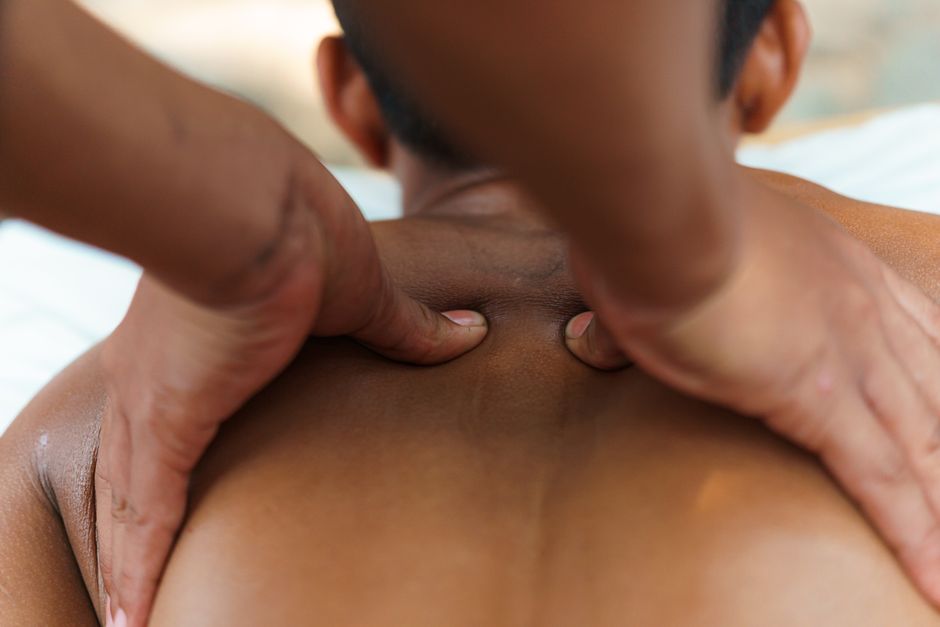
Your body tenses up because your nervous system is responding to stress the same way it always has — by preparing your muscles to act. When stress is short-lived, that tension fades once the threat passes. When stress becomes chronic, or when sleep is poor, the “off switch” for that response gets weaker, and muscles stay braced long after the original trigger is gone. Poor sleep and nerve-related discomfort often feed the same loop, which is why tension, stress, and sleep problems so often show up together.
Why Does My Body Tense Up Stress Sleep Nerves?
Muscle tension under stress is a normal, well-documented response. When your brain perceives a threat — physical or psychological — it activates the sympathetic nervous system, sometimes called the fight-or-flight response. Part of that activation involves sending signals to skeletal muscles to prepare for movement. Your shoulders rise, your jaw clenches, your back tightens.
This is not a flaw in your body. It is an evolved survival mechanism. The problem is that the human brain treats many modern stressors — a difficult email, a looming deadline, a financial worry — the same way it treats a physical threat. The muscles get the same “prepare to move” signal, but there is no movement to discharge it. The tension lingers.
Sleep plays a direct role here. During deep sleep, the body reduces sympathetic activity and shifts toward the parasympathetic branch of the nervous system, which supports rest and recovery. Muscle tension tends to drop during this phase. When sleep is cut short or fragmented, that recovery window shrinks. Stress hormones stay elevated, and the muscles that were braced all day never get the signal to fully let go.
This creates a loop. Stress makes it harder to sleep. Poor sleep makes the stress response more reactive the next day. And the muscles stay tense throughout.
What Happens in the Body When Stress Becomes Chronic?
The stress response is designed to be brief. When it stays switched on, the effects become more widespread.
The main hormonal players are cortisol and adrenaline. Adrenaline acts quickly — it raises heart rate, sharpens alertness, and primes muscles for action. Cortisol works more slowly and helps sustain the stress response over time. In short bursts, both are useful. In prolonged activation, they start to work against the body.
Chronic cortisol elevation is associated with:
- Persistent muscle tightness, especially in the neck, shoulders, and jaw
- Disrupted sleep architecture — particularly less time in deep, restorative sleep
- Increased sensitivity to pain signals
- Fatigue that does not improve with rest
The increased pain sensitivity part matters. Research on stress and pain processing suggests that prolonged stress can lower the threshold at which the nervous system registers discomfort. This means the same amount of muscle tightness that might have gone unnoticed before can now feel genuinely painful. It is not that the muscle is more damaged — it is that the nervous system is more reactive.
This is one of the less obvious pieces of the puzzle: chronic tension is not just a muscle problem. It is a nervous system problem, and it involves how the brain interprets signals from the body.
How Does Poor Sleep Keep Muscles Tense?
Sleep and muscle tension have a two-way relationship. Tension makes it harder to fall asleep. Poor sleep makes tension worse the next day.
During non-REM sleep, particularly the deeper stages, the body does several things that directly affect muscle tone. Blood flow to muscles increases, tissue repair accelerates, and the nervous system shifts toward a lower-arousal state. Growth hormone is released during this period, which supports tissue recovery.
When sleep is disrupted, these processes are interrupted. The muscles do not get the same recovery window. At the same time, the stress response that should have quieted overnight remains partially active. You wake up with muscles that never fully relaxed.
There is also a neurological component. Sleep deprivation is known to increase activity in the amygdala, a brain region involved in processing threat and emotion. It also weakens the connection between the amygdala and the prefrontal cortex, which normally helps put the brakes on emotional reactivity. The result is a nervous system that is quicker to perceive threat and slower to calm down. Muscles respond accordingly.
This is why people who sleep poorly often report feeling “wired but tired” — the body is exhausted, but the nervous system is still on alert.





What Role Do Nerves Play in Muscle Tension?
Muscles move because nerves tell them to. Every voluntary muscle in your body is controlled by motor neurons that carry signals from the spinal cord and brain. When the nervous system is in a heightened state of arousal, those signals fire more readily, and muscles stay partially contracted even at rest.
This baseline level of contraction is called muscle tone. It is not the same as flexing. It is the low-level tension that keeps your muscles ready to respond. Under stress, muscle tone increases — sometimes enough to cause discomfort, stiffness, or a feeling of tightness that does not resolve with stretching alone.
Nerves themselves can also become sensitized. When nerve tissue is exposed to prolonged stress hormones and inflammatory signals, it can become more excitable. This means it takes less stimulation to trigger a pain signal. Some researchers describe this as a form of nervous system “wind-up.”
This does not mean the nerves are damaged. In most cases, they are reacting to an environment that has kept them on high alert for too long. The distinction matters because it affects how the problem is approached. If the issue is nervous system reactivity rather than structural damage, then calming the nervous system — not just stretching the muscle — is often the more useful target.
Which Muscles Are Most Affected by Stress and Poor Sleep?
Some muscle groups are more prone to stress-related tension than others. This is partly due to posture and partly due to how these muscles are wired into the stress response.
The most commonly affected areas include:
- Neck and shoulders — the trapezius muscles often tighten first and are a common source of tension headaches
- Jaw — clenching and grinding during sleep are strongly associated with stress and poor sleep quality
- Lower back — the muscles along the spine can stay braced to protect the area, especially during prolonged sitting or stress
- Scalp and forehead — tension here contributes to the “band-like” headache many people describe
These patterns are consistent enough that clinicians often ask about stress and sleep when patients report tension in these specific areas. It is not a diagnosis on its own, but it is a useful clue.
Does Stress-Related Tension Ever Go Away on Its Own?
Short-term tension usually resolves once the stressor passes and sleep returns to normal. The nervous system is designed to return to baseline. Muscles relax, heart rate drops, and the parasympathetic branch takes over.
Chronic tension is different. When stress is ongoing and sleep stays poor, the nervous system may not return to baseline on its own. The tension becomes the new normal. People often stop noticing it until it causes pain or limits movement.
There is no single timeline for how long this takes to resolve. It depends on the source of the stress, sleep quality, overall health, and whether anything is actively done to support recovery. Some people notice improvement within days of better sleep. Others need weeks or longer.
What is clear from the research is that addressing sleep is often a key part of breaking the cycle. Improving sleep quality tends to reduce next-day muscle tension and stress reactivity. This does not mean sleep is the only factor, but it is one of the more direct levers available.
What Actually Helps Reduce Stress-Related Muscle Tension?
The most effective approaches target both the nervous system and the muscles themselves. Neither alone tends to be enough when the problem is chronic.
Things that support the nervous system:
- Prioritizing sleep — consistent timing matters more than total hours for some people
- Slow, diaphragmatic breathing, which activates the parasympathetic branch
- Regular physical activity, which helps discharge stress hormones
- Limiting stimulants like caffeine in the afternoon and evening
Things that support the muscles:
- Gentle movement and stretching, especially for the neck, shoulders, and back
- Heat, which can temporarily reduce muscle tightness
- Body awareness practices that help you notice and release tension during the day
What does not have strong evidence: passive treatments that only address the muscle without addressing the nervous system. Massage can feel good and may provide short-term relief, but if the underlying stress and sleep problems are not addressed, the tension typically returns.
Some clinicians recommend cognitive behavioral therapy for insomnia, or CBT-I, as a first-line approach for chronic sleep problems. It has the strongest evidence base of any non-drug sleep intervention. For muscle tension specifically, the evidence for most interventions is more limited, and results vary.
If tension is severe, persistent, or accompanied by other symptoms like numbness, weakness, or changes in bowel or bladder function, that warrants a medical evaluation. Those symptoms can point to nerve compression or other conditions that need proper assessment.
Frequently Asked Questions
Why does my body tense up when I am stressed?
Stress activates the sympathetic nervous system, which signals muscles to prepare for action. This is a normal survival response that becomes a problem when it stays switched on.
Can poor sleep cause muscle tension?
Yes. Sleep is when the nervous system shifts toward recovery and muscle tone drops. Poor sleep keeps stress hormones elevated and reduces the recovery window, so muscles stay tense.
Is stress-related muscle tension dangerous?
In most cases it is not dangerous, but chronic tension can contribute to pain and discomfort. If you have numbness, weakness, or other neurological symptoms, see a doctor.
How long does stress-related muscle tension last?
Short-term tension usually fades once the stressor passes and sleep improves. Chronic tension can persist for weeks or longer and often needs active steps to resolve.
