
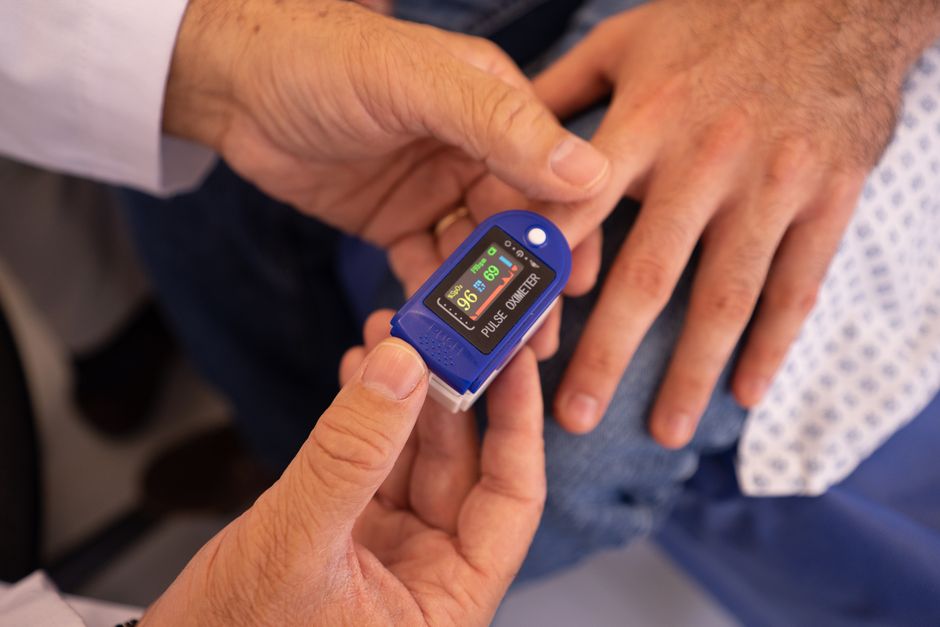
Your blood oxygen level changes from minute to minute, and that is normal. A healthy reading usually sits between 95% and 100% when you are resting and breathing normally. It can dip slightly during sleep, climb during deep breathing, and shift with cold hands, altitude, or how the sensor sits on your finger.
What matters is not one number. It is the pattern over time and whether you have symptoms. A single reading of 94% in a person who feels fine means something very different than the same number in someone who is short of breath.
What Is a Normal Blood Oxygen Level?
For most healthy adults at sea level, a normal oxygen saturation (often called SpO2) is 95% to 100%. This range comes from decades of clinical measurement and is widely used in hospitals and clinics.
Oxygen saturation is the percentage of your red blood cells that are carrying oxygen. Your red blood cells use a protein called hemoglobin to hold oxygen. When hemoglobin is fully loaded, saturation is high. When it is partly empty, saturation drops.
Pulse oximeters estimate this by shining light through your finger. They do not measure oxygen directly. They measure how much light the blood absorbs, then calculate a percentage. That indirect method is why readings can be slightly off.
A few points that are well established:
- 95% to 100% is normal for most healthy adults at sea level.
- Below 90% is generally considered low and worth medical attention.
- 90% to 94% is a gray zone that depends on your health and symptoms.
- People with certain lung or heart conditions may have lower personal baselines.
Your baseline is the number you usually sit at when you feel well. That number matters more than any single reading.
Why Does My Blood Oxygen Level Fluctuate During the Day?
Small swings during the day are expected. Your body constantly adjusts breathing, heart rate, and blood flow to match what you are doing.
When you exercise, your muscles use more oxygen, so your breathing speeds up and saturation usually stays steady or rises. When you sit still for a long time, breathing can become shallow, and readings may drift down a little.
Other everyday causes of fluctuation include:
- Cold hands. Poor circulation reduces the signal a pulse oximeter can read.
- Movement. A shaky hand or a loose sensor gives unstable results.
- Nail polish or artificial nails. These can block the light the device needs.
- Body position. Lying on one side can change blood flow to the hand being measured.
- Altitude. At higher elevations, there is less oxygen in the air, so saturation naturally runs lower.
One detail many people miss: a pulse oximeter also reports your pulse rate. If the pulse reading looks wrong or jumps around, the oxygen number is probably unreliable too. A steady pulse usually means a more trustworthy saturation reading.
Why Does Blood Oxygen Drop During Sleep?
It is normal for oxygen saturation to fall slightly during sleep, usually by a few points. Breathing becomes slower and shallower, and that alone can lower readings a little.
Larger drops are more concerning. Repeated dips below 90% during sleep can point to a breathing problem such as sleep apnea. In sleep apnea, the airway partly or fully closes for short periods, cutting off airflow. Each pause can drop oxygen, then a brief wake-up restores breathing.
Signs that nighttime drops may be a real problem include:
- Loud snoring with pauses in breathing
- Waking up gasping or choking
- Morning headaches
- Daytime sleepiness despite a full night in bed
A single overnight oximeter reading is not enough to diagnose sleep apnea. A sleep study is the standard way to confirm it. If you notice these signs, talk with a clinician rather than relying on a home device alone.

When Is Fluctuation a Sign of a Health Problem?
Fluctuation becomes a concern when readings stay low, drop sharply, or come with symptoms. The number alone rarely tells the whole story.
Seek medical care if you have:
- Oxygen saturation below 90% on a reliable reading
- Shortness of breath at rest or with light activity
- Chest pain or tightness
- Confusion, dizziness, or fainting
- Blue tint to lips, face, or fingernails
- Breathing that feels hard or fast
These can signal conditions such as pneumonia, asthma flare-ups, heart failure, blood clots in the lungs, or other serious problems. They need prompt evaluation, not home monitoring.
Some health conditions cause ongoing lower saturation. Chronic obstructive pulmonary disease (COPD), pulmonary fibrosis, and some heart conditions can keep a person’s baseline below the normal range. In these cases, a clinician sets a personal target range, and fluctuations within it may be expected.
How Accurate Are Home Pulse Oximeters?
Consumer pulse oximeters are useful but not perfect. Their accuracy varies, and they can be less reliable at very low saturation levels.
Several things affect accuracy:
- Poor circulation or cold fingers
- Motion during the reading
- Dark nail polish or long artificial nails
- Bright overhead light
- Skin pigmentation, which can affect some devices
Research has raised concerns that pulse oximeters may read higher than true blood oxygen in people with darker skin tones. This is an active area of study. The takeaway is not to distrust the device completely, but to treat a borderline reading with caution, especially if you have symptoms.
If a reading seems wrong, try a warm hand, remove nail polish, rest your hand on a steady surface, and take a few calm breaths. Then measure again. If readings stay low or you feel unwell, seek care.
What Affects Your Blood Oxygen Besides Breathing?
Breathing is the main driver, but it is not the only one. Oxygen has to travel from your lungs into your blood, then get carried to your tissues. Problems anywhere along that path can lower saturation.
Key factors include:
- Lung function. Anything that blocks airflow or fills the air sacs with fluid reduces oxygen uptake.
- Hemoglobin level. Low hemoglobin from anemia means less oxygen can be carried, even if the percentage looks normal.
- Circulation. Poor blood flow to the fingers can lower a reading without a true drop in body oxygen.
- Altitude. Less oxygen in the air means lower saturation, which is why mountain travelers often see lower numbers.
- Temperature and illness. Fever and infections raise oxygen demand and can shift readings.
This is why a pulse oximeter number is one piece of information, not a full picture of your health.
Should You Track Your Oxygen Level at Home?
For most healthy people, routine tracking is not necessary. Occasional checks are fine, but constant monitoring can cause worry without adding useful information.
Home monitoring can help in specific situations, such as managing a known lung condition or recovering from an illness under a clinician’s guidance. In those cases, your care team can tell you what range to watch and when to act.
If you do check at home, keep a few things in mind:
- Measure when you are calm and warm.
- Note your symptoms alongside the number.
- Look at trends over days, not single readings.
- Do not adjust any medication based on a home reading without medical advice.
The evidence does not support using a pulse oximeter to self-diagnose or self-treat. It is a monitoring tool, and its value depends on context.
Frequently Asked Questions
Is it normal for blood oxygen to go up and down?
Yes. Small swings throughout the day are normal and reflect changes in breathing, activity, and circulation. What matters is whether readings stay in a healthy range and whether you have symptoms.
What blood oxygen level is too low?
Below 90% is generally considered low and worth medical attention. Readings between 90% and 94% need context, since they may be normal for some people but concerning for others.
Why does my oxygen drop when I sleep?
Breathing slows during sleep, so a small drop is expected. Repeated drops below 90% or pauses in breathing can point to sleep apnea and should be checked by a clinician.
Can cold hands affect a pulse oximeter reading?
Yes. Cold hands reduce blood flow to the finger, which can make the reading less accurate or falsely low. Warming your hand and staying still usually improves the result.
