
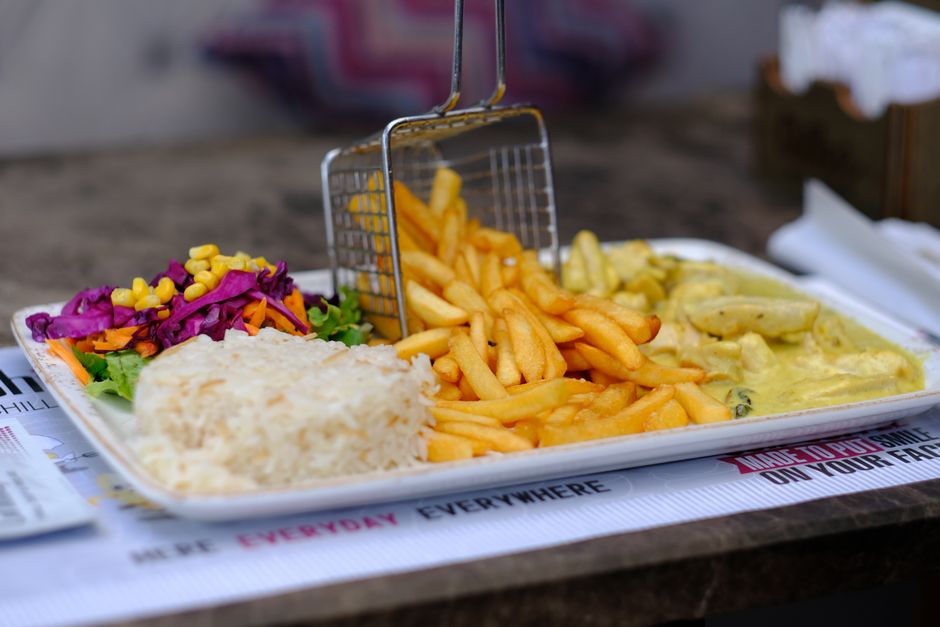
Fried food can turn your stomach for a few clear reasons. The fat slows digestion and delays stomach emptying, greasy food triggers hormone signals that cause queasiness, and in some people the gallbladder struggles to process a large fat load. For most healthy adults this is a passing discomfort, not a sign of disease. But if nausea after fried food happens often, it is worth paying attention to what your body is telling you.
Nausea is not the same as a stomach ache. It is a specific sensation controlled by the brain, and fat is one of the most reliable triggers for it. Understanding why helps you decide whether to adjust how you eat or whether to mention it to a doctor.
Why Does Fried Food Make You Nauseous?
Fat is the slowest nutrient to leave your stomach. A meal heavy in fried food sits there longer than a lean meal, and that delay is the core reason nausea shows up.
When fat reaches the small intestine, cells in the gut lining release a hormone called cholecystokinin, or CCK. CCK tells the gallbladder to squeeze out bile for fat digestion. It also signals the stomach to empty more slowly and feeds back to the brain to reduce appetite. That slowed emptying is normal and useful after a big meal. Push it too far with a very greasy meal and the fullness can tip into queasiness.
Fried food also tends to be large in volume and high in calories for the portion size. A modest-looking basket of fried food can carry more fat than a full plate of grilled food. Eating it quickly adds air and stretches the stomach, and stretch itself is a nausea trigger.
There is a second layer. The smell and heaviness of fried food can set off a conditioned response. If you have ever felt sick after eating fried food, your brain may start bracing for that feeling before you finish the meal. This is a real effect, not imagination.
What Happens in Your Body When You Eat Fried Food?
Digestion of a fried meal is a coordinated process, and each step can contribute to feeling unwell.
- Stomach: Fat slows the rate at which the stomach empties into the small intestine. The fuller and longer the stomach stays stretched, the more likely you feel queasy.
- Gallbladder: CCK triggers the gallbladder to release bile. A very large fat load asks a lot of the gallbladder at once.
- Small intestine: Bile and pancreatic enzymes break fat into particles small enough to absorb. This takes time and energy.
- Brain and gut: The vagus nerve carries signals between the gut and the brain. Satiety hormones and gut stretch signals feed into the brain areas that produce nausea.
The process is normal physiology. It is not a flaw in your body. It is your digestive system responding to a nutrient load that is unusually dense.
Does the Type of Oil or Frying Method Matter?
How the food is fried affects how much fat it carries and how it sits in your stomach. It does not change the basic mechanism, but it changes the size of the load.
Deep frying submerges food in hot oil, and the food absorbs some of it. Pan frying and shallow frying use less oil. Air frying uses very little added fat, though the food still tastes richer than boiled or steamed food. Reheating oil repeatedly can degrade it and produce compounds that some people find harder to tolerate, but the evidence on how much this affects nausea in healthy people is limited.
Higher-fat foods generally feel heavier. A thick batter holds more oil than a light coating. The practical takeaway is that the amount of fat absorbed matters more than the brand of oil. No oil makes fried food fat-free.





When Is Nausea After Fried Food a Sign of a Health Problem?
Occasional queasiness after a heavy fried meal is common and usually harmless. Nausea that repeats every time you eat fatty food is different. It can point to a problem with fat digestion, and that is worth discussing with a doctor.
One of the best-known patterns is gallbladder disease. The gallbladder stores bile and releases it when fat arrives. If gallstones block the flow, fat can trigger pain and nausea, often in the upper right abdomen, sometimes spreading to the back or right shoulder. The classic timing is within an hour or so of a fatty meal. Not everyone with gallstones has symptoms, and many people with this pattern turn out to have something else, so this is a conversation for a clinician, not a self-diagnosis.
Other possibilities a doctor may consider include reflux, gastroparesis (delayed stomach emptying), and problems with the pancreas or liver. Some people also have a genuine intolerance to certain foods or a sensitive gut. The point is not to assume the worst. It is to notice a pattern that repeats and get it checked rather than living with it.
Seek medical care promptly if nausea after eating comes with severe or persistent abdominal pain, vomiting that will not stop, fever, yellowing of the skin or eyes, or unexplained weight loss. Those are not signs to sit on.
Why Does Fried Food Sometimes Cause Diarrhea or Reflux Too?
Nausea is only one way a high-fat meal can upset the gut. The same slow-emptying and hormone signals can produce other symptoms.
Reflux is common after fried food because a full, slow-emptying stomach puts more pressure upward, and fat can relax the valve between the stomach and esophagus. That lets stomach contents move the wrong way and causes burning or a sour taste.
Diarrhea after greasy food is also reported. When a large fat load arrives faster than the gut can process it, or when bile acids are not reabsorbed as usual, the result can be loose stools. Some people notice this with very rich meals even without any underlying condition. If it happens often, it is worth mentioning to a doctor.
How Can You Reduce Nausea From Fried Food?
You do not have to give up fried food entirely to feel better. Most people can reduce the effect by changing portion size, pace, and what they eat alongside it.
- Eat smaller portions of fried food and pair it with vegetables, whole grains, or lean protein to dilute the fat load.
- Slow down. Eating quickly adds air and stretches the stomach faster.
- Avoid lying down right after a heavy meal, which makes reflux and nausea more likely.
- Notice whether a specific food or oil triggers you more than others. A simple food diary can reveal a pattern.
- If fatty food reliably makes you sick, do not treat it as a personal failing. Get it checked.
These are general habits, not a treatment plan. If you have a diagnosed digestive condition, follow the guidance your clinician has given you rather than general advice.
Does Everyone Get Nauseous From Fried Food?
No. Tolerance varies widely between people, and the same meal can leave one person fine and another queasy.
Some of that difference is genetic and some is learned. People who eat high-fat meals regularly may notice less discomfort simply because their gut has adapted to the load. People with a sensitive stomach, reflux, or gallbladder issues tend to react more strongly. Age and overall health can play a role too, though the evidence on exactly how much is limited.
One clarification worth knowing: feeling full and feeling nauseous are not the same signal, even though they can overlap. Fullness is a normal stretch and hormone response. Nausea is a distinct brain response that can be triggered by the same meal. That is why a person can feel uncomfortably full without being queasy, or queasy without eating very much at all.
Frequently Asked Questions
Why does fried food make me nauseous but not my friends?
Tolerance to fat varies between people based on digestion speed, gut sensitivity, and any underlying conditions. The same meal can affect two people differently.
How long does nausea from fried food last?
For most healthy adults it eases as the stomach empties, usually within a few hours. Nausea that lasts much longer or keeps returning after fatty meals should be checked by a doctor.
Can fried food cause nausea and diarrhea together?
Yes. A large fat load can overwhelm normal digestion and lead to loose stools along with queasiness. If this happens often, it is worth discussing with a clinician.
Does air frying stop fried food from making you nauseous?
Air frying uses far less oil, so the fat load is smaller and many people tolerate it better. It does not guarantee no nausea, because portion size and eating speed still matter.
