
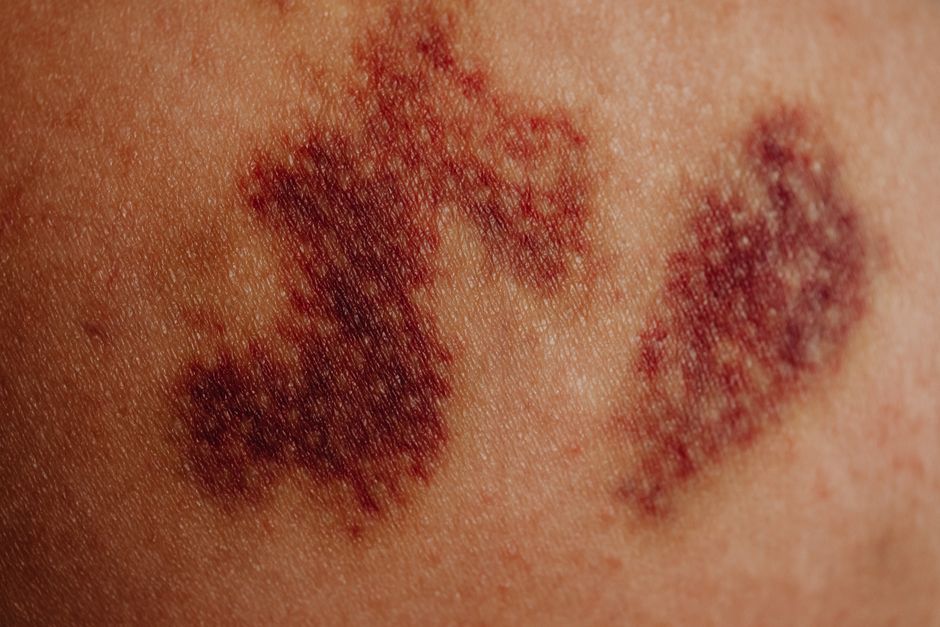
You get a bruise after bumping your arm or leg. At first it looks black, blue, or purple. Then after a few days it turns yellow or greenish-yellow. This color change is not a sign that something is wrong. It is actually a sign that your body is healing the bruise as expected. The yellow color comes from your body breaking down old blood cells under your skin.
What causes the yellow color in a healing bruise?
The yellow color comes from a substance called bilirubin. When you get a bruise, blood leaks from damaged blood vessels into the tissue around them. Your body sends immune cells to clean up that leaked blood. These cells break down the hemoglobin in red blood cells. Hemoglobin contains iron. Your body processes that iron and creates bilirubin as a byproduct.
Bilirubin is a yellow pigment. You see it when a bruise is in the later stages of healing. The same substance is what makes your skin look slightly yellow if you have jaundice, but that is a different situation involving your liver. In a bruise, bilirubin forms locally and stays in the tissue until your body clears it away completely.
The CDC does not track bruise color changes specifically, but research in dermatology journals confirms this process. A study published in the Journal of the American Academy of Dermatology described how hemoglobin breaks down into biliverdin, which looks green, and then into bilirubin, which looks yellow. So a bruise that turns green before yellow is also normal.
How long does it take for a bruise to turn yellow?
Most bruises follow a predictable timeline. For the first one to two days, a bruise looks red or purple. This is fresh blood under the skin. Around day two to five, the bruise may turn blue or dark purple. Then between day five and ten, you often see green or yellow edges. The yellow phase usually lasts a few days before fading completely.
The exact timing depends on the size of the bruise and where it is on your body. A small bruise on your arm may turn yellow by day three and disappear by day seven. A large bruise on your thigh might stay purple for a week before slowly turning yellow over several more days. Gravity also matters. Bruises on your legs often take longer to heal because blood pools more easily there.
Some people report that their bruises skip the green phase entirely and go straight from purple to yellow. That is normal too. The breakdown process is not always perfectly visible. Your skin tone also affects what colors you see. People with darker skin may notice the yellow phase less clearly, but the chemical process happens the same way.
Does a yellow bruise mean it is healing?
Yes. A yellow bruise is a clear sign that your body is actively healing the injury. The yellow color means your immune system has already broken down the hemoglobin and is now working on clearing the bilirubin. No new bleeding is happening. The damaged blood vessels have sealed themselves off.
If a bruise stays purple or black for more than two weeks without turning yellow, that can mean something else is going on. It could mean there is still active bleeding under the skin or that the body is not clearing the blood efficiently. Some medications like blood thinners can slow this process down. The American Heart Association notes that people on anticoagulants often bruise more easily and their bruises may take longer to change color.
Also watch for a bruise that turns yellow but then becomes red or warm again. That could signal an infection or a condition called a hematoma that needs medical attention. But in most cases, a bruise that turns yellow and gradually fades is doing exactly what it should.


What speeds up or slows down bruise healing?
Your body heals bruises at its own pace, but some factors can influence how fast the yellow phase appears. Age is one of them. As you get older, your skin gets thinner and your blood vessels become more fragile. The same bump that caused a small bruise at age 30 might cause a larger bruise at age 60. That larger bruise takes longer to go through all its color changes.
Nutrition also plays a role. Vitamin C helps your body produce collagen, which repairs blood vessel walls. Vitamin K is involved in blood clotting. A deficiency in either can lead to more bruising and slower healing. Research published in Nutrition Reviews found that people with low vitamin C levels had more frequent and longer-lasting bruises. But taking extra vitamins beyond what you need does not make bruises heal faster.
Here are some things that can slow bruise healing:
- Taking blood thinners like aspirin, warfarin, or ibuprofen regularly
- Having a condition like hemophilia or von Willebrand disease that affects clotting
- Using corticosteroid creams on the skin, which thin the skin over time
- Drinking alcohol in excess, which affects liver function and blood clotting
- Being deficient in vitamin C, vitamin K, or iron
There is no reliable way to make a bruise turn yellow faster. Applying ice in the first 24 hours can reduce the size of the bruise by limiting blood flow. After that, gentle heat may help increase circulation and clear the blood slightly faster. But these are modest effects. Most of the healing timeline is determined by your body working at its own speed.
When should you worry about a bruise that turns yellow?
A yellow bruise on its own is rarely a reason to worry. But there are situations where you should check with a doctor. If a bruise does not start to fade or change color after two weeks, it may be something other than a simple bruise. It could be a hematoma, which is a collection of blood that has clotted and needs medical drainage in some cases.
Also be concerned if you get large bruises from very minor bumps or if you develop bruises without any known injury. The American Academy of Family Physicians recommends seeing a doctor if you have frequent unexplained bruising along with other symptoms like fatigue, weight loss, or bleeding from your gums or nose. This can sometimes point to a blood disorder or a vitamin deficiency that needs treatment.
One more thing to watch for is a bruise that becomes painful after it has already started healing. A bruise that turns yellow and then becomes red, swollen, and warm to the touch could be infected. This is rare but possible, especially if the bruise was caused by a scrape or cut where bacteria could enter. If you see red streaks spreading from the bruise, seek medical care promptly.
Comparison of bruise stages and what they mean
| Color | Typical time frame | What is happening |
|---|---|---|
| Red or pink | 0 to 2 days | Fresh blood pooling under the skin, oxygenated hemoglobin |
| Blue or purple | 1 to 5 days | Deoxygenated hemoglobin, blood settled in tissue |
| Green | 5 to 7 days | Biliverdin forms as hemoglobin breaks down |
| Yellow | 7 to 14 days | Bilirubin forms, body is clearing the debris |
| Brown or faded | 10 to 21 days | Iron deposits are reabsorbed, skin returns to normal |
This table is a general guide. Your actual timeline may differ. Bruises on the face heal faster because of better blood flow. Bruises on the lower legs can take twice as long. The key point is that yellow is a normal and expected stage in the healing process.
Common misconceptions about yellow bruises
Some people think a yellow bruise means the injury is getting infected. That is not true. Infection would cause redness, warmth, swelling, and pain that gets worse. A yellow bruise that is fading and not painful is healing, not infected.
Others believe that rubbing or massaging a yellow bruise will help it go away faster. This is not supported by evidence. Rubbing can actually break more small blood vessels and make the bruise larger. Gentle pressure is fine, but avoid aggressive massage.
There is also a myth that a yellow bruise means you have a vitamin deficiency. While severe vitamin C or K deficiency can cause more bruising, the normal yellow phase of a healing bruise is not a sign of deficiency. It is a sign that your body is processing the blood as it should.
Some people report that putting raw meat or steak on a bruise helps it heal. This is an old folk remedy with no scientific basis. Raw meat can introduce bacteria into any broken skin and cause infection. Stick to ice packs for the first day and then nothing special is needed.
Frequently Asked Questions
Is a yellow bruise a sign of infection?
No. A yellow bruise is a normal part of healing. Infection would cause redness, swelling, warmth, and increasing pain around the bruise.
How long does a yellow bruise last?
A yellow bruise typically lasts 2 to 7 days before fading completely. The total healing time for a bruise is usually 10 to 21 days.
Can you speed up a bruise turning yellow?
Not in a meaningful way. Applying ice in the first 24 hours may reduce bruise size. After that, healing happens on its own timeline.
Why did my bruise skip green and go straight to yellow?
That is normal. The green phase from biliverdin is not always visible. Your body may process it quickly or the color may be hidden by your skin tone.
