
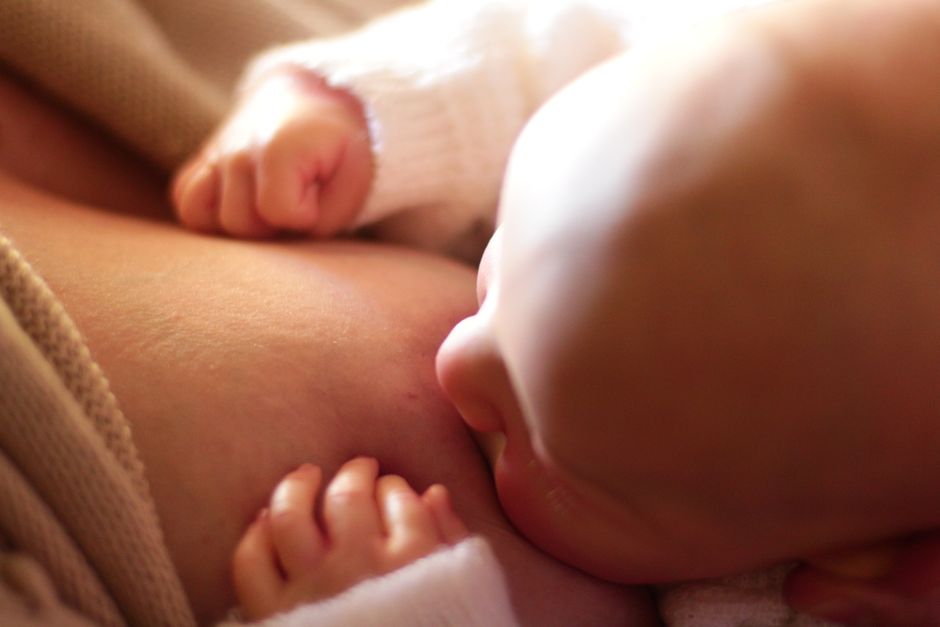
Breastfeeding can increase the chance of having twins because it naturally changes your hormone levels in a way that makes your ovaries more likely to release two eggs at once. This is not a myth, and it is not something a woman can control. It is a biological response that happens for a small group of women who are still nursing when they conceive again.
What Does Breastfeeding Have To Do With Ovulation?
To understand the connection, you have to look at how the brain talks to the ovaries. Ovulation is controlled by a chain of hormones. The brain releases something called GnRH, which tells the pituitary gland to release FSH and LH. Those are the hormones that make an egg mature and then release it.
When you breastfeed, your body produces high levels of prolactin. Prolactin is the hormone that makes milk. High prolactin also suppresses GnRH. That suppression is why many women do not get a period while they are exclusively breastfeeding. It is a natural form of birth control, though not a reliable one.
Here is where the twin connection appears. As your baby starts eating solid food and nursing less, your prolactin levels begin to drop. Your brain starts releasing GnRH again. But in the first few cycles after breastfeeding slows down, that hormone system does not always return to normal smoothly. It can overcorrect.
Why Does The Body Release Two Eggs?
When the hormone system wakes back up, it sometimes releases a larger burst of FSH than usual. FSH is the hormone that recruits eggs to mature in the ovary. A bigger burst can cause two follicles to mature at the same time. If both release an egg, and both get fertilized, you have fraternal twins.
Fraternal twins are the only kind affected by this. Identical twins happen when one egg splits after fertilization. That event is random and has no known link to breastfeeding or any other maternal behavior.
This phenomenon has a name in the medical literature. It is sometimes called the “breastfeeding rebound effect” or described as a rebound in fertility. The key point is that it is not about the act of nursing itself. It is about the transition back to normal cycles after months of lactation-related suppression.
How Strong Is The Effect?
Research on this topic is not huge, but the studies that exist point in the same direction. Some research suggests that women who conceive while still breastfeeding are more likely to have fraternal twins than women who have stopped nursing. The effect appears strongest in the first few menstrual cycles after breastfeeding frequency drops.
One important detail: this does not mean breastfeeding causes twins in most women. The majority of women who conceive while nursing will have a single baby. The increased chance is real but modest. It shifts the odds slightly, it does not flip them.
For context, the general rate of fraternal twins in the United States is about 6 in every 1,000 births. Some studies of women who conceived while breastfeeding have reported higher rates, but the numbers vary. The exact increase is hard to pin down because many factors influence twinning, including age, family history, and ethnicity.




Does This Apply To All Breastfeeding Women?
No. The effect depends on how much you are nursing and where you are in the weaning process. Women who are exclusively breastfeeding around the clock have very low estrogen and very high prolactin. Most of them are not ovulating at all, so they cannot conceive twins or a single baby.
The window of increased twinning risk opens when nursing becomes less frequent. This usually happens around six months when solids are introduced, or whenever a baby starts sleeping through the night and drops feedings. It can also happen if you are pumping less or if your baby self-weans.
Your age matters too. Women over 30 are more likely to release multiple eggs in any given cycle. Add the breastfeeding rebound effect on top of that, and the chance goes up further. But again, this is about probability, not certainty.
Is This The Same As Fertility Treatment?
No. Fertility medications like clomiphene or gonadotropins are designed to stimulate the ovaries directly. They produce a much larger effect and a much higher twin rate. The breastfeeding rebound effect is a natural, milder version of the same idea, but it is not comparable in strength.
Some people hear about the breastfeeding-twin link and assume it means nursing is a fertility treatment. It is not. It is a natural hormonal event that slightly raises the odds for a short window of time. It is not something you can time or control, and there is no evidence that nursing longer or harder increases the effect.
There is also no evidence that pumping versus nursing makes a difference. The key variable is prolactin levels, and those are influenced by how often milk is removed from the breasts, not by the method of removal.
What About The “Twin Nursing” Myth?
There is a popular idea that if you breastfeed twins, you will somehow get pregnant with more twins later. That is not supported by evidence. Having twins already does not make you more likely to have twins again because of breastfeeding. The only reason a woman might have twins again is if she tends to release multiple eggs naturally, which is partly genetic.
Another myth is that breastfeeding can be used as a reliable way to plan for twins. That is not true. You cannot control when or whether your body releases two eggs. The rebound effect is an unpredictable biological event, not a strategy.
Should You Consider This When Planning A Pregnancy?
If you are breastfeeding and hoping to conceive again, the information is useful but not something you can act on directly. You cannot choose to have the rebound effect. It either happens or it does not.
If you are breastfeeding and not hoping to conceive, this information matters in a different way. Breastfeeding is not reliable birth control. Even if you are nursing frequently, ovulation can return before your first period. Some women ovulate before they ever get a period back, which means they can conceive without knowing their cycle has resumed.
The takeaway is simple: if you are nursing and sexually active, and you do not want another pregnancy right now, use a reliable method of contraception. The breastfeeding twin effect is a real biological phenomenon, but it is not something you can plan around or use to your advantage.
What Does The Research Actually Show?
The strongest evidence for the breastfeeding-twin link comes from observational studies. These are studies that look at large groups of women and track what happens to them over time. They do not prove cause and effect, but they can show strong associations.
Some research published in medical journals has reported that women who conceived within a few months of weaning, or while still nursing, had a higher rate of fraternal twins. Other studies have found a smaller effect or none at all. The evidence is not uniform, which is why doctors do not state this as a firm rule.
What is well established is the physiology. The hormonal rebound after lactation is real. The extra FSH burst is real. The fact that two eggs can mature in that window is real. The uncertainty is about how often this translates into an actual twin pregnancy.
Frequently Asked Questions
Can breastfeeding cause twins?
Breastfeeding can slightly increase the chance of fraternal twins in the first cycles after nursing becomes less frequent. It does not cause twins in the majority of women.
How long does the increased twin chance last after breastfeeding?
The effect appears strongest in the first few menstrual cycles after breastfeeding frequency drops. Once your cycles return to a regular pattern, the chance likely returns to your baseline.
Does exclusive breastfeeding prevent twins?
Exclusive breastfeeding often prevents ovulation entirely, which prevents pregnancy of any kind. The twin effect only appears when nursing becomes less frequent and ovulation resumes.
Is it safe to get pregnant while still breastfeeding?
Getting pregnant while breastfeeding is generally safe, but it can be physically demanding. Talk to your doctor about nutrition, iron levels, and whether to continue nursing through the pregnancy.
