
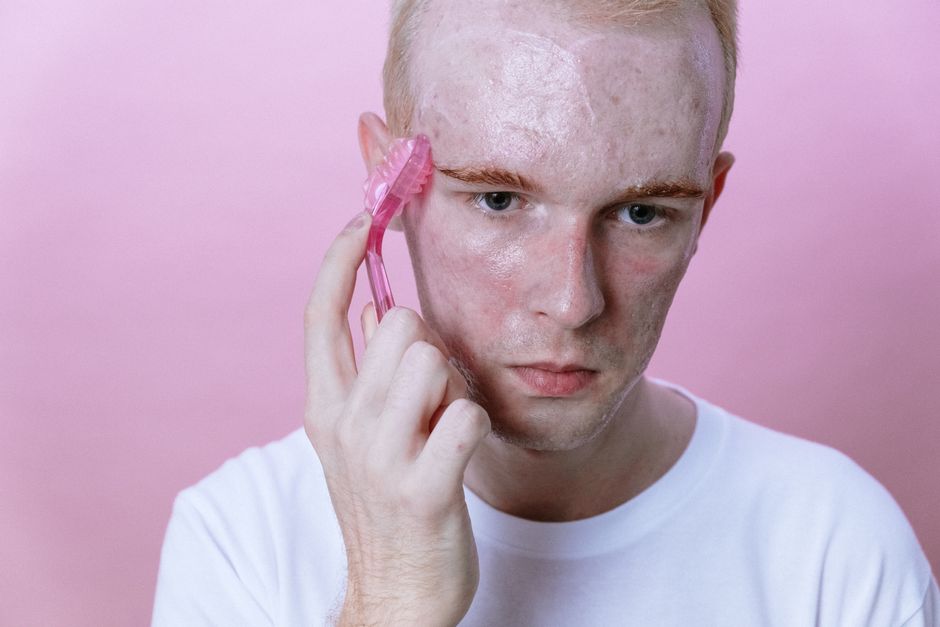
Acne happens when hair follicles in the skin get clogged with oil and dead skin cells, and that clogging process is driven by four main forces: excess oil production, dead skin cells that shed abnormally, the bacterium Cutibacterium acnes, and inflammation. Hormones are the biggest driver of oil production, which is why acne clusters in the teenage years, around menstrual cycles, and during pregnancy. Stress and diet can influence the process too, but usually as contributors rather than sole causes.
What Actually Happens Inside a Pore During Acne
Each pore on your skin is the opening of a hair follicle, and inside that follicle sits a sebaceous gland. This gland produces sebum, an oily substance that normally travels up the follicle and out onto the skin, where it helps keep skin lubricated and waterproof.
Acne starts when this normal process goes wrong in three connected ways.
- Sebaceous glands produce more oil than usual, often because of hormone signals.
- Skin cells lining the follicle shed faster than they can exit, so they mix with the oil and form a plug.
- The plugged follicle becomes a low-oxygen environment where C. acnes — a bacterium that lives on everyone’s skin — can multiply.
The immune system then responds to the bacteria and the blocked follicle, producing redness, swelling, and pus. That inflammatory response is what turns a simple clogged pore into a red, tender pimple or a deeper cyst.
This sequence is well established. What varies between people is how strongly each step is triggered, and that is largely genetic.
Why Does Acne Happen Hormones Stress And More?
Hormones are the single most important biological driver of acne. Androgens — hormones present in both males and females, though in different amounts — signal the sebaceous glands to produce more sebum. When androgen levels rise or when the glands become more sensitive to them, oil production increases and acne becomes more likely.
This is why acne so often begins around puberty, when androgen levels climb sharply in both sexes. It is also why acne can flare before a menstrual period, when hormone shifts occur even though overall androgen levels may not change dramatically. The glands appear to respond to normal hormonal fluctuations more strongly in some people than others.
Stress enters the picture differently. When you are under stress, the body releases cortisol and other hormones. Some research suggests these stress hormones can stimulate sebaceous glands and worsen inflammation, which may explain why breakouts sometimes appear during exam periods or difficult life events. The evidence here is real but not as strong as the evidence for androgens. Stress is best understood as a contributing factor, not the root cause of acne.
Other factors that genuinely matter include:
- Genetics. If a parent had significant acne, you are more likely to have it too.
- Certain medications. Some drugs, including certain steroids and some seizure medications, are known to trigger acne.
- Cosmetics and skin products. Heavy or oily products can block pores, a condition sometimes called acne cosmetica.
- Friction and pressure. Helmets, tight collars, backpacks, and phone screens held against the face can mechanically irritate follicles.
One clarification worth making: acne is not caused by dirty skin. Overwashing and harsh scrubbing can irritate skin and make things worse, not better. The clogging happens deep inside the follicle, where surface cleaning cannot reach.
Does Diet Really Cause Acne?
Diet’s role in acne is real but more modest than many people assume. The strongest evidence concerns high-glycemic diets — eating patterns heavy in refined carbohydrates and sugars that raise blood sugar quickly.
Some studies suggest that high-glycemic diets may worsen acne, possibly by raising insulin levels, which in turn can increase androgen activity and oil production. Research on dairy is less consistent. Some studies indicate an association between certain dairy products and acne, particularly skim milk, but the findings vary and no clear mechanism has been confirmed. The evidence is mixed.
What this means practically: there is no single food that causes acne in everyone, and eliminating foods is not a guaranteed fix. If you suspect a specific food triggers your breakouts, that is worth discussing with a clinician rather than assuming. Cutting entire food groups on your own can create nutritional gaps.





Is Acne Genetic or Something You Can Prevent?
Acne has a strong genetic component. Twin studies and family studies have found that acne tends to run in families, and identical twins are more likely to have similar acne patterns than fraternal twins. This suggests that the tendency toward acne — how much oil your glands produce, how your follicles shed cells, and how your immune system responds — is partly inherited.
That said, genetics set the stage; they do not write the entire script. Environmental and lifestyle factors can influence how severe acne becomes. You cannot prevent the underlying tendency, but you can reduce some triggers.
Steps that are generally supported:
- Wash your face gently twice a day with a mild cleanser.
- Use skincare and makeup labeled non-comedogenic, meaning less likely to clog pores.
- Avoid picking or squeezing pimples, which can push inflammation deeper and increase scarring risk.
- Keep hair products off your face where possible.
- Manage stress where you can, understanding this is a contributor rather than a cure.
What does not help: scrubbing hard, using many harsh products at once, or expecting overnight results. Acne treatments typically take weeks to show improvement, and this timeline is well established in clinical practice.
When Acne Is More Than a Surface Problem
Acne is common, but it is not always minor. Moderate to severe acne can cause lasting scars and significant emotional distress. Research has consistently linked acne with higher rates of anxiety and depression, particularly in teenagers and young adults. This is not vanity — it is a recognized quality-of-life issue.
Some signs that acne deserves medical attention rather than self-treatment:
- Deep, painful nodules or cysts
- Scarring beginning to form
- Acne that is not improving after several weeks of over-the-counter treatment
- Acne affecting your mood or daily life
For persistent or severe acne, a clinician may discuss prescription options. These include topical retinoids, topical or oral antibiotics, hormonal treatments for some women, and in severe cases, isotretinoin. Each has benefits and risks that need individual discussion. No treatment is right for everyone, and the choice depends on the type and severity of acne, your history, and other health factors.
One point that is often misunderstood: acne is not something you outgrow on a predictable schedule. Some people see it resolve in their early twenties, while others continue to have acne into their thirties, forties, and beyond. Adult acne is common, especially in women, and it is not a sign that something is fundamentally wrong with your skin.
What Does Not Cause Acne
Several popular beliefs about acne are not supported by evidence, and it is worth naming them directly.
- Chocolate. The link between chocolate and acne is weak. Some studies have looked at it, but results are inconsistent, and any effect may relate to sugar content rather than chocolate itself.
- Poor hygiene. Acne is not caused by not washing enough. The process starts inside the follicle.
- Greasy foods. Eating oily food does not directly transfer oil to your skin. The evidence connecting fried foods to acne is limited.
- Sexual activity. This is a myth with no scientific basis.
Understanding what does not cause acne matters because it can prevent unnecessary guilt, restrictive diets, and harsh skincare routines that do more harm than good.
Frequently Asked Questions
Why does acne happen during puberty?
During puberty, androgen levels rise in both males and females, which signals the sebaceous glands to produce more oil. That extra oil, combined with faster skin cell shedding, makes plugged follicles more likely.
Can stress alone cause acne?
Stress alone is unlikely to cause acne in someone who is not already prone to it, but it can worsen existing acne by influencing hormones and inflammation. The evidence supports stress as a contributing factor, not a root cause.
Is acne hereditary?
Yes, acne has a strong genetic component, and it often runs in families. Genetics influence oil production, how follicles shed cells, and how the immune system responds.
Does diet cause acne?
Diet can contribute to acne in some people, particularly high-glycemic diets, but it is rarely the sole cause. The evidence on dairy is mixed and no single food causes acne in everyone.
