
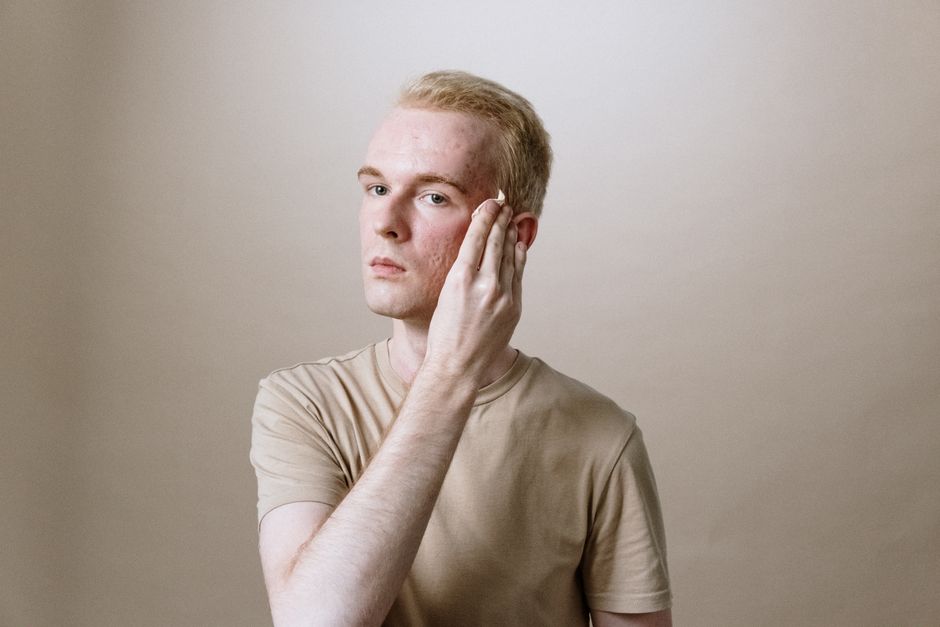
Acne happens because your skin produces too much oil, pores get clogged with dead skin cells, bacteria grow, and your immune system responds with inflammation. Hormones, genetics, and certain triggers drive this process. Understanding the biology explains why acne is not simply about dirt or diet — it is a complex skin condition rooted in normal bodily functions that sometimes go off balance.
What Causes Acne to Form?
Acne starts in your pores — tiny openings called hair follicles. Each follicle contains a sebaceous gland that makes an oily substance called sebum. Sebum normally keeps skin moist and protected. But when your body produces too much sebum, it mixes with dead skin cells that the follicle sheds naturally. Instead of sloughing off, these cells become sticky and build up, forming a plug inside the pore. This plug is called a comedone — a whitehead if closed, a blackhead if open to the air.
Once the pore is blocked, a bacterium that normally lives on your skin — Cutibacterium acnes — multiplies rapidly. Your immune system detects this overgrowth and sends white blood cells to attack. The result is redness, swelling, heat, and pus — in other words, inflammation. That inflamed bump is what most people call a pimple. Deeper, more painful lesions called cysts and nodules form when the follicle wall ruptures and the infection spreads into surrounding skin.
How Do Hormones Influence Acne?
Androgens — hormones such as testosterone — stimulate the sebaceous glands to make more sebum. This surge happens naturally during puberty and is why acne commonly starts in the teenage years. But hormones continue to affect skin throughout life. In women, monthly changes in estrogen and progesterone can trigger breakouts. Stress raises cortisol levels, which may also increase sebum production. This is why acne often flares during exams, job changes, or other stressful periods. The link is hormonal, not a sign of poor hygiene.
Why Does Acne Exist The Biology Behind Breakouts
From an evolutionary standpoint, acne does not appear to serve a direct purpose. It is a byproduct of other traits that did have value. Producing sebum likely helped early humans protect their skin from dryness, infection, and UV damage. A certain amount of C. acnes bacteria also contributed to a healthy skin barrier. But in modern environments — with rich diets, high stress, and hormonal changes — these same mechanisms can go into overdrive. The immune response that fights infection also causes the red, painful inflammation of acne. So acne exists because the systems that keep your skin healthy can sometimes overshoot, especially when genetics and environment push them too far.
The biology is not about cleaning pores or purging toxins. It is about a mismatch between ancient skin biology and modern triggers. Your body is not trying to break out — it is trying to protect itself, and the result is a pimple.





Are There Genetic Factors in Acne?
Yes, genetics play a significant role. Studies of twins show that about 50 to 90 percent of acne risk comes from inherited factors. Specific genes influence how much sebum you produce, how quickly your skin cells shed, how strongly your immune system reacts to bacteria, and how your body processes hormones. If both your parents had acne as teenagers, your chance of having it is much higher. No single gene causes acne, but many small variations add up.
What Role Does Diet Play in Acne?
The evidence on diet is mixed but growing. High-glycemic foods — white bread, sugary drinks, chips — cause blood sugar spikes that increase insulin and insulin-like growth factor (IGF-1). These hormones can boost sebum production and skin cell turnover. Some studies also link dairy, especially skim milk, to acne, possibly because of hormones naturally present in cow’s milk. However, not everyone responds the same way. Some people can eat these foods with no breakouts. Diet alone does not cause acne, but for some individuals, it can make existing acne worse.
How Is Acne Treated Based on Its Biology?
Treatments target the four main causes: excess oil, clogged pores, bacteria, and inflammation. Over-the-counter products often contain benzoyl peroxide, which kills bacteria and helps unclog pores. Salicylic acid helps shed dead skin cells. Topical retinoids — like adapalene — speed up skin cell turnover and prevent plugs from forming. For more severe cases, doctors may prescribe oral antibiotics to reduce bacteria and inflammation, hormonal therapy (birth control pills or spironolactone) to lower androgen effects, or isotretinoin, a powerful retinoid that shrinks sebaceous glands. Each treatment works on a specific part of the biological chain. No single approach works for everyone, and it often takes trial and error to find what helps.
It is important to note that no large human trial has proven that any specific food or lifestyle change cures acne. Some clinicians recommend dietary adjustments based on limited evidence, but the strongest results come from proven medical treatments combined with consistent skin care.
Frequently Asked Questions
Does stress cause acne?
Stress does not directly cause acne, but it can make existing acne worse by raising cortisol levels, which may increase oil production.
Can diet cure acne?
No diet has been proven to cure acne, but reducing high-glycemic foods and dairy may help some people see fewer breakouts.
Is acne a sign of poor hygiene?
No. Acne starts inside the pore, not on the surface. Washing too much can actually irritate skin and make acne worse.
Does acne go away with age?
Acne often improves after the teenage years, but many adults in their 30s, 40s, and 50s still get breakouts due to hormones, stress, or genetics.
