
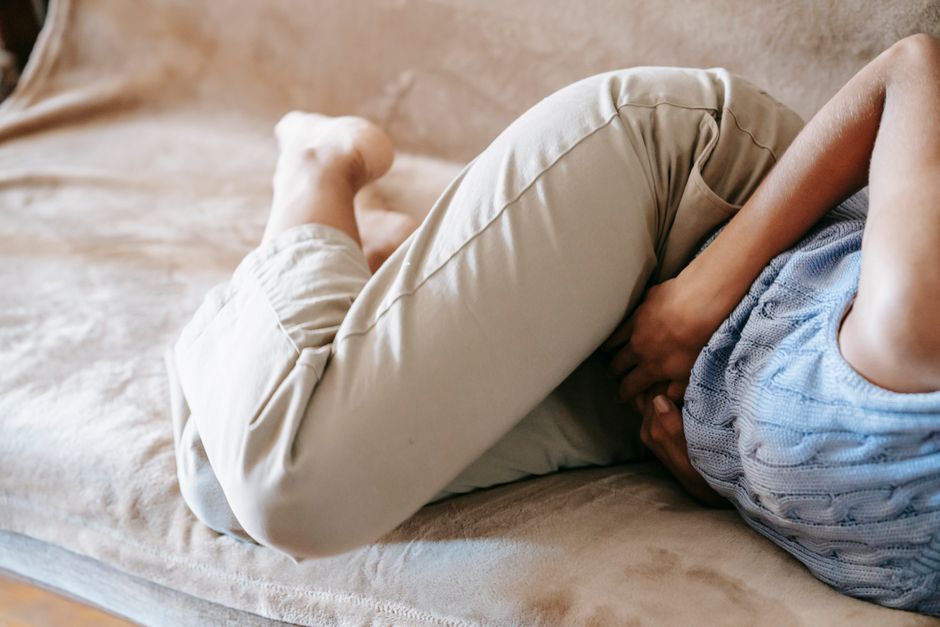
Waking up with a sharp or aching pain in your hip after sleeping on your side is a common problem. The pain usually comes from pressure on the soft tissues around the joint, not the joint itself. When you lie on your side, your body weight concentrates on a small area over the bony part of your hip, which can irritate the bursa, tendons, or nerves in that region.
What Exactly Causes the Pain When You Sleep on Your Side?
The most frequent culprit is pressure on the greater trochanter. That is the bony bump you can feel on the outside of your upper thigh. This area has a fluid-filled sac called a bursa over it. This sac reduces friction between the bone and the tendons above it.
When you press this area against a firm mattress for hours, the bursa can become irritated. This condition is called trochanteric bursitis. It is not an infection. It is inflammation from mechanical pressure. The pain typically feels like a deep ache on the outside of the hip and can be tender to the touch.
Another common cause involves the gluteal tendons. These tendons attach the buttock muscles to the greater trochanter. Repeated pressure can strain these attachments. Over time, this can lead to gluteal tendinopathy. This is a different problem than bursitis but produces a similar location of pain.
Your sleeping position matters more than you might think. If you sleep with your top leg dropped forward, it twists your pelvis. This pulls on the hip muscles and can increase strain on the side you are lying on. A neutral spine position keeps the pelvis level and reduces this tug-of-war on your hip structures.
Is It Your Hip Joint or the Soft Tissues Around It?
True joint pain from arthritis usually feels different. It tends to be located in the groin or the front of the hip. It often worsens when you first start walking after rest, a symptom called start-up pain. It typically improves as you move around.
Side-lying pain at the bony prominence is usually a soft tissue issue. The joint itself is deep inside the body. It is not directly under the skin on the outer side of your thigh. If your pain is on the outer hip and you can reproduce it by pressing on the bone, it is more likely bursitis or tendinopathy than arthritis.
There is a well-known clinical test for this distinction. If you can lie on the painful side and the pain is immediate and localized to the outer bone, that points to a soft tissue problem. If the pain is in the groin or feels deep inside the joint, that points to an intra-articular problem like osteoarthritis or a labral tear.
Nerve compression can also produce side-lying hip pain. The sciatic nerve passes near the hip. The lateral femoral cutaneous nerve runs across the outer thigh. Pressure on these nerves can cause burning, tingling, or numbness that radiates down the leg. This feels different from the dull ache of bursitis.
Why Does the Pain Sometimes Move or Feel Like It Is in the Buttock?
Pain referral patterns complicate the picture. The structures around the hip share nerve pathways with the lower back and buttock. This means a problem in one area can feel like it is coming from another.
Lumbar spine issues can refer pain to the hip region. Facet joint irritation or disc problems in the lower back can produce pain that feels like it is in the outer hip or buttock. This is why a thorough evaluation often includes the lower back, not just the hip.
The piriformis muscle sits deep in the buttock. It can become tight or spasmodic. When it does, it can compress the sciatic nerve. This produces buttock pain that may worsen when lying on the affected side. Some clinicians call this piriformis syndrome, though the diagnosis remains debated in the medical literature.
Your sleeping position can aggravate these referral patterns. If you twist your spine while side-sleeping, you put stress on the lumbar facet joints. This can trigger referred pain that you perceive as hip pain. Correcting spinal alignment often reduces this type of discomfort.
What Can You Do to Reduce the Pain Tonight?
Positioning changes are the first line of defense. Place a firm pillow between your knees. This keeps your top hip from dropping forward and maintains a neutral pelvis. The pillow should be thick enough to keep your top knee level with your bottom knee.
A second pillow under your waist can help if you have a curved lower back. This fills the gap between your ribs and pelvis. It reduces lateral bending of the spine. Less spinal curvature means less pull on the hip structures.
Mattress firmness plays a role. A mattress that is too soft lets your hip sink down. This increases the angle at the hip and can compress the bursa more. A mattress that is too firm creates a hard pressure point. Medium-firm is generally a reasonable starting point, but individual preference matters.
Applying ice to the tender spot before bed can reduce inflammation. Use a thin cloth between the ice pack and your skin. Limit ice application to 15 to 20 minutes. Heat is less helpful for acute pressure-related inflammation but can relax tight muscles around the hip.
Over-the-counter pain relievers can help in the short term. Nonsteroidal anti-inflammatory drugs like ibuprofen or naproxen reduce inflammation. Acetaminophen reduces pain but does not address inflammation. Follow the dosing instructions on the label. If you have kidney disease, stomach ulcers, or take blood thinners, talk to your doctor before using these.
When Should You See a Doctor About Side-Sleeping Hip Pain?
Occasional discomfort that resolves with positioning changes is not usually a medical emergency. You can try conservative measures for a few weeks. If the pain persists despite these changes, seek medical evaluation.
See a doctor promptly if the pain is severe, if you cannot bear weight on that leg, or if the area looks red, swollen, or feels warm to the touch. These signs can indicate a fracture, infection, or blood clot. These are rare but require urgent attention.
Night pain that wakes you from sleep is worth investigating. While side-lying pressure pain can wake you, pain that is present regardless of position and interrupts sleep consistently may point to an inflammatory condition or nerve problem that needs evaluation.
A clinician can perform specific physical examination maneuvers to differentiate bursitis from tendinopathy from joint disease. Imaging such as ultrasound or MRI may be ordered if the diagnosis is unclear or if conservative treatment fails. These tests are not needed for every case of side-lying hip pain.
What Are the Treatment Options if Home Measures Do Not Work?
Physical therapy is the most evidence-supported treatment for gluteal tendinopathy. A therapist can teach you exercises to strengthen the gluteal muscles. Stronger muscles take pressure off the underlying tendons and bursa. This is not a quick fix. It typically requires consistent effort over several weeks.
Corticosteroid injections are sometimes used for trochanteric bursitis. These injections deliver strong anti-inflammatory medication directly to the irritated area. They can provide rapid relief, but they do not address the underlying cause. The pain often returns if the mechanical problem is not corrected.
Some clinicians recommend extracorporeal shockwave therapy for chronic gluteal tendinopathy. This treatment uses sound waves to stimulate healing in the tendon. The evidence is mixed. Some studies show benefit, while others show no significant difference compared to placebo. It is not a first-line treatment.
Surgery is rarely needed for side-lying hip pain. It is reserved for cases where conservative treatment has failed for many months and imaging confirms a structural problem that can be addressed surgically. Most people with this condition improve without surgery.
Can Your Sleeping Position Cause Long-Term Hip Damage?
Side-sleeping itself does not damage the hip joint. The cartilage inside the joint is not harmed by pressure from lying on your side. The concern is the soft tissues around the joint. Chronic, untreated inflammation in the bursa or tendons can lead to thickening and scarring of those tissues over time.
This is not permanent damage in the sense of joint destruction. It is more like a chronic overuse injury. The tissues become less resilient. They may hurt more easily with less pressure. This is why addressing the problem early with positioning and strengthening is worthwhile.
There is no evidence that side-sleeping causes or accelerates hip osteoarthritis. Osteoarthritis is driven by genetic factors, prior injury, age, and weight. Sleeping position does not appear in the list of modifiable risk factors for hip arthritis in the medical literature.
What side-sleeping can do is expose an underlying problem. If you already have mild bursitis or tendinopathy, sleeping on that side will make it worse. The position is not the root cause. It is the aggravating factor. Treating the underlying tissue problem is more important than changing your fundamental sleeping preference.
Frequently Asked Questions
Why does my hip hurt only when I sleep on that side?
Pressure on the bony bump of your hip irritates the bursa and tendons over several hours. The pain is mechanical, so it only appears when you put weight on that specific area.
Should I stop sleeping on my side if my hip hurts?
You do not need to stop entirely, but you should change how you do it. Place a firm pillow between your knees to keep your pelvis level and reduce pressure on the outer hip.
Is a firm or soft mattress better for hip pain?
Medium-firm is usually a reasonable starting point. A mattress that is too soft lets your hip sink and increases joint angle, while one that is too hard creates a pressure point on the bursa.
How long does hip bursitis take to heal?
With consistent positioning changes and appropriate treatment, most people see improvement within four to six weeks. Full recovery from tendinopathy can take longer, often two to three months of targeted exercise.
