
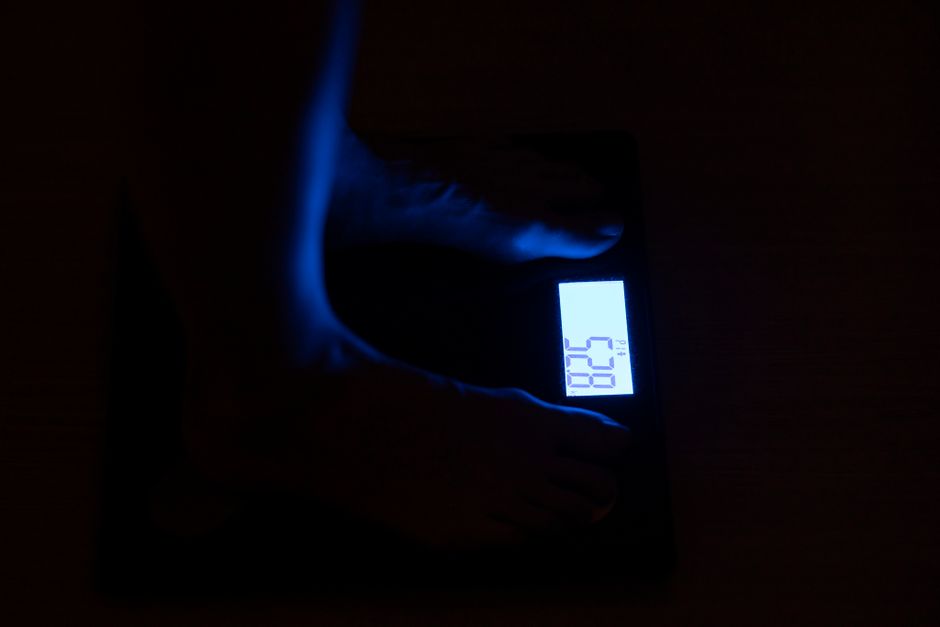
Stepping on the scale first thing in the morning often shows a lower number than it does later in the day. This is a normal daily pattern, not a mystery or a sign of a health problem. You weigh less in the morning primarily because your body has been fasting overnight and you have lost water through breathing and sweating while you slept. The difference is mostly about fluid loss and the timing of your last meal, not a real change in body fat.
What Causes the Morning Weight Difference?
The number on the scale changes throughout the day for several physical reasons. Overnight, your body continues to perform essential functions. You breathe out moisture, you sweat a small amount, and your kidneys produce urine. All of these processes remove water from your body.
You also have not eaten or drunk anything for many hours while you slept. This means no new food or fluid is entering your system to replace what your body naturally uses and releases. The combination of overnight water loss and an empty stomach creates the lower morning weight.
This is not a loss of fat. Fat loss happens over weeks and months when you consistently burn more calories than you consume. The morning scale reading is a snapshot of your current hydration status, not your overall body composition.
How Much Weight Do You Lose Overnight?
The amount of weight lost overnight varies from person to person. It depends on your body size, how much you sweat during sleep, the temperature and humidity of your bedroom, and how much you drank before bed.
Most people lose between one and two pounds overnight. Some people lose more if they sweat heavily or sleep in a warm room. Others lose less if they are well hydrated or have a smaller body frame. This range is normal and does not indicate anything about your health or your weight loss progress.
You regain this weight quickly once you start drinking fluids and eating food in the morning. A glass of water alone can replace several ounces of the overnight loss.
Why Do You Weigh Less In The Morning Than At Night?
Comparing your morning weight to your evening weight shows a clear pattern. During the day, you eat meals and snacks. You drink beverages. All of this food and liquid has physical mass that adds to your total body weight until it is digested, absorbed, and eventually eliminated.
A typical day involves consuming several pounds of food and water. While your body processes these, they contribute to your total weight. By evening, you are carrying the weight of everything you have consumed that day that has not yet been excreted.
After a full night of fasting, your digestive tract is mostly empty. Your body has processed the previous day’s food, and your kidneys have filtered out excess fluids. The morning scale reflects a body in a fasted, dehydrated state relative to the rest of the day.





Does Sleep Itself Affect Your Weight?
Sleep affects your weight in ways beyond just the overnight fast. During deep sleep, your body repairs tissues and regulates hormones. Two hormones involved in appetite control — ghrelin and leptin — are influenced by sleep quality.
Ghrelin signals hunger. Leptin signals fullness. When you do not get enough sleep, research shows that ghrelin levels can rise and leptin levels can fall. This combination can make you feel hungrier the next day and may lead to eating more than usual.
This hormonal effect does not directly change the number on the scale in the morning. But poor sleep over time can influence your eating habits, which can affect your weight over weeks and months. The immediate morning weight difference is still primarily about fluid and food timing.
What Is the Best Way to Weigh Yourself?
If you track your weight, consistency matters more than the specific number on any given day. Weighing yourself under the same conditions each time gives you the most useful data for spotting trends.
The most reliable approach is to weigh yourself at the same time each morning under the same conditions. Most experts suggest weighing yourself after using the bathroom and before eating or drinking anything. Wear the same amount of clothing or none at all. Place the scale on a hard, flat surface rather than carpet.
Daily weight naturally fluctuates by several pounds due to water retention, salt intake, hormonal changes, and digestive timing. A single reading tells you very little. Looking at the trend over one to two weeks gives you a much clearer picture of whether your weight is actually changing.
Should You Weigh Yourself Every Day?
Daily weighing works well for some people and poorly for others. Research on self-weighing shows mixed results. Some studies indicate that daily weighing helps people stay on track with weight management goals. Other research suggests that for some individuals, daily fluctuations cause anxiety and lead to unhealthy behaviors.
If you find that daily numbers upset you or make you obsess over small changes, weighing less frequently may be a better choice. Once a week at the same time and under the same conditions provides useful data without the daily noise.
If you do weigh daily, understand that the number will bounce around. A two to three pound swing from one day to the next is normal and does not mean you gained fat. Fat gain of that magnitude would require eating roughly 7,000 to 10,500 extra calories beyond what your body burns, which is unlikely in a single day.
When Should You Be Concerned About Weight Changes?
Most daily weight fluctuation is completely normal. However, some patterns may warrant attention. If your weight climbs steadily over several weeks without changes to your diet or activity level, it is worth discussing with a healthcare provider.
Sudden large weight gain over a day or two — especially several pounds — can indicate fluid retention that may be related to kidney, heart, or liver issues. This is different from the normal one to two pound overnight variation.
Unexplained weight loss can also be a concern. Losing weight without intentionally changing your eating or exercise habits may signal an underlying medical condition. If you notice this pattern, mention it to your doctor.
Does the Type of Scale Matter?
Standard bathroom scales measure total body weight. Smart scales and bioelectrical impedance scales estimate body fat percentage and other metrics by sending a weak electrical current through your body. These estimates can be useful for tracking trends but are not highly precise.
Hydration levels significantly affect bioelectrical impedance readings. Being dehydrated, as you are in the morning, can make body fat estimates read higher than they actually are. For the most consistent body fat trend data, use the scale under the same hydration conditions each time.
For tracking purposes, the specific scale matters less than using the same scale consistently. Different scales can vary by a pound or more. Stick with one scale and place it in the same spot each time for the most reliable comparisons.
Frequently Asked Questions
Why do I weigh less in the morning than at night?
You weigh less in the morning because your body lost water overnight through breathing and sweating, and your digestive tract is empty after fasting for many hours. This difference is mostly fluid and food mass, not fat loss.
How much weight do you lose overnight while sleeping?
Most people lose between one and two pounds overnight. The exact amount depends on your body size, how much you sweat, and the temperature of your sleeping environment.
Is it better to weigh yourself in the morning or at night?
Morning is the better time because your weight is more consistent after an overnight fast. Weighing yourself at the same time each morning after using the bathroom gives you the most reliable comparisons.
Why does my weight go up after I drink water?
Water has physical mass, so drinking it adds to your total weight until your body processes and eliminates it. This is temporary and does not represent fat gain.
