
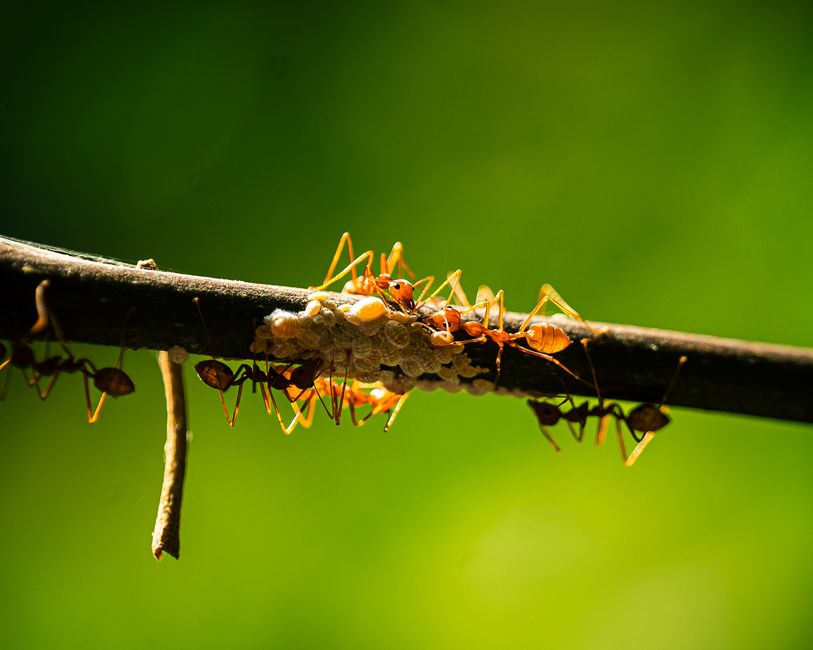
Ants come into your house for the same reason any animal goes anywhere: food, water, and shelter. A single scout ant finds a crumb on your counter, lays down a chemical trail on the way back to the colony, and within hours dozens of workers are following that exact path into your kitchen. The colony isn’t trying to invade you. It’s just doing what ants do — exploiting a reliable resource.
That distinction matters, because it changes how you deal with them. Killing the ants you see rarely solves the problem. Finding out why they’re coming in, and where they’re going, usually does.
Why Do You Have Ants In Your House?
Ants enter homes because homes offer what colonies need to survive. Most infestations trace back to one of three things: accessible food, moisture, or a physical route inside.
Food is the most common driver. Ants are opportunistic feeders. Sugary spills, pet food bowls, grease residue, open garbage, and even toothpaste or soap can attract certain species. Different ants prefer different foods, which is why one kitchen gets tiny sugar ants while another gets larger ants interested in protein and grease.
Moisture matters more than most people realize. Ants need water, and a leaky pipe, a dripping air conditioner line, or a damp basement can make a home attractive even when food is scarce. Some species, including carpenter ants, are drawn to wood that has been softened by moisture — though they nest in it rather than eat it.
Finally, ants need a way in. A gap under a door, a crack in a foundation wall, a hole where utility lines enter, or a branch touching the roofline all work. Ants are small. A gap you can barely see is a highway to them.
What Are Those Tiny Ants In My Kitchen?
The small ants trailing across your counter are most likely one of a few common household species, and identifying the type matters because different species behave differently.
Odorous house ants are among the most frequent kitchen invaders in the United States. They’re small, dark, and release a faint unpleasant odor when crushed. They nest in wall voids, under floors, and in insulation, and they’re strongly attracted to sweets.
Pharaoh ants are smaller still — light yellow to reddish — and they present a genuine complication. They nest indoors in warm, hidden spots and can split into multiple new colonies when disturbed. This is why spraying a visible trail of pharaoh ants can make the problem worse rather than better.
Carpenter ants are much larger, often black or reddish-black, and are typically seen foraging at night. Seeing them indoors can indicate a moisture problem and a nest inside the structure, not just an outside colony wandering in.
Pavement ants and Argentine ants round out the list of common culprits. Argentine ants in particular form enormous interconnected colonies, which is part of why they can seem to reappear no matter what you do.
You do not need to identify the species with certainty to act. But knowing whether you’re dealing with a species that splits colonies — like pharaoh ants — changes which approaches are likely to backfire.
Why Do Ants Keep Coming Back After I Kill Them?
Because the ants you see are a tiny fraction of the colony. Worker ants are expendable. The colony — the queen or queens, the brood, and the nest itself — is what keeps producing new foragers.
When you wipe out a visible trail, you remove the workers but leave the source intact. Within days, new workers find the same food source and rebuild the trail. This is the core reason surface spraying and wiping so often fail.
There’s a second reason. Many ants communicate through pheromone trails, and some species respond to disturbance by relocating or splitting. Killing a line of certain species can scatter them into multiple new nesting sites, which turns one problem into several.
The fix is to address the colony, not the visible ants. That usually means baiting rather than spraying, and sealing the entry points and removing the attractants that keep drawing them back.





How Do You Get Rid Of Ants In The House?
The most reliable approach combines three things: eliminate what’s attracting them, block how they’re getting in, and address the colony itself.
Start with the attractants. Wipe up crumbs and spills immediately. Store food in sealed containers. Rinse recyclables. Take out garbage regularly. Feed pets on a schedule and clean up leftovers rather than leaving food down. Fix any leak or damp spot you can find, because moisture draws ants even when food is limited.
Then block the routes. Seal cracks in foundations and around windows. Use weather stripping on doors. Caulk gaps where pipes and wires enter the house. Trim back tree branches and shrubs that touch the building. These steps won’t kill a colony, but they cut off access.
For the colony itself, baits are generally more effective than sprays for most household ant problems. The logic is straightforward: foraging ants carry bait back to the nest, where it reaches the rest of the colony. Sprays kill foragers on contact but often leave the nest untouched.
One important exception: for pharaoh ants, most guidance recommends against sprays and even against some baits, precisely because disturbing them causes colony splitting. If you suspect pharaoh ants, a pest control professional is usually the better call.
Bait placement matters too. Put baits along the trails ants are already using, not in random spots. Leave them undisturbed for as long as the product label directs — patience is part of how baits work.
Do Home Remedies Actually Work?
Some do, in a limited way. Others don’t, and a few are risky.
Diatomaceous earth can damage the outer layer of ants that walk through it, and it’s sometimes used as a barrier. Its effectiveness depends heavily on keeping it dry and undisturbed, and it works slowly if at all.
Vinegar, lemon juice, and soapy water can wipe out pheromone trails and discourage ants from a specific spot. They don’t reach the colony, so they’re a cleanup tool, not a solution.
Borax-based homemade baits are a common DIY approach, but the ratio matters and getting it wrong can either repel ants or fail to kill them. Commercial baits are formulated to be carried back and shared. If you use borax, follow an established recipe rather than guessing.
What doesn’t work: spraying a visible trail and expecting the problem to end. And what’s risky: using outdoor pesticides indoors, or mixing products. Always follow the label, and keep all pesticides away from children and pets.
When Should You Call A Pest Control Professional?
Call a professional when the problem keeps returning despite consistent baiting and sanitation, when you suspect pharaoh ants, or when you see large ants — carpenter ants — inside the home.
Carpenter ants are worth attention because their presence can point to moisture damage and an indoor nest, which is a structural issue as much as a pest issue. A professional can locate the nest and advise on the moisture problem behind it.
For most small trailing ants, though, a homeowner who removes the food and water sources, seals entry points, and uses bait correctly can often resolve the problem without hiring anyone. If that combination fails after a reasonable effort, that’s the signal to bring in help.
Can Ants In Your House Cause Health Problems?
For most people, household ants are a nuisance rather than a health threat. They don’t transmit disease the way mosquitoes or ticks do, and they don’t bite or sting in most common household species.
There are real exceptions. Some ants can bite or sting, and fire ants in particular can cause painful stings and, in rare cases, serious allergic reactions. Ants that crawl across food or food-prep surfaces can transfer bacteria they’ve picked up elsewhere, which is a reason to keep them out of kitchens and away from food — but this is a contamination concern, not evidence that household ants spread specific diseases to people.
People with allergies should also be aware that some ants can trigger reactions, though this is uncommon. If you experience swelling, difficulty breathing, or other signs of a severe allergic reaction after an ant sting, seek emergency care.
For the vast majority of indoor ant problems, the stakes are practical: contaminated food, damaged pantry items, and the annoyance of a recurring infestation. That’s worth solving, but it’s not usually a medical emergency.
Frequently Asked Questions
Why do ants suddenly appear in my house?
A scout ant found a food or water source and laid a pheromone trail that other workers followed. Once a trail is established, ants can appear in large numbers within hours.
What attracts ants in the house the most?
Food and moisture are the two biggest draws, especially sugary spills, pet food, grease, and any damp area. Sealing food and fixing leaks removes most of what brings them in.
Does killing ants make them come back worse?
For most species, killing visible ants just removes workers while the colony keeps producing more. For pharaoh ants, disturbing them can cause the colony to split into several new nests, making the problem harder to solve.
How long does it take to get rid of ants in the house?
With consistent baiting and removal of attractants, many household ant problems improve within days to a couple of weeks. Species that split colonies or nest deep inside walls can take longer and may need professional help.
