
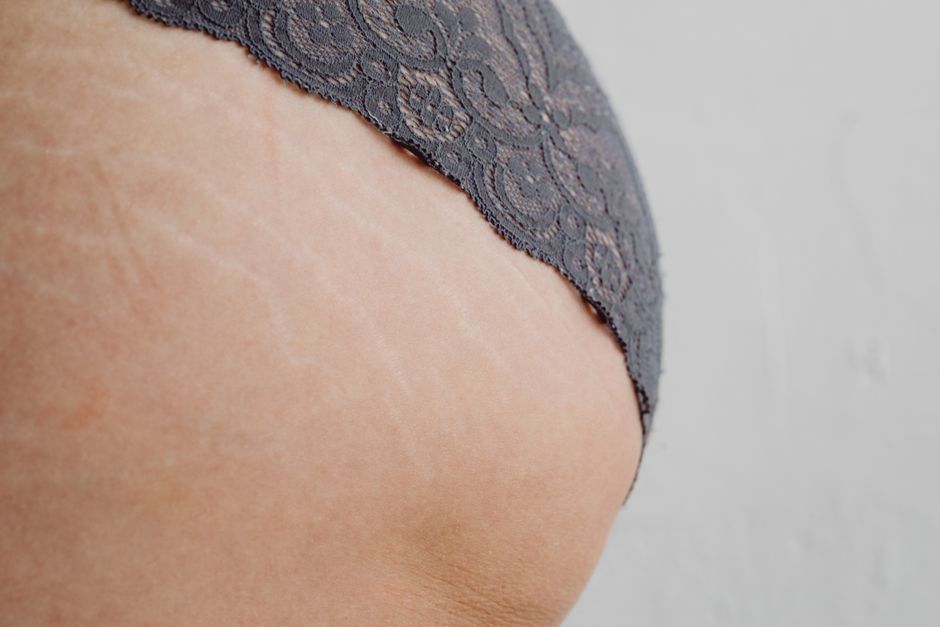
Finding a pimple on your butt is common and usually not a reason to worry. The skin on your buttocks has large pores and hair follicles, and it is often covered by tight clothing that traps heat and moisture. This combination makes it easy for a follicle to become blocked or infected, which looks and feels like a pimple.
Why Do You Have A Pimple On Your Butt?
A true pimple on the butt is usually caused by the same process that causes pimples on your face. Dead skin cells, oil, and bacteria can clog a hair follicle. When that clogged follicle becomes infected with bacteria, it swells, fills with pus, and turns into a red, tender bump.
But the buttocks are different from the face in one important way. You sit on them. Pressure, friction from clothing, and sweat all make the area more prone to irritation. This is why bumps on the butt are often not classic pimples at all. Many are a condition called folliculitis.
Folliculitis is an inflammation or infection of the hair follicle itself. It can look almost identical to acne. The most common cause is the bacteria Staphylococcus aureus, which lives on the skin normally. When a hair follicle is damaged by friction or shaving, that bacteria can get inside and cause an infection.
Is It a Pimple or Something Else?
Not every bump on your butt is a pimple. It is important to know the difference because treatment is not the same.
Folliculitis is the most common culprit. These bumps often have a hair in the center. They can be itchy or tender and may have a white head. They tend to appear in areas where clothing rubs or where you sweat most.
Boils are deeper infections. A boil starts as a firm, red, painful lump that grows larger over a few days. It fills with pus and eventually comes to a head. Boils are larger and more painful than pimples. They happen when the infection spreads deeper into the skin.
Keratosis pilaris can also appear on the buttocks. This condition causes small, rough, painless bumps. They are caused by a buildup of keratin, a protein in the skin, blocking the hair follicle. These are not infected and do not have white heads.
Herpes simplex can cause outbreaks on the buttocks. These look like clusters of small, painful blisters. They may break open and crust over. If you have recurring, painful blisters in this area, see a clinician for testing. This is not a pimple and requires different treatment.
Why Does This Keep Happening?
Recurrent bumps on the butt are a common complaint. The anatomy of the area is partly to blame. The skin on the buttocks is thick. The hair follicles are large and deep. When they become infected, they can be slow to heal and easy to reinfect.
Sitting for long periods is a major factor. Pressure reduces blood flow to the skin. It also traps sweat against the surface. This creates an ideal environment for bacteria to multiply.
Tight clothing makes things worse. Synthetic fabrics like nylon and polyester do not breathe well. They hold moisture against the skin. This softens the outer layer of skin and makes it easier for bacteria to enter hair follicles.
Shaving or waxing the area can also trigger outbreaks. These methods can cause micro-tears in the skin and irritate hair follicles. The hair that grows back can curl into the skin, causing an ingrown hair, which then becomes infected.





How To Treat a Butt Pimple at Home
Most bumps on the butt resolve on their own within a few days to a week. You can speed up healing and reduce discomfort with simple steps.
Keep the area clean. Wash with a mild, unscented cleanser once or twice a day. Do not scrub hard. Gentle cleansing is enough to remove sweat and bacteria.
Apply a warm compress. Soak a clean cloth in warm water and hold it against the bump for 10 to 15 minutes, three to four times a day. This can help bring the infection to a head and allow it to drain on its own.
Do not pop or squeeze the bump. Squeezing pushes bacteria deeper into the skin. It can turn a minor infection into a larger, more painful one. It also increases the risk of scarring.
Over-the-counter treatments can help. Products containing benzoyl peroxide kill bacteria and are commonly used for acne. Products containing salicylic acid help exfoliate dead skin cells. These are reasonable options for mild, recurring bumps.
Keep the area dry. After showering, pat the area dry completely. Wear loose-fitting underwear made of cotton. Change out of sweaty workout clothes as soon as possible.
When To See a Clinician
Most butt bumps do not require medical care. But some situations need professional attention.
See a clinician if the bump is very large, very painful, or getting worse despite home care. A bump that grows over several days may be a boil that needs to be drained by a professional. Do not attempt to drain it yourself.
Seek care if you develop a fever, or if the area becomes increasingly red, warm, or swollen. These can be signs of a spreading infection called cellulitis. This requires prescription antibiotics.
See a clinician if bumps keep coming back in the same spot. Recurrent boils in the groin or buttocks area may be a condition called hidradenitis suppurativa. This is a chronic inflammatory skin condition. It is not a hygiene issue and does not respond to typical acne treatments. A dermatologist can diagnose this and offer treatments that actually work.
Also see a clinician if you have diabetes or a weakened immune system. Skin infections can be more serious in these situations and may need earlier treatment.
Can You Prevent Butt Pimples?
Prevention focuses on reducing friction, moisture, and bacterial growth.
Shower soon after exercise. Sweat left on the skin is a major contributor. If you cannot shower immediately, at least change out of damp clothing and wipe the area dry.
Wear loose, breathable clothing. Cotton underwear allows air circulation. Avoid thongs or tight synthetic underwear, especially during exercise.
Use a gentle exfoliant once or twice a week. This can help prevent dead skin cells from building up and blocking follicles. Do not over-exfoliate, as this can irritate the skin and make things worse.
If you shave the area, use a clean razor and shaving cream. Shave in the direction of hair growth. Consider using an electric trimmer instead of a razor to reduce irritation.
Consider using a benzoyl peroxide wash in the shower two to three times a week. This can reduce the bacterial population on the skin. Start slowly, as it can be drying.
Frequently Asked Questions
Why do I keep getting pimples on my butt?
Recurrent bumps are usually caused by folliculitis, an infection of the hair follicle. Friction from sitting, tight clothing, and sweat all contribute to repeated infections.
Can I pop a pimple on my butt?
No. Popping pushes bacteria deeper into the skin and can turn a minor bump into a larger, more painful infection.
How long does a pimple on the butt last?
Most bumps heal on their own within a week. A warm compress can speed healing and help the bump drain naturally.
Is a bump on my butt a sexually transmitted infection?
Most bumps are not. But herpes simplex can cause painful blisters on the buttocks. If you have recurring, painful blisters, see a clinician for testing.
