
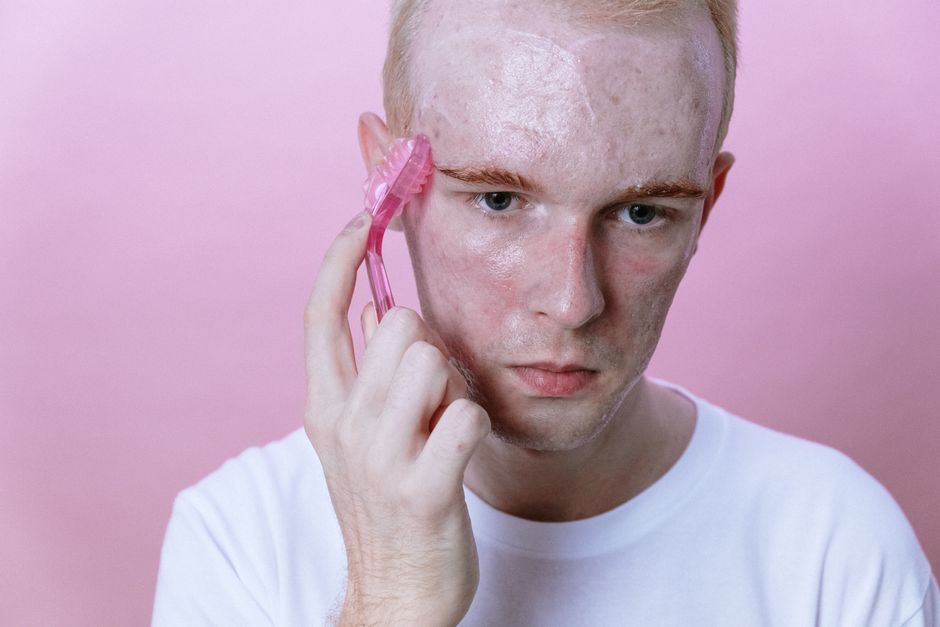
Forehead acne is a direct result of your skin’s oil production interacting with hormones and dead skin cells. Your forehead has a high density of oil glands, making it especially reactive to hormone shifts that increase sebum output. When that excess oil mixes with shed skin cells, it clogs pores, and bacteria can multiply inside the blocked pore, causing inflammation and pimples.
Why Does the Forehead Break Out More Than Other Areas?
Your forehead is part of the T-zone, which includes the forehead, nose, and chin. This area has more sebaceous glands than your cheeks or jawline. These glands produce sebum, the natural oil that keeps skin moisturized.
Because the forehead has so many oil glands, it responds quickly to any change in hormone levels. When androgen hormones increase, they signal these glands to produce more oil. The result is a forehead that looks shiny and becomes prone to clogged pores faster than drier areas of the face.
Friction also plays a role. Hair, hats, headbands, and even your hands can push oil and bacteria into forehead pores. This is sometimes called acne mechanica, and it explains why people who wear sports helmets or religious head coverings often see breakouts in that specific area.
How Do Hormones Trigger Forehead Acne?
Androgens are the main hormones involved in acne. Both men and women produce them, though men produce more. Androgens increase the size of sebaceous glands and stimulate them to produce more oil.
In women, hormone fluctuations during the menstrual cycle are a common trigger. Progesterone levels rise in the second half of the cycle, which can increase oil production. Estrogen levels drop right before the period, and this shift can make skin more sensitive to androgens.
Stress hormones also matter. Cortisol, released during stressful periods, can increase oil production indirectly. Stress does not cause acne on its own, but it can make existing acne worse by amplifying the hormone signals that drive oil production.
Conditions like polycystic ovary syndrome (PCOS) involve higher androgen levels, which often cause persistent acne. If you have irregular periods, excess facial hair, and acne that does not respond to typical treatments, PCOS may be worth discussing with a doctor.
Is Forehead Acne Caused by Oil Alone?
Oil is the starting point, but it is not the whole story. Acne forms when three things happen: excess oil, dead skin cells that do not shed properly, and bacteria called Cutibacterium acnes that live in the pore.
Normally, skin cells shed gradually and are washed away. In people prone to acne, the cells shed in a sticky clump inside the pore. When that clump mixes with oil, it forms a plug. If the plug stays below the surface, it is a whitehead. If it opens to the surface and darkens from exposure to air, it is a blackhead.
Bacteria are always present on skin, but they thrive when a pore is blocked. The blocked pore becomes an oxygen-poor environment where these bacteria multiply rapidly. Your immune system responds by sending white blood cells to fight the bacteria, which causes redness, swelling, and pus — the visible signs of a pimple.
So oil is necessary for acne, but without the dead skin cell buildup and bacterial response, excess oil alone would not cause pimples.




Why Do You Get Forehead Acne Hormones Oil More in Adulthood?
Teenage acne is driven by the hormonal surge of puberty, but adult acne is common too. Research suggests that adult acne affects a significant portion of women, particularly between ages 20 and 40.
Adult acne often presents differently than teenage acne. Teenagers typically get breakouts across the forehead, nose, and chin. Adults, especially women, often see acne on the jawline and lower face. However, forehead acne in adults is still common, particularly when triggered by stress, hormonal birth control changes, or cosmetic products.
One reason adult forehead acne persists is the cumulative effect of pore-clogging products. Hair gels, pomades, sunscreens, and heavy moisturizers can all contribute. These products are called comedogenic, meaning they tend to block pores. If you apply them to your forehead and do not wash them off thoroughly, they add to the oil and dead skin cell mixture that causes acne.
What Actually Works to Clear Forehead Acne?
Over-the-counter treatments are the first step for mild to moderate acne. The most effective options target oil production, dead skin cell buildup, or bacteria.
- Benzoyl peroxide kills bacteria and helps clear blocked pores. It works quickly but can dry the skin, so start with a lower concentration.
- Salicylic acid helps shed dead skin cells inside the pore. It is oil-soluble, meaning it can penetrate the oil that lines the pore.
- Adapalene is a retinoid that normalizes skin cell shedding. It was once prescription-only but is now available over the counter at 0.1% strength.
Consistency matters more than product strength. Acne treatments take at least 6 to 8 weeks to show visible improvement. Switching products every few days will not help and can irritate the skin.
Washing your face twice daily with a gentle cleanser is standard advice. However, washing more often can strip the skin and trigger more oil production. Your skin’s moisture barrier matters — when it is damaged, the skin tries to compensate by producing more oil.
Non-comedogenic moisturizers and sunscreens are labeled specifically because they are less likely to block pores. Using them can prevent the dryness that acne treatments cause while avoiding the pore-clogging problem that heavy products create.
When Should You See a Dermatologist?
See a dermatologist if over-the-counter products have not improved your acne after 8 to 12 weeks of consistent use. Also seek medical advice if you have painful, deep, or scarring acne.
Prescription options include stronger retinoids, antibiotics, and for women, hormonal treatments like spironolactone or combined oral contraceptives. These treatments work through different mechanisms — some reduce oil production, some reduce bacteria, and some address the hormonal signals driving the acne.
Isotretinoin, formerly known as Accutane, is reserved for severe acne that has not responded to other treatments. It is highly effective but carries significant side effects and requires careful monitoring by a doctor.
For women whose acne is clearly linked to their menstrual cycle, hormonal therapy is often the most effective approach. This is a decision to make with a doctor, as it involves weighing benefits against potential side effects.
No clinical guidelines currently exist for using supplements like zinc or vitamin A to treat acne. Some research suggests they may help, but the evidence is not strong enough to recommend them as a primary treatment.
Can Diet Affect Forehead Acne?
The connection between diet and acne has been debated for decades. Some research suggests that high-glycemic foods — those that cause rapid blood sugar spikes — may worsen acne. The theory is that insulin spikes increase androgen activity, which increases oil production.
Some studies also link dairy consumption to acne, particularly skim milk. The evidence is not strong enough to say dairy causes acne, but if you consume a lot of dairy and have persistent acne, reducing your intake for several weeks may be worth testing.
Chocolate has been blamed for acne for years, but the evidence is mixed. Some studies suggest dark chocolate may worsen acne, while others find no connection. The honest answer is that diet is likely a minor factor for most people, and no single food is a proven acne trigger.
What is more established is that a diet high in processed foods and sugar may increase inflammation throughout the body, which can make acne lesions more inflamed and slower to heal. Eating a balanced diet with plenty of vegetables, whole grains, and lean protein is reasonable advice, though it will not cure acne on its own.
What Does Not Cause Forehead Acne?
Several popular myths persist about acne causes. Dirty skin is not a primary cause — acne forms beneath the surface, and washing more often will not prevent it. In fact, over-washing can worsen acne by irritating the skin.
Masturbation and sexual activity do not cause acne. This is an old myth with no scientific basis.
Sun exposure does not clear acne permanently. Sunlight may temporarily dry out pimples, but the inflammation and skin damage it causes can lead to more breakouts later and increase the risk of skin cancer.
Picking or popping pimples does not make them heal faster. It pushes bacteria deeper into the skin, increases inflammation, and raises the risk of permanent scarring.
Frequently Asked Questions
Why do I only get acne on my forehead?
The forehead has more oil glands than other facial areas, so it responds more strongly to hormone changes that increase oil production. Friction from hair, hats, or products also contributes to breakouts specifically in this area.
Can stress cause forehead acne?
Stress does not directly cause acne, but it can make existing acne worse by increasing cortisol levels, which may boost oil production. Managing stress may help, but it will not clear acne by itself.
How long does it take for forehead acne to clear?
Most acne treatments need at least 6 to 8 weeks of consistent use before visible improvement appears. Full clearing can take 3 to 4 months, and some people need prescription treatments for stubborn cases.
Is forehead acne different from hormonal acne?
Forehead acne is often triggered by hormones, but “hormonal acne” typically refers to breakouts on the jawline and chin in adults. Forehead acne can also be caused by hair products, friction, or stress, so it is not always hormonal.
