
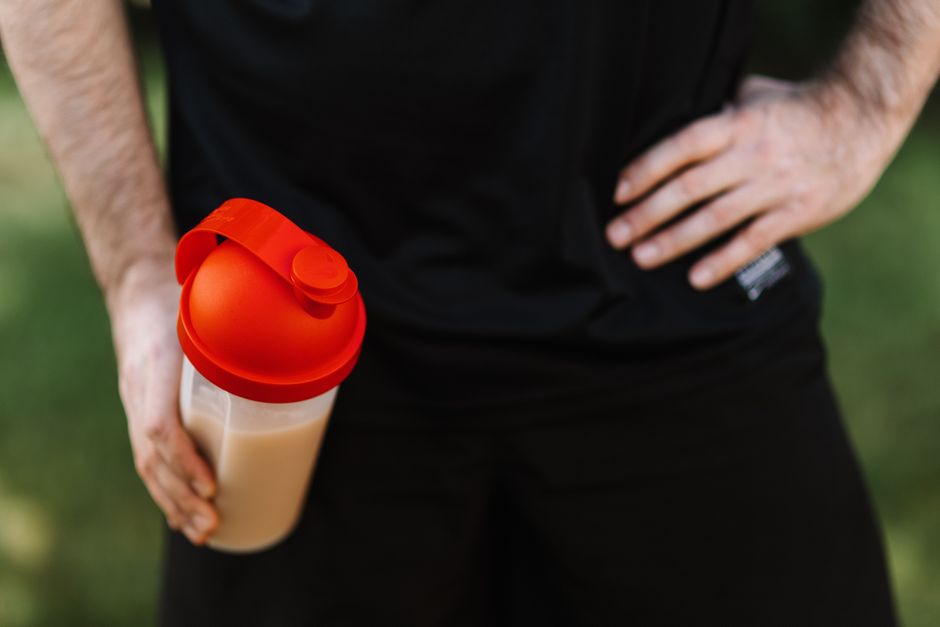
You finish your shake, feel fine for twenty minutes, and then your stomach swells like you swallowed a balloon. The most common reason is that the protein itself — or what came with it — is reaching your large intestine undigested, where gut bacteria ferment it and produce gas. The second most common reason is lactose, a milk sugar that many adults stop digesting well. Neither problem means protein is bad for you. It means the type, dose, or speed of your shake needs adjusting.
Below is what is actually happening in your gut, which ingredients are the usual suspects, and what the evidence does and does not support.
Why Do You Feel Bloated After A Protein Shake?
Bloating after a protein shake comes down to gas and fluid. Gas is produced when undigested carbohydrate or protein reaches the colon and bacteria ferment it. Fluid shifts happen when your gut pulls water in to dilute something it cannot absorb quickly, or when a large liquid volume moves through slowly.
Whey and casein are milk proteins. Both arrive with small amounts of lactose unless the product is specifically filtered to remove it. Many protein powders also contain added fibers, sugar alcohols, thickeners, or flavoring compounds that ferment readily. Any of these can produce gas in a gut that is sensitive or already working slowly.
There is a detail most people miss: protein itself is not a major gas producer in the small intestine. Your body digests protein efficiently. Bloating usually traces back to what the protein came packaged with, or to how much total liquid and powder you consumed at once.
Is It Lactose Intolerance or Something Else?
Lactose intolerance is the most common cause of bloating from whey and casein shakes. Most adults worldwide lose the enzyme lactase after childhood, which means milk sugar passes undigested into the colon. There it ferments and produces gas, cramping, and loose stools, typically within 30 minutes to 2 hours of drinking.
Whey protein isolate contains very little lactose because of how it is filtered. Whey concentrate contains more. If you bloat from a concentrate but not an isolate, lactose is a strong candidate. This is a reasonable self-test, though it is not a formal diagnostic method.
Other possibilities are worth considering:
- Sugar alcohols such as sorbitol, maltitol, and xylitol. These are poorly absorbed and ferment in the colon. They are common in low-sugar or “diet” protein products.
- Added fibers like inulin, chicory root, and soluble corn fiber. These are fermentable by design and can produce noticeable gas.
- Protein dose. A very large single serving moves more material through the gut at once and can overwhelm absorption.
- Speed of drinking. Drinking fast means swallowing air, which adds to the gas already there.
If bloating comes with diarrhea, weight loss, or symptoms that persist for weeks regardless of what you drink, that is a reason to see a clinician rather than keep experimenting.
Does Whey Protein Cause More Bloating Than Other Proteins?
Whey is not inherently more gas-producing than other proteins, but it is the most common protein in supplements, so it gets blamed most often. The comparison that matters is between forms of whey, and between whey and plant proteins.
| Protein type | Lactose content | Typical bloating risk |
|---|---|---|
| Whey concentrate | Low but present | Higher for lactose-sensitive people |
| Whey isolate | Very low | Lower for lactose-sensitive people |
| Casein | Low but present | Similar to concentrate |
| Pea or rice protein | None | Lower lactose risk, but added fibers can still cause gas |
| Soy protein | None | Generally low, though some people report sensitivity |
These are general patterns, not guarantees. Individual tolerance varies widely, and the additives in a specific product often matter more than the protein source itself. A pea protein powder loaded with inulin can produce more gas than a plain whey isolate.





Why Does Bloating Sometimes Happen Even With Lactose-Free Protein?
Lactose-free does not mean gas-free. If you removed lactose and still bloat, the next suspects are the other ingredients and the mechanics of how you drink.
Fermentable fibers and sugar alcohols are the leading culprits. Many “clean” or “gut-friendly” protein powders add inulin or chicory root specifically because these are prebiotic fibers. Prebiotics work by feeding gut bacteria, and feeding bacteria produces gas. That is the mechanism, not a side effect. For some people the gas is mild. For others it is uncomfortable.
Protein dose and concentration matter too. A shake with 50 grams of protein powder in a small volume of water is a dense load. Spreading the same amount across two smaller shakes, or using more liquid, often reduces symptoms. This is practical observation rather than a finding from controlled trials.
Some people also have a sensitive gut that reacts to large liquid volumes or to cold drinks. The evidence for cold temperature as a trigger is thin. The evidence for volume and speed is more consistent with what is known about gastric emptying.
What Can You Do About Protein Shake Bloating?
The most reliable step is to change one variable at a time and give it a few days. Changing everything at once tells you nothing about what actually helped.
Start with the protein form. If you use a concentrate, try an isolate. If you use whey, try a plant protein. Read the ingredient list and look for sugar alcohols ending in “-ol” and added fibers like inulin or chicory root. A shorter ingredient list is easier to troubleshoot.
Adjust how you drink it. Use more water per scoop. Drink more slowly. Split a large serving into two smaller ones. These changes are low-risk and often enough on their own.
Consider timing. Some people tolerate a shake with food better than on an empty stomach, because food slows gastric emptying and dilutes the load. Others find the opposite. There is no strong evidence that one approach works for everyone.
If you have tried these steps and still bloat, it is reasonable to look at your total protein intake. Very high protein diets can slow digestion and increase gas for some people. A registered dietitian can help you find a level that meets your needs without the discomfort.
What does not have good evidence: enzyme supplements marketed for protein digestion, charcoal capsules taken with shakes, and “gut reset” products. Some people report benefit from digestive enzymes, but large controlled trials showing they reduce bloating from protein supplements are lacking. Treat marketing claims in this space with skepticism.
When Should Bloating After a Protein Shake Concern You?
Occasional mild bloating after a shake is common and not a sign of disease. Bloating that is severe, painful, or comes with other symptoms deserves medical attention.
See a clinician if you have:
- Bloating with diarrhea, constipation, or both that lasts more than a few weeks
- Unintended weight loss
- Blood in your stool
- Vomiting or inability to keep fluids down
- Bloating that is new and persistent regardless of what you eat or drink
These symptoms do not mean protein shakes caused a problem. They mean something else may be going on and should be evaluated. Persistent bloating has many possible causes, and a clinician is better placed to sort through them than an ingredient label.
One clarification worth making: bloating and abdominal distension are not the same thing. Bloating is the sensation of fullness or pressure. Distension is a measurable increase in belly size. They often occur together but can happen separately, and the distinction matters when talking to a doctor.
Frequently Asked Questions
Does whey protein cause bloating?
Whey can cause bloating, mostly because of the small amount of lactose it contains and because many whey products include added fibers or sugar alcohols. Whey isolate contains less lactose than concentrate and is often better tolerated.
How long does protein shake bloating last?
For most people, bloating from a shake eases within a few hours as gas passes or is absorbed. If bloating lasts more than a day or happens every time regardless of the product, look at the ingredients or talk to a clinician.
Is it normal to feel bloated after a protein shake?
Mild bloating after a shake is common, especially with larger servings or products containing lactose, added fiber, or sugar alcohols. It is not dangerous on its own, but recurring discomfort is a signal to adjust what or how you drink.
Can lactose-free protein powder still cause bloating?
Yes. Lactose-free products can still contain fermentable fibers, sugar alcohols, or large protein doses that produce gas. Check the ingredient list for inulin, chicory root, and ingredients ending in “-ol.”
