
Many women notice the scale creeping up right around the time their periods start changing. That timing is not a coincidence. During the menopausal transition, falling estrogen levels change where the body stores fat, how it builds and breaks down muscle, and how efficiently it uses energy. Most women gain roughly 1 to 2 pounds per year through their 40s and early 50s — but research consistently shows that menopause changes body composition more than it changes total body weight.
In other words, the number on the scale may move less than the mirror suggests. Fat shifts from the hips and thighs to the abdomen, and lean muscle mass tends to decline. Understanding why this happens is the first step toward managing it sensibly.
Why Do Women Gain Weight During Menopause?
The short answer: hormones change, but hormones are not the whole story. Estrogen influences where the body deposits fat. Before menopause, estrogen tends to favor fat storage in the hips and thighs — what clinicians call a gynoid or “pear” pattern. As estrogen declines, fat is redistributed toward the abdomen, producing a more central or “apple” pattern.
Estrogen also plays a role in insulin sensitivity and in how the body uses glucose. When estrogen drops, some women become less sensitive to insulin, which can encourage abdominal fat storage. This is a well-established physiological shift, not a personal failing.
But menopause is rarely the only thing happening. Most women going through the transition are also aging, and aging itself is associated with a gradual loss of muscle mass — roughly 3 to 8 percent of muscle per decade after age 30, with the rate accelerating after 60. Since muscle burns more calories at rest than fat does, losing muscle lowers resting energy expenditure. That combination — less muscle, lower calorie burn, shifting fat storage — explains a lot of what women experience.
Sleep disruption, which is common during perimenopause, may also contribute. Poor sleep is associated with changes in appetite-regulating hormones and with increased cravings for high-calorie foods. The relationship is well documented, though the size of the effect varies from person to person.
Is Menopause Itself Causing the Weight Gain, or Is It Aging?
This is one of the most common points of confusion, and it matters. Total body weight gain during midlife appears to be driven mostly by aging and lifestyle factors, while the redistribution of fat toward the abdomen is more specifically linked to the menopausal transition.
That distinction comes from studies that followed women across the menopause transition and compared them with women of similar age who were not transitioning. Both groups tended to gain some weight over time. But the women in menopause gained more fat around the middle and lost more lean mass. In other words, menopause changes the shape more than the scale.
Why does this matter? Because blaming menopause for every pound can lead women to overlook the factors they can actually influence — activity level, protein intake, sleep, and stress. And blaming themselves for something driven by hormonal shifts is equally unhelpful.
What Role Does Muscle Loss Play?
Muscle is metabolically active tissue. It burns calories even when you are sitting still. When muscle mass declines, resting energy expenditure declines with it. A woman who eats and moves exactly the same way at 52 as she did at 42 may still gain weight, because her body is burning fewer calories at rest.
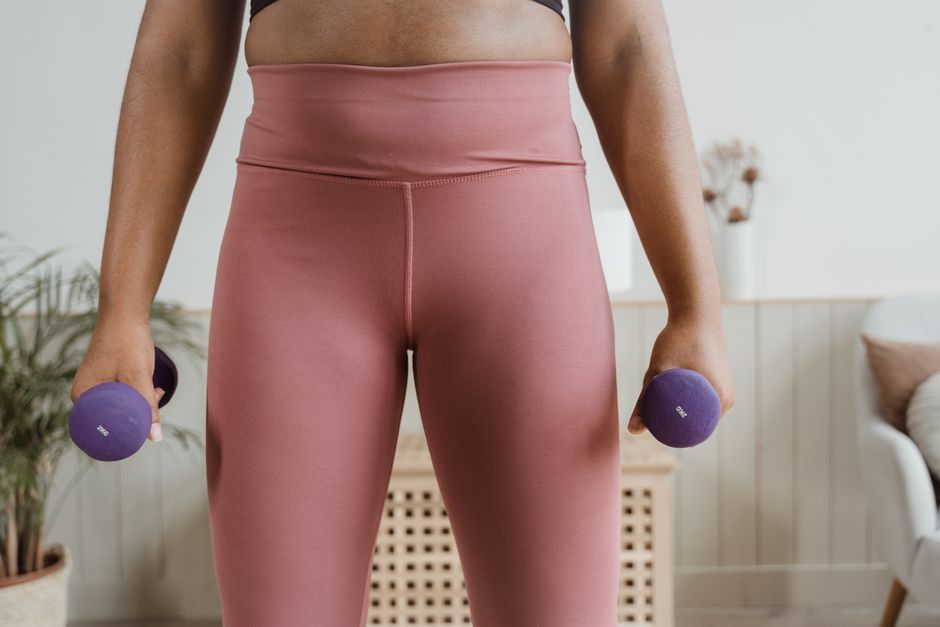
This decline is not inevitable in the sense that nothing can be done about it. Resistance training — lifting weights, using resistance bands, or doing bodyweight exercises that challenge the muscles — is the most reliable way to slow age-related muscle loss. Research consistently shows that strength training in midlife and beyond helps preserve lean mass.
Protein intake matters too. Many midlife women eat less protein than their bodies need to maintain muscle. General guidance from nutrition authorities suggests that most adults need at least 0.8 grams of protein per kilogram of body weight per day, and some researchers argue that older adults may benefit from somewhat more. If you have kidney disease or another condition that affects protein intake, talk to your clinician before changing your diet.




How Do Sleep and Stress Factor In?
Night sweats and insomnia are hallmarks of perimenopause for many women. When sleep suffers, so does appetite regulation. Short sleep is associated with higher levels of ghrelin (a hunger hormone) and lower levels of leptin (a fullness hormone). The result is often increased hunger, especially for sugary and high-fat foods.
Chronic stress works through a similar pathway. Cortisol, the body’s main stress hormone, can promote abdominal fat storage when levels stay elevated over time. Whether this effect is large enough on its own to cause noticeable weight gain is debated, but the pattern is plausible and supported by some research.
What is not debated: poor sleep and high stress make it harder to stick with healthy eating and regular exercise. That indirect effect may matter as much as any hormonal one.
What Actually Helps — and What Does Not
There is no single intervention that reverses menopausal weight gain. The evidence supports a combination of approaches, and results vary widely between individuals.
- Resistance training: Two or more sessions per week helps preserve muscle mass and supports metabolic rate. This is one of the most consistent findings in the research.
- Adequate protein: Helps maintain muscle, especially when paired with strength training.
- Sleep hygiene: Consistent bedtimes, limiting screens before bed, and keeping the bedroom cool can help with the night sweats and insomnia that disrupt sleep.
- Reducing ultra-processed foods and added sugars: Not because they are uniquely fattening, but because they tend to be calorie-dense and easy to overeat.
- Managing stress: Whatever works for you — walking, breathing exercises, therapy, time outdoors.
What does not work: extreme calorie restriction, which tends to accelerate muscle loss; “menopause metabolism” supplements, none of which have been shown in large human trials to change body composition; and relying on hormone therapy for weight loss. Hormone therapy is effective for hot flashes and night sweats, but the evidence does not show it produces meaningful weight loss.
Does Hormone Therapy Affect Weight?
Hormone therapy is not a weight-loss treatment. Some studies suggest that women on hormone therapy may gain slightly less abdominal fat than those not on it, but the effect is modest and not the reason to start or avoid it. The decision to use hormone therapy should be based on symptom relief — hot flashes, night sweats, vaginal dryness — and discussed with a clinician who can weigh the risks and benefits for your specific situation.
This is one of the clearest examples of why biological reasoning alone can mislead. It seems logical that replacing estrogen would reverse the fat redistribution caused by losing it. But clinical trials have not shown that hormone therapy produces substantial weight loss, and no major medical organization recommends it for that purpose.
What About Belly Fat Specifically?
Abdominal fat is not just a cosmetic concern. Visceral fat — the fat stored deep around the organs — is metabolically active and is associated with higher risk of cardiovascular disease and type 2 diabetes. This is why the shift toward central fat storage during menopause matters beyond appearance.
The good news is that visceral fat responds to the same things that improve overall health: regular physical activity, adequate sleep, stress management, and a diet rich in vegetables, fiber, and lean protein. Even modest weight loss — in the range of 5 to 10 percent of body weight — is associated with meaningful improvements in metabolic markers in many studies. That is a range, not a target, and it should be discussed with a clinician rather than pursued aggressively.
Waist circumference is a useful measure because it captures abdominal fat better than BMI alone. A waist measurement above 35 inches (88 centimeters) in women is generally considered a marker of increased health risk, though thresholds can vary by population and should be interpreted by a clinician.
Frequently Asked Questions
Is weight gain during menopause inevitable?
Some weight gain is common, but it is not inevitable for every woman. Body composition changes are driven by hormonal shifts, aging, and lifestyle factors — some of which can be influenced.
Does hormone therapy help with menopausal weight gain?
The evidence does not show that hormone therapy produces meaningful weight loss. It may slightly reduce abdominal fat accumulation in some women, but it is not recommended as a weight-loss treatment.
What is the best exercise for menopausal weight gain?
Resistance training combined with regular aerobic activity is the most consistently supported approach. Strength training helps preserve muscle mass, which supports resting energy expenditure.
Can I lose belly fat during menopause?
Visceral fat responds to the same lifestyle factors that improve overall health — regular exercise, adequate sleep, stress management, and a nutrient-rich diet. Results vary, and no single intervention targets belly fat alone.
