
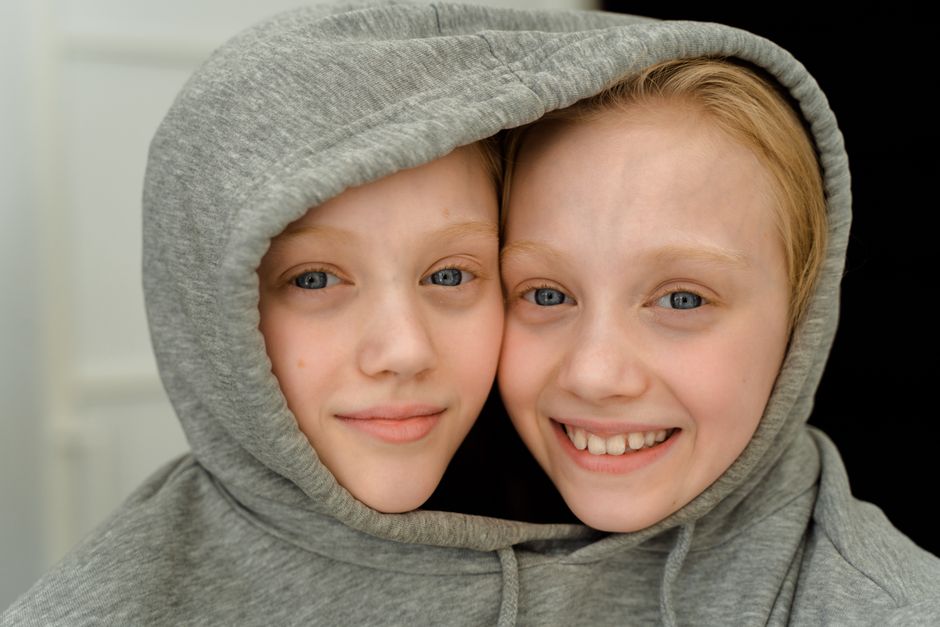
Identical twins can look different because identical DNA is not the same as identical biology. Even when two people inherit the same genetic code, that code gets read, copied, and chemically marked in slightly different ways as each person grows. Small differences in gene activity, combined with chance events during development and the environment, add up to visible differences in faces, height, hair, and skin.
Most people assume identical twins are genetic photocopies. They are close, but not exact. The DNA sequence they start with is nearly the same. How that DNA gets used is where the differences begin.
Why Do Some Identical Twins Look Different?
Identical twins come from a single fertilized egg that splits into two embryos. Because they start from one egg and one sperm, their DNA sequence is essentially the same at the moment of splitting. After that, the two embryos develop separately, and their bodies begin making different choices about which genes to switch on or off.
That process is called gene expression. The genetic instructions are the same, but the volume at which each instruction plays can differ. One twin might produce more pigment in the skin. Another might grow slightly taller bones. Over years, those small differences become visible.
There is also a second layer. Chemical tags called epigenetic marks sit on top of DNA and help control which genes are active. These marks can differ between twins even before birth, and they drift apart further with age. This is one reason twins who looked nearly identical as children can look more distinct as adults.
What Happens During Development That Makes Twins Different?
Once the egg splits, each embryo develops on its own. The uterus is not a perfectly uniform environment. Position in the womb, blood flow, and how the placenta attaches can vary slightly between twins. Those small differences can shape growth.
Random chance matters too. Cell division is not perfect. Every time a cell copies its DNA, tiny errors can occur. These are not usually harmful, but they accumulate differently in each twin. The result is that even their DNA sequence is not truly 100 percent identical by adulthood.
Facial features are especially sensitive to these small differences. The shape of a nose, the width of a jaw, and the spacing of eyes are built through many steps during development. A slight variation in any of those steps can change how a face looks, even when the underlying instructions are the same.
How Do Epigenetics Change Identical Twins Over Time?
Epigenetics is the study of chemical marks that affect how genes are read without changing the DNA sequence itself. The best known of these marks is DNA methylation, which can turn a gene’s activity up or down. Twins are born with similar patterns of these marks, but the patterns drift apart as they age.
Some of that drift comes from environment. Diet, smoking, stress, and sun exposure can all leave epigenetic marks. Some of it happens simply because cells divide and marks are copied imperfectly. Research on twins has found that older twins tend to show larger differences in these marks than younger twins.
This is why two people with the same genes can respond differently to the same conditions. One twin might develop a health issue that the other does not. The genes are the same, but the way they are regulated is not.





Can Identical Twins Have Different DNA?
Yes, and this surprises many people. Identical twins do not have perfectly identical DNA. Small differences arise early in development and can accumulate over a lifetime.
One well-documented source is copy number variation, where sections of DNA get duplicated or deleted. These changes can happen in one twin and not the other. When they occur early, they can affect many cells and sometimes produce visible differences.
There are also rare cases where twins are not truly identical from the start. Sometimes a single egg is fertilized by two sperm, or a mutation happens very early. These situations are uncommon, but they show that the word “identical” is a simplification.
For most twins, the DNA differences are small. They do not usually cause major health effects. But they help explain why two people who share a womb and a genome can still look and feel different.
What Role Does Environment Play in Twin Differences?
Environment shapes twins in ways that are easy to overlook. Even twins raised in the same home do not live identical lives. They have different friends, different injuries, different illnesses, and different habits. Each of those experiences can leave a mark on the body.
Sun exposure is a clear example. A twin who spends more time outdoors may develop more freckles or darker skin. A twin who smokes may show different skin aging. A twin who plays a sport may build different muscle patterns. Over decades, these choices add up.
Health conditions can also change appearance. Weight, hair loss, and skin changes can all differ between twins because of different medical histories. The genes set a range. Life within that range is not the same for both people.
Do Identical Twins Ever Look Completely the Same?
Some identical twins look remarkably alike, especially when they are young. As children, their faces are still developing, and many of the differences that show up later have not yet emerged. Parents and close friends can usually tell them apart, but strangers often cannot.
Over time, most twins become easier to distinguish. The face changes with age. Skin, hair, and weight shift. Health and habits leave their mark. By middle age, many identical twins look similar but clearly not the same.
There are exceptions. Some twins stay very close in appearance throughout life. This usually means their gene expression and environments stayed similar. It does not mean their biology is identical.
What This Means for Health and Identity
The differences between identical twins are not just cosmetic. They show that genes are not destiny. Two people can carry the same genetic risk and still have different outcomes.
This matters for health research. Scientists study twins to separate the effects of genes from the effects of environment. When identical twins differ in a trait, that difference usually points to something beyond DNA. When they share a trait, it suggests a stronger genetic influence.
It also matters for how we think about ourselves. Identical twins are a reminder that biology is not fixed at birth. The body keeps responding to experience. Small differences can grow into large ones over time.
Common Myths About Identical Twins
One myth is that identical twins have exactly the same DNA. They start with nearly the same sequence, but small changes and epigenetic marks make them different. Another myth is that twins always share the same health risks. They share many, but not all.
A third myth is that twins are mirror images of each other. Some are, but most are not. Mirroring can happen when the egg splits late, but it is not the norm.
Finally, people often assume twins have the same personality. Personality is shaped by genes and environment together. Twins can be alike in temperament and still be very different people.
Frequently Asked Questions
Are identical twins 100% genetically identical?
No. They start with nearly the same DNA sequence, but small mutations and copy number changes can occur after the egg splits. Epigenetic marks also differ between them.
Can identical twins look different as they get older?
Yes. Gene expression and environmental exposures drift apart over time, so many twins become easier to tell apart with age. Differences in skin, hair, weight, and health all play a role.
What causes identical twins to have different features?
Differences come from gene expression, epigenetic marks, random events during development, and environment. The DNA sequence is similar, but how it is used is not.
Do identical twins have the same fingerprints?
No. Fingerprints are shaped partly by genes and partly by random events in the womb. Even identical twins have different fingerprints.
