
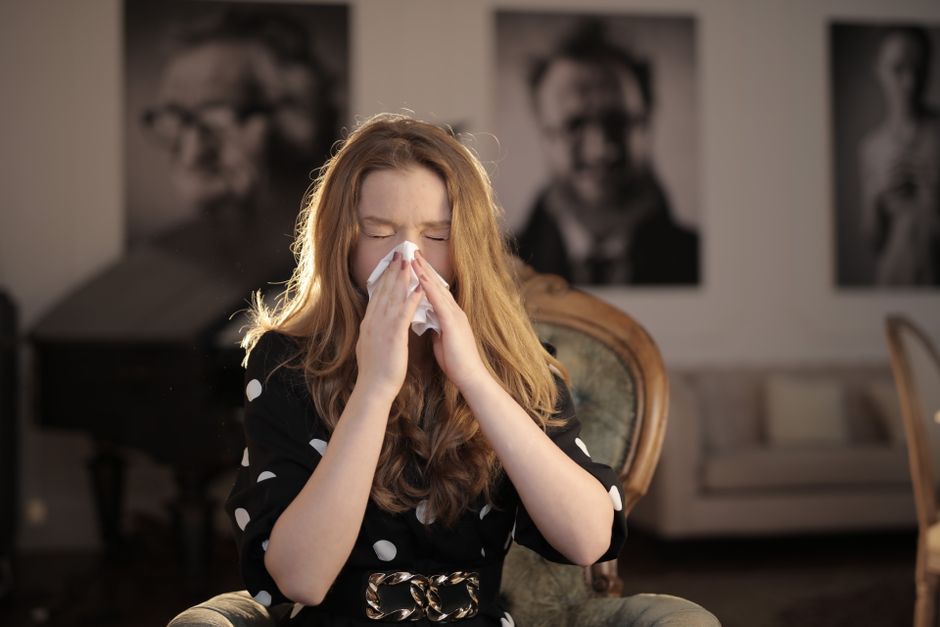
You sneeze during a cold because your nasal passages are inflamed and irritated, and your body responds with a reflex that forces air out of your nose and mouth at high speed. That reflex is your nervous system’s attempt to clear irritants from your airway. During a cold, the trigger is usually swelling and mucus rather than a speck of dust or pollen. The sneeze is a symptom of the inflammation, not a separate problem.
Sneezing is one of the most misunderstood parts of a cold. Many people assume it is the body launching virus particles outward to protect you. The reality is more mechanical and less heroic. Here is what is actually happening, why colds make you sneeze, and why some of the popular explanations do not hold up.
Why Do Sneeze When You Have A Cold?
A cold virus infects the lining of your nose and throat. Your immune system responds by sending blood flow and immune cells to the area, which causes the tissue to swell and produce mucus. That combination of swollen tissue and extra fluid irritates nerve endings in your nasal passages.
Those nerve endings are branches of the trigeminal nerve, which carries sensation from your face and nose. When they are stimulated, they send signals to a sneeze center in your brainstem. The brainstem then coordinates a set of muscle movements that produce a sneeze.
The sequence is fast. You take a quick breath in, your soft palate closes briefly, and then your chest and abdominal muscles contract sharply. Air is forced out through your nose and mouth. The whole event lasts about a second or two.
So the direct answer is this: colds cause sneezing because the infection inflames and irritates the nasal lining, and that irritation trips a protective reflex. The sneeze itself does not fight the virus in any meaningful way. It is a side effect of the inflammation.
What Is Actually Happening Inside Your Nose?
The nasal lining, called the mucosa, is a thin layer of tissue packed with tiny hair-like structures called cilia. These cilia normally sweep mucus slowly toward the back of your throat, where it is swallowed. This is happening constantly, and you never notice it.
When a cold virus infects this lining, several things change at once. The tissue becomes swollen as blood vessels widen. Mucus production increases, and the mucus becomes thicker. The cilia do not work as well when the tissue is inflamed.
The result is a nose that feels blocked, drippy, and irritated all at once. That irritation is what sets off sneezing. It is worth understanding that the swelling itself is part of the immune response, not damage from the virus. Your body is doing this on purpose, even though it feels miserable.
One clarification that surprises people: a blocked nose during a cold is often caused more by swollen tissue than by mucus. That is why decongestant sprays, which shrink blood vessels, can open the airway even when mucus is still present. It also explains why blowing your nose does not fully clear the blockage.
Is Sneezing Your Body’s Way of Getting Rid of the Virus?
This is the most common myth about cold sneezing, and it is not accurate. Sneezing can expel irritants like dust or pollen from your nose. It does not clear a viral infection from your body.
The virus has already infected cells in your nasal lining. A sneeze does not remove those infected cells or stop the virus from replicating. The reflex evolved as a way to protect the airway from physical irritants, not as an antiviral defense.
What sneezing does do effectively is spread respiratory droplets into the air and onto surfaces. That is how cold viruses move from one person to another. This is why covering a sneeze matters, and why the reflex is a public health issue as much as a personal one.
The idea that sneezing “clears out” a cold is a reasonable guess that happens to be wrong. The irritation driving the sneeze is the inflamed tissue itself, so sneezing does not resolve the underlying trigger.
Why Do Colds Make Some People Sneeze More Than Others?
Sneezing varies a great deal from person to person, and the reasons are not fully understood. Some people sneeze constantly with a cold, while others barely sneeze at all despite feeling equally unwell.
Several factors likely play a role. Individual sensitivity of the trigeminal nerve varies. Some people have more reactive airways in general, which can make them sneeze more readily. The specific virus matters too, since different cold viruses tend to cause different mixes of symptoms.
There is also a well-documented reflex called the photic sneeze reflex, where looking at bright light triggers sneezing. It affects a minority of people and appears to run in families. It is not caused by colds, but people who have it may notice more sneezing overall when their nose is already irritated.
Allergies are a separate and important consideration. If you sneeze a lot but do not have other cold symptoms like a sore throat or fatigue, the cause may be allergic rhinitis rather than a cold. The two can look similar, and only a clinician can reliably tell them apart when symptoms are ambiguous.
Does Sneezing Mean Your Cold Is Getting Better or Worse?
Neither. Sneezing frequency does not reliably track how sick you are or how close you are to recovery. It reflects how irritated your nasal lining happens to be at a given moment.
Cold symptoms generally follow a rough pattern. Sneezing and a runny nose often appear early, sore throat is common at the start, and congestion tends to build over the first few days. Most people improve within about a week to ten days, though some symptoms like a cough can linger a bit longer.
You should not use sneezing as a gauge of progress. Pay more attention to your overall pattern. Symptoms that are improving, even slowly, are the normal course. Symptoms that are clearly worsening after the first week, or that include high fever, shortness of breath, or severe facial pain, are reasons to seek medical advice.
This is a case where the honest position is that sneezing is a poor signal. It is a symptom, not a measurement.
How Do You Manage Cold-Related Sneezing?
There is no treatment that stops cold-related sneezing at the source, because the source is the infection itself. What you can do is reduce the irritation that drives the reflex and manage the symptoms while your immune system handles the virus.
Saline nasal rinses or sprays can help moisten and clear the nasal passages. Some people find them soothing, and they are generally considered low risk when used properly with clean water and equipment. Steam from a shower or a humidifier may ease irritation for some people, though the evidence for steam as a treatment is limited.
Over-the-counter antihistamines are sometimes used for cold sneezing, but this deserves honesty. Antihistamines are effective for allergy-driven sneezing. Their benefit for cold-related sneezing is not well established, since colds are not driven by histamine in the same way allergies are. Some clinicians recommend them for symptom relief, but the evidence is not strong.
Decongestants can reduce nasal swelling, which may reduce the irritation driving sneezes. They carry side effects, including raised blood pressure and jitteriness, and they are not appropriate for everyone. People with high blood pressure, heart conditions, or who are taking certain medications should check with a pharmacist or clinician before using them.
Basic measures still matter most. Rest, fluids, and time are what actually resolve a cold. No product currently on the market cures a cold or shortens it reliably. Be cautious with any product that claims to.
When Should Sneezing During a Cold Concern You?
Sneezing on its own during a cold is not a warning sign. It is an expected symptom and rarely indicates anything serious.
What matters is the overall picture. Seek medical advice if you develop a high fever, difficulty breathing, chest pain, severe headache, facial pain or swelling that worsens, or symptoms that clearly get worse after appearing to improve. These can suggest a secondary infection such as sinusitis or a bacterial complication, though only a clinician can determine that.
People with asthma should pay attention to colds, since respiratory infections can trigger asthma flare-ups. If you have a chronic lung condition and your symptoms are worsening, contact your clinician rather than waiting it out.
For most healthy adults, cold-related sneezing is uncomfortable but harmless. It fades as the inflammation settles, which usually happens as the infection resolves.
Frequently Asked Questions
Why do I sneeze so much when I have a cold?
Colds inflame and irritate the lining of your nose, which trips the sneeze reflex. The more irritated your nasal tissue is, the more you tend to sneeze.
Does sneezing help get rid of a cold?
No. Sneezing can clear physical irritants like dust, but it does not remove the virus or speed recovery from a cold.
How long does sneezing from a cold last?
Sneezing usually settles as nasal inflammation eases, often within the first several days. Most cold symptoms improve within about a week to ten days.
Can allergies cause sneezing that feels like a cold?
Yes. Allergic rhinitis can cause sneezing, a runny nose, and congestion that closely resemble a cold. A clinician can help tell them apart when symptoms are unclear.
