
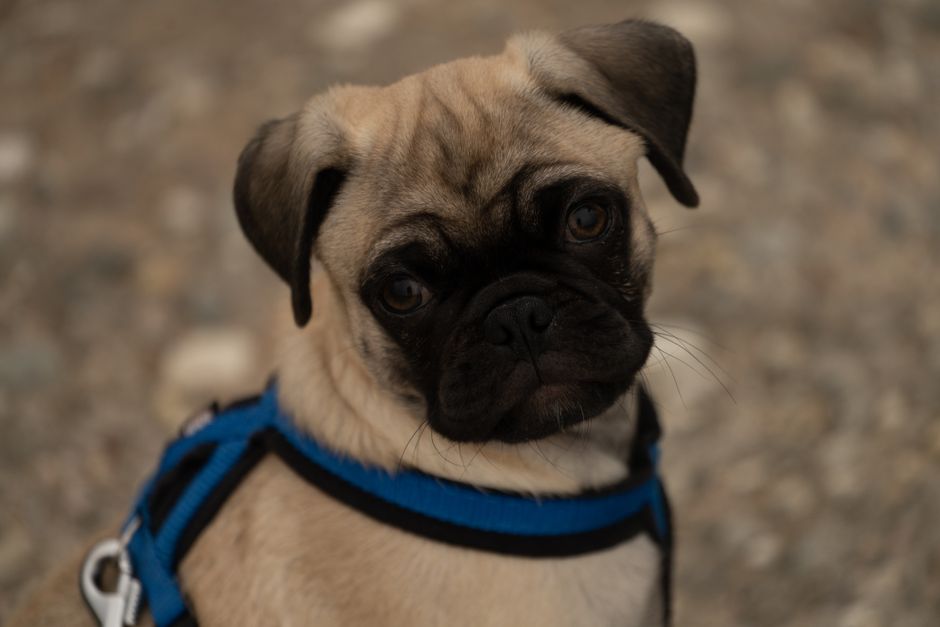
Pug eyes can pop out of their sockets, a condition called proptosis. This happens because pugs have very shallow eye sockets and large eyes. It is a serious medical emergency that requires immediate veterinary care to save the dog’s vision.
What Causes a Pug’s Eye to Pop Out?
The main cause is trauma. Even minor pressure on the head or neck can push a pug’s eye forward. Because their eye sockets are shallow, there is little bone to hold the eye in place.
Common causes include:
- Dog fights or bites to the head
- Being hit by a car
- Falling from furniture or stairs
- Rough play with larger dogs
- Being picked up by the scruff of the neck
- Pulling hard against a collar or leash
The medical term for this condition is proptosis. It means the eyeball has moved forward and the eyelids have closed behind it. This traps the eye outside the socket.
Why Are Pugs So Prone to This Injury?
Pugs are brachycephalic dogs. This means they have flat faces and short skulls. Their eye sockets, called orbits, are not deep enough to protect the eyeball.
A normal dog has a deep bony socket that holds the eye securely. A pug has a shallow dish instead of a deep cup. Their large eyes sit prominently in this shallow space.
This combination of a large eye and a shallow socket means very little force is needed to displace the eye. What might cause a minor bump in another breed can cause a serious eye injury in a pug.
What Does a Prolapsed Eye Look Like?
The eye will appear bulging and out of place. The dog cannot blink because the eyelids are trapped behind the eyeball.
You may notice:
- A swollen, red, or bloody eyeball
- The eye protruding further than normal
- The dog pawing at its face
- Signs of pain or distress
- Refusal to eat or drink
This is not a condition that resolves on its own. The eye will not go back into place without veterinary help. Attempting to push it back yourself can cause more damage.



Why Do Pugs Eyes Pop Out Causes Treatment: What To Do Immediately
Time is critical. The longer the eye is out of the socket, the higher the risk of permanent blindness.
Keep the eye moist while you travel to the veterinarian. Use a saline solution or a sterile eye lubricant if you have one. If you have neither, plain water can be used as a last resort.
Cover the eye with a damp cloth or gauze. This protects it from further injury and helps keep it moist. Do not apply pressure to the eye.
Do not try to push the eye back into the socket. You can cause serious damage to the optic nerve and the muscles that move the eye.
Get the dog to a veterinarian immediately. This is an emergency, not something to wait and see about.
How Do Veterinarians Treat a Prolapsed Eye?
The vet will first assess the damage. They will check the optic nerve and the muscles around the eye. The dog will need to be under general anesthesia for treatment.
The vet will clean the eye and surrounding tissue. They will then gently push the eyeball back into the socket. The eyelids are stitched shut to hold the eye in place while it heals.
These stitches stay in for several weeks. The dog will need anti-inflammatory medications and pain relief. An Elizabethan collar, also called a cone, is required to stop the dog from scratching at the stitches.
In severe cases, the eye cannot be saved. If the optic nerve is torn or the eye is too badly damaged, the vet may need to remove the eye entirely. This is called enucleation.
What Is the Success Rate for Saving the Eye?
The outcome depends on how quickly treatment begins and how severe the injury is. Dogs that receive treatment within a few hours have a better chance of keeping their vision.
Some studies suggest that vision is preserved in roughly half of all proptosis cases. However, many dogs that keep their eye may have reduced vision or permanent damage to the cornea.
Some dogs develop a condition called dry eye after this injury. This happens because the tear glands can be damaged during the trauma. These dogs need daily eye drops for the rest of their lives.
Even with successful surgery, the affected eye may look different from the other eye. Some dogs have a permanently dilated pupil or a slight bulge that remains.
Can This Happen More Than Once?
Yes. A pug that has had proptosis once is more likely to have it again. The muscles and tissues that hold the eye in place are stretched and weakened by the first injury.
Some veterinarians recommend a surgical procedure called medial canthoplasty for dogs that have experienced proptosis. This procedure narrows the eyelid opening to make it harder for the eye to pop out again.
This surgery is often done at the same time as the emergency repair. It can reduce the risk of the eye popping out again in the future.
If you own a pug that has had this injury, extra care is needed. Avoid situations where head trauma could occur. Keep the dog away from rough play and use a harness instead of a collar.
How to Prevent a Pug’s Eye From Popping Out
Prevention focuses on avoiding trauma to the head and neck area.
- Use a harness instead of a collar when walking your pug
- Never pick up a pug by the scruff of the neck
- Supervise play with larger or more energetic dogs
- Keep pugs away from stairs if they are very small or elderly
- Do not allow pugs to ride with their head out of a car window
- Keep cats and dogs separated if they do not get along
These steps do not guarantee that proptosis will never happen. But they reduce the risk of the most common causes of this injury.
Some veterinarians also recommend avoiding activities that put pressure on the neck. This includes tight collars and leashes that pull sharply.
Are Some Pugs More at Risk Than Others?
All pugs have the same basic skull shape, so all are at risk. However, some factors increase the risk further.
Younger pugs may be more at risk because they are more active and playful. They may get into more situations where trauma occurs.
Obesity can also be a factor. Excess weight puts more strain on the body and may increase the risk of falls or accidents.
Pugs with particularly prominent eyes may be at higher risk than those with less prominent eyes. However, no reliable way exists to predict which pugs will experience this injury.
What Is the Long-Term Outlook for a Pug After Proptosis?
Many pugs go on to live happy, healthy lives after treatment. Dogs that lose an eye adapt remarkably well. They can still play, run, and enjoy life with one eye.
Dogs that keep their eye may need ongoing care. This often includes daily eye drops to keep the eye moist and prevent ulcers on the cornea.
Regular veterinary checkups are important after this injury. The vet will monitor the eye for signs of glaucoma, dry eye, or corneal damage.
With proper care, most pugs recover well. The key is fast treatment and following the vet’s instructions during the recovery period.
Frequently Asked Questions
Can a pug’s eye pop out from pulling on a leash?
Yes, pressure on the neck from a collar can cause the eye to pop out in a pug. This is why a harness is strongly recommended for brachycephalic breeds.
Can I push my pug’s eye back in myself?
No. Pushing the eye back can cause severe damage to the optic nerve and eye muscles. This must be done by a veterinarian under anesthesia.
Will my pug go blind if its eye pops out?
Not always. Many pugs keep some or all of their vision if they receive treatment quickly. However, permanent vision loss is possible in severe cases.
How much does it cost to treat a prolapsed pug eye?
Costs vary widely depending on the severity and your location. Emergency surgery and hospitalization can be expensive, and follow-up care adds to the total.
