
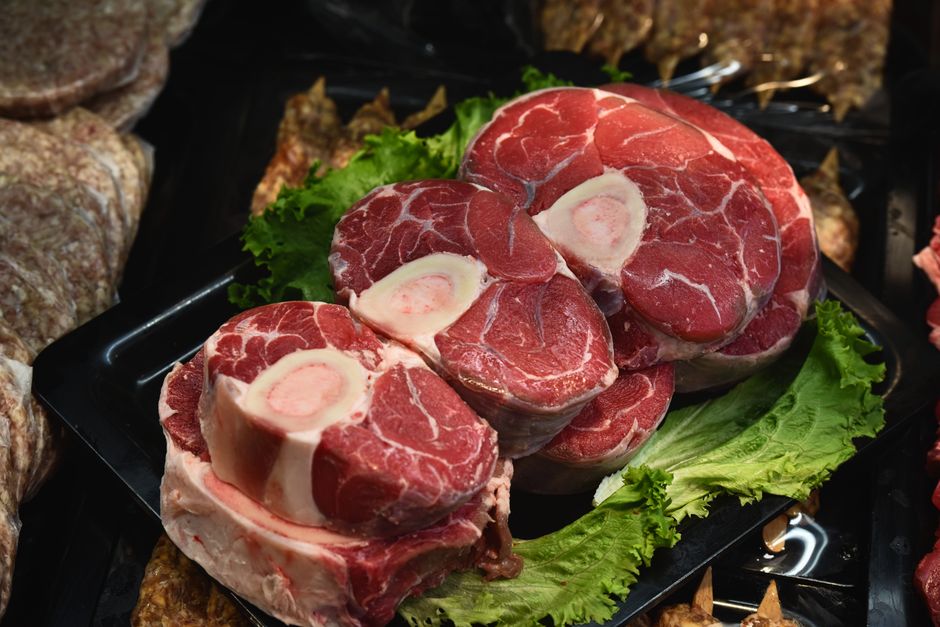
Veal is meat from young cattle, usually male dairy calves. People eat it because it is tender, mild in flavor, and traditionally tied to specific regional cuisines in Europe and North America. The ethics of eating veal are genuinely contested, and the nutrition picture is less dramatic than most people assume.
Those three threads — flavor, nutrition, and ethics — are tangled together. Veal production exists largely because the dairy industry produces male calves that cannot give milk. What happens to those animals is where the disagreement starts.
What Is Veal and Why Do People Eat It?
Veal is the meat of calves, typically slaughtered between a few weeks and several months of age depending on the type. The meat is pale, soft, and mild because young animals have less myoglobin — the protein that gives red meat its color — and more connective tissue that has not yet toughened.
People eat veal for three main reasons. First, flavor and texture: it is delicate and tender, which suits certain cooking methods like braising and scaloppine. Second, tradition: dishes like osso buco in Italy, wiener schnitzel in Austria, and blanquette de veau in France are culturally embedded. Third, economics: veal has historically been a way to extract value from male dairy calves that would otherwise be a cost to the farm.
That last point matters more than most people realize. A dairy cow must calve to produce milk. Roughly half those calves are male. They cannot produce milk and are not typically raised for beef as efficiently as beef breeds. Veal production grew partly as an answer to that surplus.
What Does Veal Actually Taste Like?
Veal tastes mild, slightly sweet, and noticeably less “beefy” than mature beef. The flavor is subtle enough that it takes on the character of whatever it is cooked with — wine, stock, herbs, butter.
The mildness comes from the animal’s age and diet. Myoglobin accumulates over an animal’s life, so a young calf has far less of it. Fat content also differs, and fat carries much of the flavor we associate with red meat. Less fat and less myoglobin means a quieter flavor.
Some people describe a slight mineral or milky note. That description is subjective and varies by cut and cooking method. There is no single “veal flavor” — a shank braised for hours tastes very different from a thin cut sautéed quickly.
Is Veal Nutritious? A Look at the Numbers
Veal is a lean meat and a solid source of complete protein, B vitamins, and several minerals. It is not a superfood, and it is not a health food in any special sense. It is meat.
According to USDA data, a 3-ounce (85-gram) portion of cooked veal — depending on the cut — provides roughly 20 to 25 grams of protein and is relatively low in total fat compared with some beef cuts. It supplies vitamin B12, niacin, zinc, and iron, though the iron content is lower than in mature beef because of the lower myoglobin.
| Nutrient (approx., 3 oz cooked veal) | General range |
|---|---|
| Protein | 20–25 g |
| Total fat | Varies widely by cut |
| Vitamin B12 | Meaningful contributor |
| Zinc | Present, moderate |
| Iron | Lower than mature beef |
Exact figures depend heavily on the cut. A loin chop and a shank are not nutritionally identical. Anyone tracking intake closely should consult USDA’s FoodData Central rather than rely on a general range.
One clarification worth making: veal is sometimes marketed as “lighter” or “healthier” than beef. It is leaner in some cuts, but that is a comparison between specific cuts, not a blanket rule. Fat content varies more by cut than by species or age.



Why Is Veal Controversial?
Veal is controversial because of how some calves have historically been raised. The traditional method — confining calves in individual crates too small to turn around, fed a liquid diet to keep meat pale — drew sustained criticism from animal welfare groups starting in the 1980s.
The core welfare concerns are well documented and widely acknowledged, including by the industry itself:
- Individual confinement that restricts movement and social contact
- Anemia and poor muscle development from iron-restricted diets used to keep meat pale
- Early separation from the mother
- Slaughter at a very young age
These practices are not a matter of debate. They existed and were standard in many operations. What is debated is how much has changed and how much still happens.
Has Veal Production Changed?
Yes, substantially in some regions — but not uniformly, and not everywhere.
In the European Union, veal crates were banned. Group housing for calves became standard under welfare directives, and calves must now be given a diet that includes adequate iron and fiber. In the United States, several major producers and retailers moved away from crates, and some industry groups adopted group-housing standards. Several US states have restricted veal crates by law.
What remains is a patchwork. A “group-housed” calf may still be raised indoors with limited space. A “pasture-raised” or “rose veal” label means something different from conventional veal, and those labels are not always tightly defined or independently verified. The honest position is that welfare conditions vary widely by farm, region, and certification, and a single label does not guarantee a specific standard.
If welfare is the deciding factor for a buyer, the most reliable approach is to look for third-party certification with published standards rather than rely on marketing language on the package.
Why Do People Eat Veal Flavor Nutrition And Ethics — How Do These Fit Together?
This is the question underneath the whole topic. Flavor and nutrition are reasons people give. Ethics is the reason others refuse.
For people who eat veal, the flavor is genuinely distinctive and hard to replicate, and the nutrition is comparable to other lean meats. Neither of those is a strong argument for or against the practice — they are just properties of the food.
The ethical case is where the real disagreement sits. Some people hold that raising and slaughtering young animals for a mild flavor is not justified. Others point out that male dairy calves exist regardless, and that the alternative — disposal or a different rearing system — may not be clearly better. That argument is contested, and reasonable people land on different sides.
What is not honest is dressing up the decision as purely nutritional. Veal is not meaningfully healthier than other meats, and no nutritional argument requires eating it. It is a food choice shaped by culture, taste, and values.
What About Nutrition Compared With Other Meats?
Veal sits in the middle of the meat spectrum. It is leaner than many beef cuts, similar to pork in some respects, and higher in certain B vitamins than poultry in some cuts. None of these differences are large enough to make veal a medically meaningful choice over another lean meat.
For most people, the health impact of eating veal depends far more on how it is cooked and what it is eaten with than on the meat itself. Breaded and fried veal cutlets are a different nutritional proposition from a braised shank.
Anyone with specific dietary needs — for iron, for protein, for saturated fat limits — should treat veal as one option among many, not as a special case.
Does Veal Have Any Health Risks?
Veal carries the same general food-safety considerations as other meats. It must be cooked to a safe internal temperature to reduce the risk of bacterial illness. The USDA recommends a minimum internal temperature of 145°F (63°C) for whole cuts of beef and veal, followed by a rest period, and higher temperatures for ground meat.
There is no evidence that veal is inherently more or less risky than other red meat from a food-safety standpoint. Handling and cooking practices matter more than the type of meat.
From a longer-term health perspective, red meat consumption in general — including veal — is associated in large observational studies with certain health outcomes, though these studies cannot prove cause and effect. The evidence on red meat and health is mixed and heavily debated among researchers. Anyone concerned about this should look at overall dietary patterns rather than single foods.
Frequently Asked Questions
Is veal healthier than beef?
Not in any general sense. Some veal cuts are leaner than some beef cuts, but fat content varies more by cut than by animal type, so the comparison depends entirely on which cuts you mean.
Why is veal considered cruel?
The traditional practice of confining calves in individual crates and restricting iron to keep meat pale drew widespread criticism, and these practices were documented and acknowledged. Welfare conditions now vary widely by region and farm, and not all veal is produced the same way.
Is veal crating still legal?
Veal crates are banned in the European Union, and several US states have restricted them, but rules differ by country and state. Some producers have moved to group housing voluntarily while others have not.
What does veal taste like?
Veal is mild, tender, and less strongly flavored than mature beef, with a slightly sweet note. The flavor is subtle enough that it mostly reflects how it is cooked and seasoned.
