

Ovarian cysts are fluid-filled sacs that develop on or inside a woman’s ovary. Most are harmless and disappear on their own without treatment. They form most often during the menstrual cycle, when the normal process of egg release goes slightly off course, but other health conditions can also cause them.
Why Do Ovarian Cysts Form? Reasons
The most common reasons are tied directly to your monthly cycle. Each month, your ovaries prepare an egg for release. This process involves tiny sacs called follicles. When the follicle fails to release the egg, or when it seals back up after release, fluid can become trapped and form a cyst.
These are called functional cysts. They are the most common type and are almost always benign. They are a normal variation of the menstrual cycle, not a disease.
What Are the Main Types of Ovarian Cysts?
Understanding the type of cyst helps explain why it formed in the first place. There are two main categories: functional cysts and pathological cysts.
Functional cysts are linked to your cycle. They include:
- Follicular cysts: When the follicle does not break open to release the egg, it can keep growing and fill with fluid.
- Corpus luteum cysts: After the egg is released, the follicle becomes a structure called the corpus luteum. If it fills with fluid and does not shrink as expected, it forms a cyst.
Pathological cysts are not related to the normal cycle. They develop from cell growth. These include dermoid cysts, cystadenomas, and endometriomas. They require medical evaluation to determine the right course of action.
How Does the Menstrual Cycle Trigger Cyst Formation?
The hormonal signals that control your cycle can sometimes misfire. During a typical cycle, a follicle grows, matures, and releases an egg. This process depends on a precise balance of hormones, including estrogen and luteinizing hormone.
When that balance shifts, the follicle may not rupture. It continues to grow instead. This is the direct cause of a follicular cyst. Similarly, after ovulation the corpus luteum normally breaks down. If it fills with blood or fluid instead, it becomes a corpus luteum cyst.
Most functional cysts are small, often under 5 centimeters. They usually resolve within one to three menstrual cycles. No treatment is needed unless they cause symptoms.


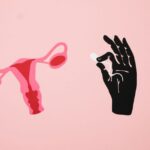


Can Endometriosis Cause Ovarian Cysts?
Yes. Endometriosis is a condition where tissue similar to the lining of the uterus grows outside the uterus. This tissue can attach to the ovary and form a cyst filled with dark, old blood. These are called endometriomas, sometimes known as “chocolate cysts” because of their appearance.
Endometriomas do not go away on their own. They are a sign of underlying endometriosis and may require treatment. Some research suggests that endometriosis affects roughly 10 percent of women of reproductive age, though many are unaware they have it.
What Other Conditions Lead to Cyst Formation?
Polycystic ovary syndrome (PCOS) is another common cause. In PCOS, the ovaries produce higher than normal levels of androgens, which are male hormones. This disrupts the hormonal balance and prevents follicles from maturing and releasing eggs regularly.
Instead of releasing an egg, many small follicles accumulate on the ovary. These are technically not cysts in the traditional sense, but they appear as multiple small fluid-filled sacs on an ultrasound. The name “polycystic” refers to this appearance.
Severe pelvic infections can also cause cysts. An infection that spreads to the ovaries and fallopian tubes can create an abscess, which is a pocket of pus. This is a serious condition that requires immediate medical care.
Are Some Women More Likely to Develop Cysts?
Certain factors increase the likelihood of developing ovarian cysts. Age matters. Functional cysts are most common during the reproductive years, when ovulation occurs regularly. They are rare before puberty and after menopause.
Hormonal medications can influence cyst formation. Some fertility treatments stimulate the ovaries to produce multiple follicles, which increases the chance of cyst development. On the other hand, birth control pills that prevent ovulation usually reduce the risk of functional cysts.
Pregnancy can also cause a specific type of cyst called a luteoma, which forms during pregnancy and usually resolves after delivery. This is a normal finding in most cases.
What Symptoms Should You Watch For?
Most ovarian cysts cause no symptoms at all. They are often found during a routine pelvic exam or ultrasound for an unrelated reason. When symptoms do occur, they may include a dull ache in the lower abdomen or pelvis, bloating, or a feeling of fullness.
Some women feel pain during intercourse or during their period. Larger cysts can press on the bladder or bowel, causing frequent urination or constipation.
Seek immediate medical attention if you experience sudden, sharp pelvic pain, pain with fever, or dizziness. These can be signs of a ruptured cyst or ovarian torsion, a condition where the ovary twists on its blood supply. Both are medical emergencies.
How Are Ovarian Cysts Diagnosed?
Ultrasound is the primary tool for diagnosing ovarian cysts. It uses sound waves to create an image of the ovary. The ultrasound can show the size, shape, and internal structure of the cyst.
Simple cysts that are thin-walled and filled with clear fluid are almost always benign. Cysts with solid areas, irregular borders, or internal growths require further investigation. In these cases, your doctor may order a blood test to check for tumor markers, though these tests are not definitive on their own.
Follow-up imaging is common. Many cysts are monitored with repeat ultrasounds to confirm they are shrinking. If a cyst persists or grows, your doctor may recommend surgical removal for a definitive diagnosis.
What Treatment Options Exist?
Treatment depends on the type, size, and symptoms of the cyst. For small functional cysts that cause no symptoms, the standard approach is watchful waiting. Your doctor will likely recommend a repeat ultrasound in a few months to confirm the cyst has resolved.
Pain relievers such as ibuprofen can help manage discomfort. Birth control pills are sometimes prescribed to prevent new cysts from forming, though they do not shrink existing cysts.
Surgery is considered when a cyst is large, persistent, or has suspicious features on imaging. The two main surgical options are cystectomy, which removes only the cyst, and oophorectomy, which removes the entire ovary. The choice depends on the characteristics of the cyst and your future fertility plans.
Can Ovarian Cysts Be Prevented?
There is no guaranteed way to prevent ovarian cysts. Because functional cysts are a normal part of the menstrual cycle, they cannot be entirely avoided in women who are ovulating.
Hormonal birth control is the most effective preventive measure. By suppressing ovulation, these medications reduce the chance of functional cyst formation. However, they do not prevent cysts caused by endometriosis or other underlying conditions.
Regular gynecologic exams are the best strategy. They allow your doctor to detect cysts early and monitor them appropriately. This is especially important for cysts that have suspicious features or that persist over time.
Frequently Asked Questions
Do ovarian cysts go away on their own?
Most functional cysts dissolve within one to three menstrual cycles. Cysts caused by endometriosis or other conditions often do not resolve without treatment.
Can stress cause ovarian cysts?
Stress alone does not directly cause ovarian cysts. However, stress can affect hormone levels, which may influence the menstrual cycle and potentially contribute to cyst formation.
Are ovarian cysts a sign of cancer?
Most ovarian cysts are benign, especially in women of reproductive age. The risk of cancer increases after menopause, and any persistent or complex cyst should be evaluated by a doctor.
Can you get pregnant with ovarian cysts?
Yes, many women with ovarian cysts can conceive normally. However, conditions like PCOS or large cysts that affect ovarian function may impact fertility and should be discussed with a healthcare provider.
