
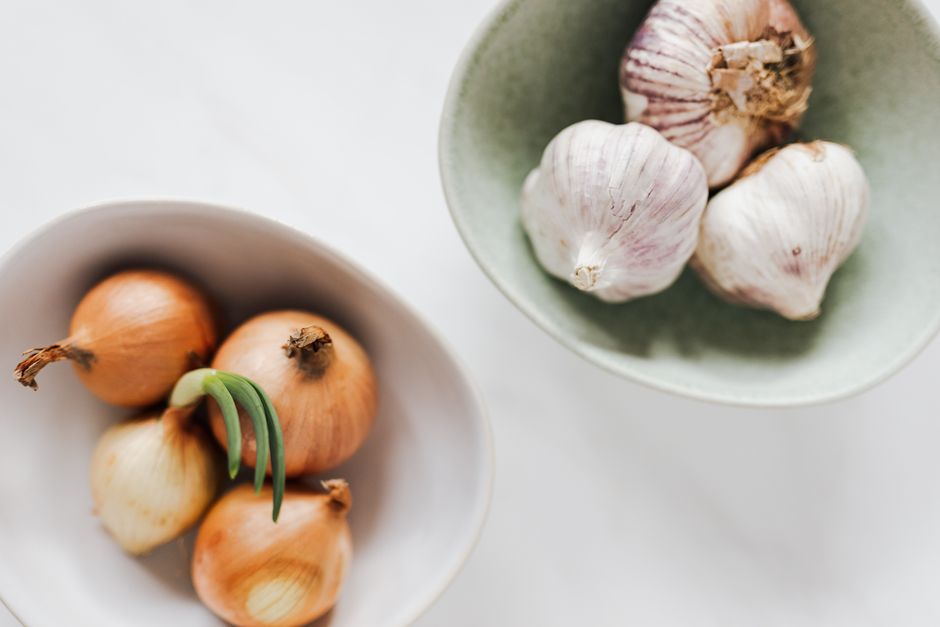
Onions and garlic are two of the most common foods that cause stomach discomfort, bloating, and gas. The reason is not that they are “bad” for you—it is that they contain specific carbohydrates that your small intestine cannot fully break down. When these undigested sugars travel to your large intestine, the bacteria there ferment them, producing gas and triggering a range of digestive symptoms.
Why Do Onions And Garlic Upset My Stomach? Root Causes
The primary culprit is a group of carbohydrates called FODMAPs. FODMAP stands for Fermentable Oligosaccharides, Disaccharides, Monosaccharides, And Polyols. Onions and garlic are especially rich in a specific type of FODMAP called fructans. Fructans are chains of fructose molecules linked together. Your body lacks the enzyme needed to split these chains apart in the small intestine, so they pass through undigested.
Once fructans reach the colon, the resident bacteria feed on them. This fermentation process produces hydrogen and methane gas, which stretches the intestinal walls and causes bloating and cramping. In people with a sensitive gut, even small amounts of onion or garlic powder can trigger noticeable symptoms.
What Does Fructan Intolerance Actually Feel Like?
Symptoms usually begin 30 minutes to two hours after eating. The most common complaints are bloating, excessive gas, abdominal pain, and a feeling of fullness. Some people also experience changes in bowel habits, such as diarrhea or constipation, though this is less consistent.
The severity depends on the person. Someone with a healthy digestive tract may eat a large serving of onions and feel only mild gas. Someone with irritable bowel syndrome (IBS) may react to a tiny amount of garlic powder hidden in a marinade. This variability is why fructan intolerance is often described as a dose-dependent issue—the more you eat, the more likely symptoms appear.
Are Onions And Garlic High In FODMAPs?
Yes, both are high-FODMAP foods, but they are not equal. Garlic is generally higher in fructans than onions, meaning it can trigger symptoms in smaller amounts. Onions vary by type. Red onions, white onions, and yellow onions all contain significant fructan levels. The green tops of spring onions (scallions) are low in FODMAPs, which is why some people with sensitivities can tolerate them.
Garlic powder and onion powder are more concentrated than their fresh counterparts. A small sprinkle of garlic powder can deliver more fructans than a clove of fresh garlic. This surprises many people who assume dried forms are milder. They are not—they are more potent in terms of FODMAP content.
It is also important to note that cooking does not remove fructans. Boiling, roasting, or frying onions and garlic does not break down these carbohydrates. The fructans remain intact and can still cause symptoms. Some people report that well-cooked onions are easier to tolerate, but this is not supported by strong evidence. The difference may simply be that cooking reduces the serving size or that the person ate less overall.





Why Do Some People React And Others Do Not?
The difference lies in gut sensitivity and the composition of the gut microbiome. Everyone produces gas from fermenting fructans, but not everyone feels it. People with visceral hypersensitivity—a heightened awareness of sensations in the gut—feel the stretching and pressure more acutely. This condition is common in IBS and functional dyspepsia.
Another factor is the rate of gas production. If your colon bacteria ferment fructans quickly, gas accumulates rapidly, causing more discomfort. If fermentation is slower, gas may be released more gradually and pass without noticeable symptoms. There is also evidence that the balance of gas-producing versus gas-consuming bacteria in the colon influences how much bloating you experience.
Is It An Allergy Or An Intolerance?
This is a common point of confusion. A true onion or garlic allergy is rare. Allergies involve the immune system and typically cause symptoms like hives, itching, swelling, or difficulty breathing. These reactions are serious and require medical attention.
Fructan intolerance is not an allergy. It is a digestive issue caused by the inability to absorb certain carbohydrates. It does not involve the immune system and is not dangerous. It is uncomfortable and inconvenient, but it will not cause anaphylaxis. If you experience allergic-type symptoms after eating onions or garlic, see a doctor. If you only experience bloating and gas, it is likely a FODMAP sensitivity.
There is also a condition called allium intolerance, which is a broader sensitivity to the entire onion family—including leeks, shallots, and chives. This is not a formal medical diagnosis, but many people report symptoms after eating any of these foods. The mechanism is still thought to be fructan fermentation, as all these vegetables contain similar carbohydrates.
How To Manage Symptoms Without Giving Up Flavor
If onions and garlic cause you regular discomfort, you do not have to eliminate them entirely. The first step is to identify your personal threshold. Some people can tolerate a small amount of onion in a cooked dish but cannot eat a raw onion ring. Start with very small amounts and gradually increase to find your limit.
For cooking, there are several practical strategies. Infusing oil with garlic or onion flavor is one option. When you heat garlic or onion in oil, the flavor transfers to the oil, but the fructans remain in the solid pieces. If you remove the solids and use only the oil, you get the taste without most of the FODMAPs. This works best with garlic, as onion flavor transfers less effectively to oil.
Another approach is to use the green parts of scallions or leeks, which are low in fructans. Chives are also a safe alternative for adding onion-like flavor. Asafoetida powder, a spice used in Indian cooking, provides a garlic-onion flavor without the FODMAPs. It is available in most specialty grocery stores.
There is no enzyme supplement that has been proven to reliably break down fructans in the way lactase breaks down lactose. Some products claim to help, but the clinical evidence is limited. If you choose to try one, be aware that results vary and no large trials have confirmed their effectiveness.
Could It Be Something Else?
If your symptoms are severe, persistent, or getting worse, do not assume onions and garlic are the only explanation. Fructan intolerance is common, but other conditions can cause similar symptoms. Irritable bowel syndrome, small intestinal bacterial overgrowth (SIBO), and celiac disease can all present with bloating and gas after meals.
If you notice blood in your stool, unintentional weight loss, or symptoms that wake you from sleep, seek medical advice promptly. These are not typical signs of fructan intolerance and warrant a proper evaluation. A gastroenterologist can help you determine the underlying cause and may recommend a low-FODMAP elimination diet to confirm which foods are triggering your symptoms.
Frequently Asked Questions
Are cooked onions easier to digest than raw onions?
Cooking does not remove the fructans that cause symptoms, so cooked onions can still upset your stomach. Some people find them easier to tolerate, but this is not backed by strong evidence.
Can I be allergic to garlic and onions?
True allergies to allium vegetables are rare and cause symptoms like hives or swelling. If you only experience bloating and gas, it is more likely a fructan intolerance rather than an allergy.
Is onion powder worse than fresh onion for stomach upset?
Onion powder is more concentrated, so a small amount can contain as many fructans as a larger piece of fresh onion. It can trigger symptoms in smaller quantities than you might expect.
Will probiotics help with onion and garlic intolerance?
There is no strong clinical evidence that probiotics prevent fructan fermentation. Some research suggests they may influence gut bacteria over time, but no specific strain has been proven to eliminate symptoms.
