
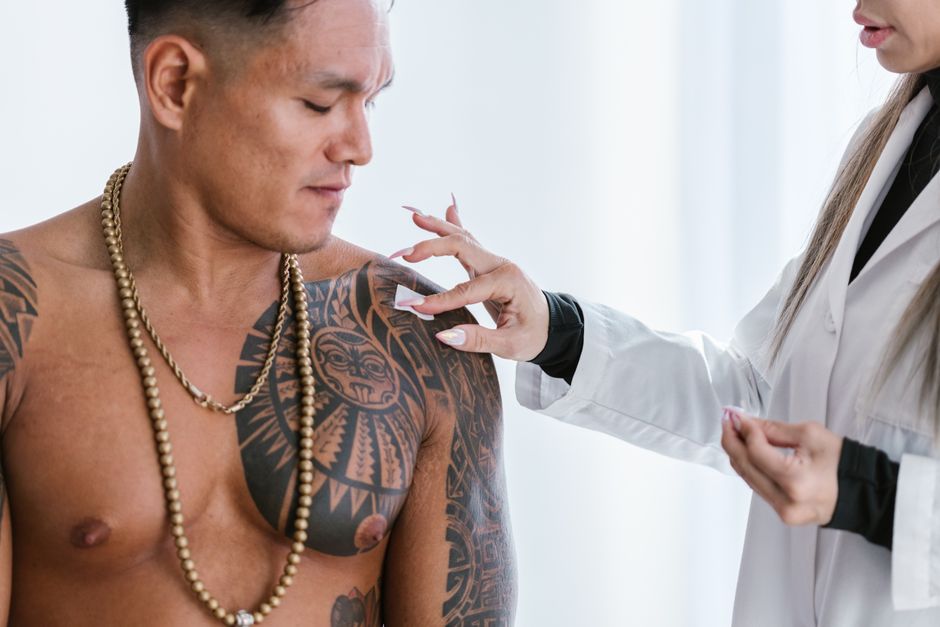
A new tattoo itches because your skin is healing from thousands of tiny puncture wounds. The needle pushed ink into the middle layer of your skin, called the dermis, and your immune system responded by sending cells to clean up the damage and lock the pigment in place. That repair process releases histamine and other chemical signals that irritate nerve endings, which your brain reads as itch. The itch is usually worst in the first few days and can come and go for two to three weeks as the skin rebuilds itself.
Most of the time, itching is a normal part of healing. Sometimes it signals a problem, like an allergic reaction or an infection. Knowing the difference matters, because the wrong response — scratching — can pull ink out of place and damage the tattoo permanently.
What Happens To Your Skin During Tattoo Healing?
A tattoo is a controlled injury. A machine drives a needle through the top layer of skin, the epidermis, and into the dermis, depositing pigment along the way. The epidermis is thin and replaces itself quickly. The dermis is deeper, holds blood vessels and nerves, and heals more slowly.
Your immune system treats the pigment as a foreign invader. Specialized immune cells called macrophages travel to the site and try to engulf the ink particles. Many succeed and carry pigment away, but others stay put. The ink that remains trapped in the dermis is what you see as a finished tattoo.
This cleanup creates inflammation. Inflamed tissue releases histamine, the same compound involved in allergic reactions and mosquito bites. Histamine makes nerve endings fire more easily, and that firing is what you feel as itch. As new skin forms over the tattoo, the surface tightens and dries, adding another layer of itchiness.
Healing generally moves through stages:
- Days 1–3: The skin is raw, weepy, and tender. Itch may be mild at this point because pain signals dominate.
- Days 4–14: A thin scab or flaky layer forms. This is often the itchiest stretch.
- Weeks 2–4: The outer skin peels and sheds. Itch usually fades as the surface smooths out.
Timelines vary. Tattoo size, location, skin type, and how well you care for it all affect how long the itch lasts.
Why Do New Tattoos Itch More Than Other Wounds?
A tattoo itches for the same reasons any healing wound itches, but several factors can make it worse. The pigment itself is a foreign substance, so the immune response is ongoing rather than brief. The dermis is packed with nerve endings, and the needle disturbs many of them.
Location matters. Skin on the ribs, feet, hands, and joints stretches and moves constantly, which can keep the area irritated. Thin-skinned areas may heal faster, while thicker skin may itch longer.
Dryness is a major driver. As the tattoo scabs and peels, the surface loses moisture. Dry, tight skin itches more than moist, flexible skin. This is why aftercare instructions almost always include keeping the area lightly moisturized.
Some people also react to specific ink colors. Red pigment, in particular, has been linked to allergic reactions more often than other colors. This does not mean red ink is unsafe for everyone. It means a red tattoo is more likely than a black one to trigger a reaction in a person who is sensitive to it.
How Can You Relieve The Itch Safely?
The single most important rule is do not scratch. Scratching can pull pigment out of the dermis, leave gaps or patchy spots, and open the skin to bacteria. It can also turn a mild itch into a scar.
Instead, try these approaches:
- Keep it moisturized. Apply a thin layer of a fragrance-free ointment or lotion recommended by your artist. A light layer is enough; heavy layers can clog pores.
- Cool the area. A clean, cool compress can calm nerve endings. Never put ice directly on the skin.
- Gently tap or press. Tapping around the tattoo, not on broken skin, can distract the nerves without causing damage.
- Wash gently. Use lukewarm water and a mild, fragrance-free soap. Pat dry with a clean paper towel.
- Avoid tight clothing. Friction from fabric can make itching worse and irritate healing skin.
- Stay out of the sun. Fresh tattoos burn easily, and sun exposure can fade ink and worsen irritation.
- Skip pools, hot tubs, and baths. Soaking in shared water raises the risk of infection while the skin is open.
Over-the-counter antihistamines may help some people, but they are not a standard treatment for tattoo itch specifically. If itching is severe or keeping you awake, talk to a doctor or pharmacist rather than self-treating.





When Is Itching A Sign Of Something More Serious?
Itching alone is rarely a red flag. Itching combined with other symptoms can be. Watch for signs that the healing process has gone off track.
Contact a doctor if you notice:
- Spreading redness or warmth around the tattoo
- Swelling that gets worse instead of better after the first few days
- Pus, yellow or green drainage, or a foul smell
- Fever or chills
- A rash, hives, or raised, bumpy areas specifically in one ink color
- Pain that increases rather than fades
These can point to a skin infection or an allergic reaction to pigment. Both need medical evaluation. Infections are treatable, and delaying care can let them spread. Allergic reactions to ink can appear days, weeks, or even years after a tattoo is done, and some require treatment or, in rare cases, removal.
It is also worth knowing that not all bumps in a tattoo are allergic reactions. Some are granulomas, where the body forms small clusters of immune cells around pigment. Others are related to how the skin healed. A doctor or dermatologist can tell the difference, which is why a proper diagnosis matters before assuming one cause.
Does Aftercare Affect How Long You Itch?
Good aftercare does not eliminate itching, but it can shorten it and reduce complications. The goal is to support healing without interfering with it.
Follow the instructions from your tattoo artist, and ask questions if anything is unclear. In general, gentle cleansing, light moisturizing, and protecting the area from sun, friction, and bacteria give skin the best chance to heal well. Avoid picking or peeling scabs, even when they flake. Let them fall off on their own.
Some people find that their tattoo itches again weeks or months later, often during weather changes or when the skin dries out. This is usually mild and temporary. Persistent or worsening itch in a healed tattoo is worth mentioning to a doctor.
What About Itching In Older Tattoos?
An old tattoo can itch too, and the reasons differ from a fresh one. Dry skin is the most common cause. Eczema and psoriasis can also affect tattooed skin, sometimes appearing for the first time in the tattoo itself.
Occasionally, an old tattoo becomes raised, itchy, or bumpy in one color. This can be a delayed allergic reaction, which some research suggests may happen more often with red pigment. In other cases, it can reflect an immune response triggered by something else going on in the body.
If an old tattoo suddenly changes, gets inflamed, or itches without an obvious cause like dry skin, have it checked. Most causes are manageable, but a medical evaluation is the only way to know what you are dealing with.
Frequently Asked Questions
How long does a new tattoo itch for?
Most itching lasts about one to two weeks, with the worst of it in the first several days. Some people notice mild itchiness for up to three or four weeks as the skin finishes healing.
Can I put hydrocortisone cream on a new tattoo?
No, do not apply hydrocortisone or other steroid creams to a healing tattoo unless a doctor tells you to. Steroids can slow healing and thin the skin, and they are not part of standard tattoo aftercare.
Why does my tattoo itch more at night?
Itch often feels worse at night because there are fewer distractions and skin temperature and blood flow change during sleep. Dryness from bedding and reduced moisture in the air can also add to it.
Is it normal for a tattoo to itch after it peels?
Yes, mild itching can continue for a short time after the peeling stage as the new skin settles. Itching that gets worse, spreads, or comes with redness, swelling, or pus is not normal and should be checked by a doctor.
