
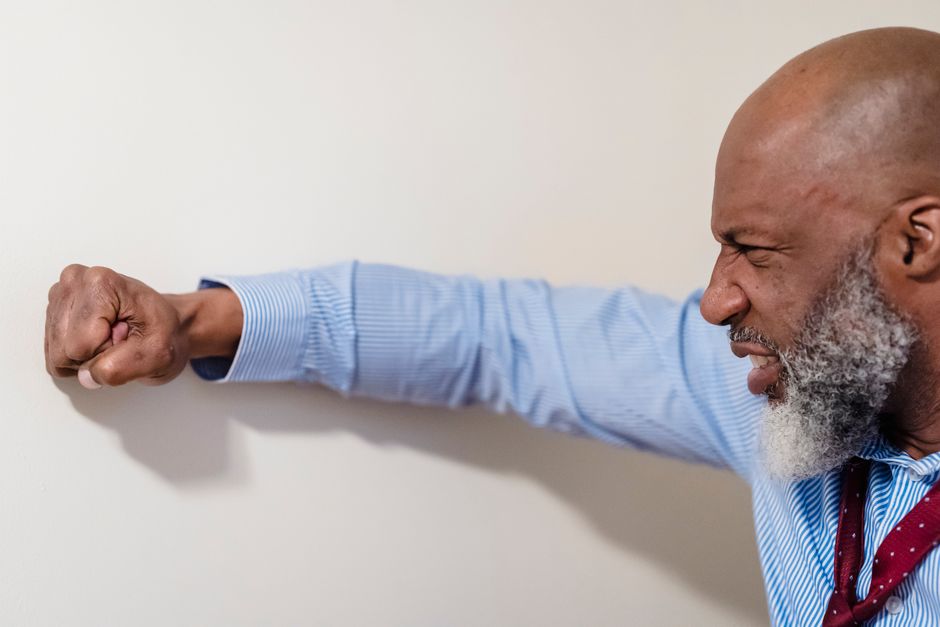
A man who punches a wall is usually not trying to break the wall. He is trying to do something with a feeling that has become unbearable, and he has run out of words, time, or permission to express it any other way. The behavior is best understood as a physical discharge of intense emotion, most often anger, frustration, or shame, that has exceeded a person’s usual ability to regulate it. It is a sign that emotional regulation has failed in that moment, not a sign that the man is evil or that he does not care.
The psychology behind it involves several overlapping systems: how the brain responds to threat and frustration, how boys are often taught to handle emotion, and what happens in the body when anger builds without an outlet. Understanding these pieces helps explain the behavior without excusing it.
Why Do Men Punch Walls The Psychology Explained
Punching a wall is what psychologists would call an emotional regulation failure. The feeling is real and intense. The response is a physical action aimed at releasing or expressing it. In that moment, the brain has chosen a fast, physical route over a slower, verbal one.
Anger activates the body’s stress response. Heart rate rises, muscles tense, and breathing changes. This is the same system that prepares a person to respond to danger. When that energy has nowhere to go, a physical act can feel like the only available release. The wall is a target that does not talk back, does not judge, and does not require the man to explain himself.
There is also a social dimension. Many men were taught, directly or indirectly, that anger is one of the few emotions they are allowed to show. Sadness, fear, and shame can feel off-limits. Anger becomes the acceptable surface for feelings that are harder to name. The punch is sometimes anger, and sometimes it is grief or humiliation wearing anger’s clothes.
What Happens in the Brain When Anger Takes Over
Anger involves a rapid response from deep brain structures that evolved to keep us safe. The amygdala, a small almond-shaped region, reacts quickly to perceived threats or provocations. It can trigger a surge of stress hormones before the thinking parts of the brain have caught up.
The prefrontal cortex, which sits behind the forehead, is involved in planning, impulse control, and weighing consequences. Under intense emotional arousal, its influence can be reduced. This is why people often describe “seeing red” or doing something they regret and cannot fully explain afterward. The quick reaction outran the deliberate one.
This does not remove responsibility. It explains the mechanism. A person can learn to recognize the buildup earlier, before the thinking brain is crowded out. That is the basis of most anger management approaches.
Is Punching a Wall a Sign of a Mental Health Condition?
Not on its own. A single incident of punching a wall during extreme stress does not indicate a disorder. It is a behavior, and behaviors have causes that vary from person to person.
That said, frequent or escalating physical outbursts can be associated with several conditions. These include intermittent explosive disorder, which involves repeated impulsive aggressive outbursts that are out of proportion to the trigger. They can also appear alongside depression, post-traumatic stress disorder, substance use, or problems with impulse control. Some men who punch walls are dealing with untreated trauma or chronic stress.
No single behavior confirms a diagnosis. A mental health professional looks at patterns, duration, triggers, and how much the behavior interferes with a person’s life. If outbursts are frequent, cause injury, frighten others, or leave the person feeling out of control, that is a reason to seek professional evaluation.
How Do Boys Learn to Handle Anger?
Many men grew up receiving a narrow emotional education. Boys are often encouraged to be tough and discouraged from crying or showing fear. Anger, by contrast, is frequently tolerated or even rewarded as a sign of strength. Over time, anger can become the default channel for a whole range of feelings.
This is not about blaming parents or upbringing. It is about recognizing that emotional skills are learned. A man who never had practice naming feelings, asking for help, or calming his body may have fewer tools available when stress peaks. Punching a wall can be a skill gap as much as anything else.
There is also a modeling effect. Men who witnessed physical expressions of anger growing up may have absorbed that pattern without ever choosing it consciously.
What Are the Risks of Punching Walls?
The most immediate risk is injury. The bones of the hand are small and fragile compared with a wall. Punching a hard surface can break bones, damage knuckles, or injure tendons. A common injury from punching is a fracture of the metacarpal bone at the base of the pinky finger, sometimes called a boxer’s fracture. These injuries can require surgery and can leave lasting stiffness.
There are other risks. Repeated outbursts can damage relationships and create fear in a household. They can escalate over time. And they can be a warning sign that a person’s stress or emotional struggles are not being addressed.
If someone punches a wall and the hand is swollen, deformed, or very painful, or if there is numbness or an inability to move the fingers normally, that warrants medical evaluation. Some fractures are not obvious without an X-ray.
What Helps Men Manage Anger Without Physical Outbursts?
The first step is learning to notice anger earlier in the buildup. Anger usually does not appear from nowhere. There are physical signs: a tightening jaw, raised voice, clenched fists, a racing heart. Catching these early gives a person more room to choose a response.
Cooling the body down helps. Slow breathing, stepping away from the situation, or physical movement like a brisk walk can reduce arousal. This is not about suppressing anger. It is about giving the thinking brain time to reengage.
Naming the feeling underneath the anger is often useful. Was this really anger, or was it embarrassment, rejection, or feeling disrespected? Therapists sometimes call this looking beneath the anger. It can be uncomfortable at first, especially for men who were not encouraged to do it.
Professional support can make a real difference. Cognitive behavioral therapy and anger management programs have been studied for anger problems, and the evidence supports their use for many people, though results vary by individual and program. A therapist can help a person understand their triggers and build skills over time. For some people, treating an underlying condition such as depression or trauma is part of the picture.
Some men benefit from structured programs, and some benefit from individual therapy. There is no single approach that works for everyone. The key is that the behavior is learnable and changeable with support.
When Should Someone Seek Help?
Seeking help is warranted when outbursts are frequent, when they cause injury to the person or others, when they frighten family members, or when the person feels unable to control them. It is also warranted when anger is affecting work, relationships, or a person’s own sense of safety.
Men are often less likely than women to seek help for emotional problems, and stigma can be a real barrier. It is worth saying plainly: asking for help with anger is not weakness. It is a practical step toward protecting your health, your relationships, and the people around you.
If you or someone you know is in crisis or at risk of harming themselves or others, contact a crisis line or emergency services right away. In the United States, the 988 Suicide and Crisis Lifeline can be reached by calling or texting 988.
Frequently Asked Questions
Why do men punch walls instead of talking?
Many men were taught that anger is more acceptable than sadness or fear, so anger becomes the outlet for harder feelings. When words feel unavailable, a physical act can feel like the only release.
Is punching a wall a sign of anger issues?
It can be, especially if it happens often or escalates. A single incident during extreme stress is not a diagnosis, but frequent outbursts are worth discussing with a professional.
What injury can happen from punching a wall?
Punching a hard surface can break the small bones of the hand, including a common fracture near the pinky finger. Swelling, deformity, or numbness after a punch should be checked by a doctor.
How can men learn to stop punching walls?
Learning to notice anger early, cooling the body down, and naming the feeling underneath the anger can help. Therapy and anger management programs can build these skills with professional support.
