
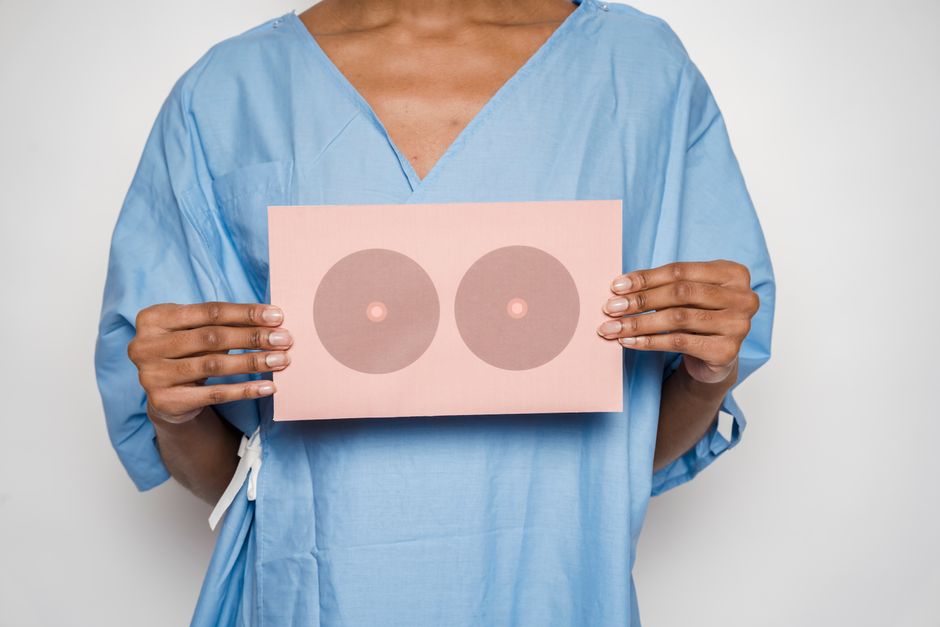
Men develop breast tissue for two main reasons: true gynecomastia, which is actual glandular breast tissue growth, and pseudogynecomastia, which is chest fat with no glandular tissue involved. These are different conditions with different causes and different treatments. The distinction matters because a man with gynecomastia has a medical issue driven by hormones, while a man with chest fat has a body composition issue driven by calorie balance. Many men actually have both at the same time.
What Is the Difference Between Gynecomastia and Chest Fat?
The difference comes down to tissue type. Gynecomastia is a proliferation of glandular breast tissue — the same kind of tissue found in female breasts. It sits directly behind the nipple and areola as a firm, often tender disc. Pseudogynecomastia is simply subcutaneous fat deposited on the chest. It feels soft, spreads more broadly across the pectoral area, and has no discrete glandular mass underneath.
This is not a cosmetic distinction. Glandular tissue responds to hormones. Fat responds to energy balance. A man who loses 30 pounds of fat may see his chest shrink, but if he has true gynecomastia, the glandular disc will remain. That is why some men diet aggressively, get lean everywhere else, and still have a pointed chest contour. They are trying to lose something that is not fat.
Physicians can usually tell the difference during a physical exam. A firm, rubbery disc that is at least 0.5 cm (about a quarter inch) in diameter behind the nipple indicates gynecomastia. Some clinicians use imaging when the exam is unclear, but the physical exam alone is accurate in most cases. If the tissue is soft throughout with no distinct disc, it is more likely fat.
Why Do Men Have Breast Tissue At All?
Every man has breast tissue from birth. Male and female embryos develop along the same basic blueprint until hormonal signals diverge during puberty. Men have nipples, milk ducts, and a small amount of glandular tissue. What men typically lack is the hormonal environment — specifically high estrogen relative to testosterone — that causes that tissue to grow.
When the estrogen-to-testosterone ratio shifts in favor of estrogen, that dormant glandular tissue can enlarge. This is the core mechanism behind gynecomastia. It is not a sign that a man is becoming female. It is a sign that the hormonal balance in his body has temporarily or persistently changed.
This is also why gynecomastia is common in newborn boys (exposed to maternal estrogen in the womb), during puberty (hormonal flux), and in older men (declining testosterone with relatively stable or increasing estrogen). These three life stages account for the vast majority of cases.
What Causes Gynecomastia in Men?
Gynecomastia has many possible causes, and identifying the specific one matters because treatment depends on it. The most common categories are hormonal, medication-related, and idiopathic — meaning no clear cause is found.
Hormonal causes include age-related testosterone decline, which is the most frequent driver in men over 50. As testosterone drops, the ratio of estrogen to testosterone rises even if estrogen levels have not changed. Certain medical conditions can also shift this ratio, including liver disease, kidney failure, thyroid disorders, and conditions that affect testosterone production such as hypogonadism.
Medications are a significant and often overlooked cause. Some drugs interfere with estrogen metabolism or directly stimulate breast tissue. Categories that have been associated with gynecomastia include:
- Certain antipsychotics and antidepressants
- Some heart medications, including digoxin and calcium channel blockers
- Anti-androgen drugs used for prostate conditions
- Anabolic steroids and androgen precursors
- Some antibiotics and antifungal medications
- Ulcer medications such as cimetidine
Substances also play a role. Alcohol, marijuana, opioids, and anabolic steroids have all been linked to gynecomastia. The relationship with marijuana is documented but the strength of the association varies across studies. Anabolic steroid use is one of the most direct causes because these drugs convert to estrogen in the body.
In some cases, no cause is identified. Estimates vary, but a meaningful percentage of gynecomastia cases remain unexplained after evaluation. This is called idiopathic gynecomastia.
Why Does Chest Fat Develop in Men?
Pseudogynecomastia follows the same rules as fat accumulation anywhere else on the body. It develops when a man consistently takes in more calories than he burns. Genetics influence where that fat settles. Some men store more fat on the chest, just as some store more on the belly or hips.
There is no exercise that specifically targets chest fat. Spot reduction — the idea that working a muscle burns the fat on top of it — is not supported by research. Chest fat responds to overall fat loss, not to push-ups or bench presses. Building the pectoral muscles underneath can change the shape of the chest, but it does not remove the fat covering them.
Hormones do influence fat distribution. Men with lower testosterone tend to carry more fat in the chest and abdominal area. This creates a situation where a man may have both pseudogynecomastia and early gynecomastia simultaneously. The fat is one problem. The glandular tissue is another.
How Can You Tell Which One You Have?
The most reliable way to distinguish between gynecomastia and chest fat is a physical examination by a physician. The key finding is a firm, disc-shaped mass centered behind the nipple. This is the hallmark of gynecomastia. Fat alone does not produce this texture or location.
Other signs that point toward gynecomastia include tenderness or sensitivity in the nipple area, a rubbery or firm consistency rather than soft, and a shape that is concentrated around the areola rather than spread evenly across the chest. Pseudogynecomastia tends to look more diffuse, with a softer feel and no distinct mass.
A doctor will typically take a medical history, review medications and substance use, and may order blood tests to check hormone levels. If the cause is unclear or the presentation is unusual — such as one-sided enlargement, a hard fixed mass, nipple discharge, or skin changes — further evaluation is warranted. These signs can indicate other conditions that require prompt medical attention.
What Treatment Options Exist?
Treatment depends entirely on which condition is present and what is causing it. For pseudogynecomastia, the answer is fat loss through diet and exercise. There is no shortcut. No supplement or cream has been shown in clinical trials to reduce chest fat. Some products marketed for this purpose contain ingredients that have never been tested in humans for this use.
For gynecomastia, treatment starts with addressing the underlying cause. If a medication is the trigger, a doctor may adjust or switch it. If a medical condition is responsible, treating that condition may resolve the breast enlargement. If no reversible cause is found, options include watchful waiting, medication, and surgery.
Watchful waiting is reasonable in many cases. Pubertal gynecomastia often resolves on its own within one to two years without intervention. This is well documented and is the standard approach for adolescent boys with typical presentation.
Medications exist that block estrogen or its effects on breast tissue. These are sometimes used, but they are not universally effective and are generally considered more useful in early-stage gynecomastia than in long-standing cases. Once glandular tissue has been present for an extended period, it can become fibrous and less responsive to medication.
Surgery is the most definitive treatment for gynecomastia that does not resolve. Procedures range from liposuction (for fatty tissue) to surgical excision (for glandular tissue). Many cases require both. Surgery is generally reserved for men who have completed puberty, have stable symptoms, and have not responded to other approaches. It is not without risks, including scarring, asymmetry, and changes in nipple sensation.
No clinical guidelines currently exist for treating gynecomastia in pre-pubertal boys, and treatment decisions in adolescents should involve a pediatric endocrinologist.
When Should You See a Doctor?
See a doctor if you notice new breast enlargement, particularly if it is rapid, painful, one-sided, or accompanied by nipple discharge or skin changes. These features are not typical of common gynecomastia and may indicate something that needs urgent evaluation.
Also see a doctor if you are taking a medication and notice breast changes. Do not stop any prescribed medication on your own. Your doctor can determine whether the drug is the likely cause and whether an alternative exists.
For men with longstanding, stable breast enlargement that is not painful and has no concerning features, an appointment is still worthwhile. A proper diagnosis tells you what you are dealing with and what your realistic options are. Guessing rarely leads to the right answer.
Frequently Asked Questions
Can gynecomastia go away on its own?
Yes, in many cases. Pubertal gynecomastia often resolves within one to two years without treatment, and gynecomastia caused by a reversible factor like a medication may improve once that factor is removed. Long-standing gynecomastia is less likely to resolve on its own.
How do I know if I have gynecomastia or just chest fat?
A firm, rubbery disc directly behind the nipple suggests gynecomastia, while soft tissue spread across the chest without a distinct mass suggests fat. A physical exam by a doctor is the most reliable way to tell the difference.
Does exercise get rid of man boobs?
Exercise can reduce chest fat as part of overall fat loss, but it cannot target chest fat specifically and will not remove glandular tissue. Men with true gynecomastia will not resolve it through exercise alone.
Is gynecomastia a sign of low testosterone?
It can be. Low testosterone shifts the ratio of estrogen to testosterone in favor of estrogen, which can stimulate breast tissue growth. However, gynecomastia has many other causes, and blood tests are needed to determine whether low testosterone is the reason.
