
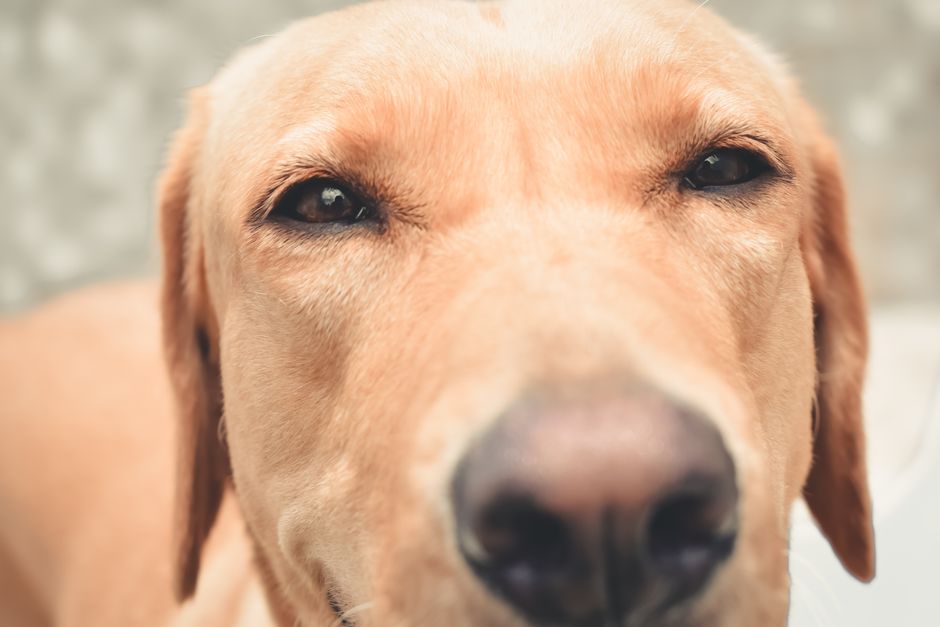
Labradors shed a lot because they have a double coat designed for cold water and harsh weather. The soft undercoat sheds constantly, and twice a year they “blow” their coat, losing large clumps of fur over a few weeks. You cannot stop a Labrador from shedding, but you can manage it with regular brushing, the right tools, and a few simple routines that keep the loose fur out of your home.
Why Do Labradors Shed So Much And How To Manage It?
Labradors have two layers of fur. The top layer is a short, dense outer coat that repels water. The bottom layer is a soft, thick undercoat that traps body heat and keeps them warm in cold water.
The undercoat does not stop growing. It reaches a certain length, dies, and falls out. This happens continuously throughout the year. That is why you find fur on your couch in July just as much as in January.
Twice a year, usually in spring and fall, the shedding becomes extreme. This is called “blowing coat.” The dog loses most of its undercoat over a period of two to four weeks. During this time, brushing once a day is not optional—it is necessary.
What Makes Labrador Shedding Worse Than Other Breeds?
Many dogs have single coats. Poodles, for example, have hair that grows continuously and sheds very little. Labradors have a double coat, which means they produce far more fur overall.
Labradors also have a genetic predisposition to shedding that is simply stronger than many other breeds. This is not a health problem. It is normal physiology for the breed.
Some factors can increase shedding beyond the normal baseline:
- Seasonal changes — longer daylight hours trigger the spring shed, shorter days trigger the fall shed.
- Stress — moving homes, new pets, or major routine changes can cause temporary increases in shedding.
- Poor nutrition — a diet lacking in essential fatty acids can make the coat dry and increase hair loss.
- Skin conditions — allergies, parasites, or fungal infections can cause patchy or excessive shedding.
If your Labrador suddenly loses fur in patches, or if the skin looks red, flaky, or irritated, see a veterinarian. Normal shedding is uniform. Patchy hair loss is not.
What Is the Best Brush for a Labrador?
You need two tools. A slicker brush for the outer coat and an undercoat rake for the dense undercoat.
An undercoat rake has long, widely spaced metal pins. It reaches down through the top coat and pulls out loose undercoat fur without cutting the skin. This is the single most effective tool for a Labrador.
A slicker brush has fine, short wires set closely together. It removes loose hair from the top coat and helps distribute natural skin oils through the fur.
A de-shedding tool, such as a Furminator, can also work. Use it with caution. These tools have blades that cut through the undercoat. Overuse can damage the top coat and irritate the skin. Use a de-shedding tool no more than once or twice a week, and stop if the skin becomes red.
Do not use human hair brushes. They are not designed for dense double coats and will not reach the undercoat.





How Often Should You Brush a Labrador?
During normal shedding periods, brush your Labrador two to three times per week. This keeps loose fur from spreading around your home and prevents mats from forming behind the ears and on the thighs.
During the seasonal “blow” in spring and fall, brush every day. A daily session of ten to fifteen minutes will remove a surprising amount of fur. You will see clumps of undercoat coming out in large sheets. This is normal.
Brush outside if possible. If you brush indoors, do it in a room with hard floors rather than carpet. Loose fur is easier to sweep or vacuum from hard surfaces.
Does Bathing Help Reduce Shedding?
Yes, but not the way you might think. Bathing does not stop shedding. It removes fur that is already loose and ready to fall out.
A warm bath loosens dead undercoat hairs. When you rinse and then brush, significantly more fur comes out than with brushing alone. Many owners bathe their Labrador at the start of the heavy shedding season to speed up the process.
Do not bathe too often. Over-bathing strips natural oils from the skin and coat, which can lead to dryness and increased hair loss. Once every four to six weeks is reasonable for most Labradors. Use a dog-specific shampoo. Human shampoo has a different pH and can irritate a dog’s skin.
After the bath, dry thoroughly with a towel. If your dog tolerates a blow dryer on a low, cool setting, that can help remove even more loose fur. Never use a hot setting—it can burn the skin.
Does Diet Affect Shedding?
Diet influences coat quality. A dog fed a complete and balanced diet will typically shed less than a dog with nutritional deficiencies. But no food will stop shedding entirely.
Omega-3 and omega-6 fatty acids support skin health and coat condition. Many commercial dog foods include these. Some owners add fish oil supplements. Research on whether supplements reduce shedding is limited, but improving skin health may reduce excessive hair loss caused by dry, flaky skin.
If you consider adding supplements, talk to your veterinarian first. Dosage matters, and too much fish oil can cause digestive issues.
Dehydration also affects the coat. Make sure your dog always has access to fresh water. A well-hydrated dog has healthier skin and a stronger coat.
Can You Reduce Shedding With Grooming Routines?
Yes. A consistent grooming routine is the most effective way to manage shedding.
Start with the undercoat rake. Work in sections, starting at the neck and moving toward the tail. Use long, firm strokes. Do not press hard—the goal is to remove loose fur, not to scrape the skin.
Follow with the slicker brush to smooth the top coat and remove any remaining loose hairs.
Pay special attention to the areas where fur mats most often: behind the ears, under the collar, and on the back of the thighs.
Wipe your dog down with a damp cloth or a grooming glove after brushing. This picks up any remaining loose fur and leaves the coat looking neat.
How to Manage Shedding in Your Home
You cannot win a war against Labrador fur in your home. You can only reduce the amount that accumulates.
Use washable covers on furniture your dog sits on. Wash them weekly during heavy shedding periods.
Vacuum with a pet-specific vacuum or a vacuum with a HEPA filter. Pet fur and dander are fine enough to pass through standard filters and recirculate in the air.
Run an air purifier with a HEPA filter in the main living area. This captures airborne fur and dander that brushing and vacuuming miss. It will not remove fur from your furniture, but it will reduce what you breathe in.
Keep a lint roller near the door. You will need it before leaving the house.
When Should You Worry About Shedding?
Normal shedding is uniform across the body. Your dog loses fur everywhere, and the skin underneath looks healthy.
See a veterinarian if you notice any of these signs:
- Bald patches or thinning in specific areas
- Red, inflamed, or scaly skin
- Excessive scratching, licking, or biting at the skin
- Foul odor from the skin or coat
- Hair loss accompanied by weight loss, lethargy, or changes in appetite
These can indicate allergies, parasites, hormonal imbalances, or infections. A veterinarian can run tests to identify the cause. Do not try to treat these conditions at home without a diagnosis.
Also note that Labradors shed heavily for their entire lives. Do not expect shedding to decrease as your dog ages. In fact, older dogs may shed more if they develop skin conditions or hormonal issues.
Frequently Asked Questions
Do Labradors shed more than other dogs?
Yes. Labradors are among the heaviest shedding breeds because they have a dense double coat that sheds year-round.
Can shaving a Labrador reduce shedding?
No. Shaving a double-coated dog does not stop shedding and can damage the coat permanently.
How long does Labrador shedding season last?
The heavy seasonal shed typically lasts two to four weeks in spring and again in fall.
Do Labradors shed less after being neutered or spayed?
Some owners report reduced shedding after the procedure, but this is not guaranteed and depends on the individual dog.
