
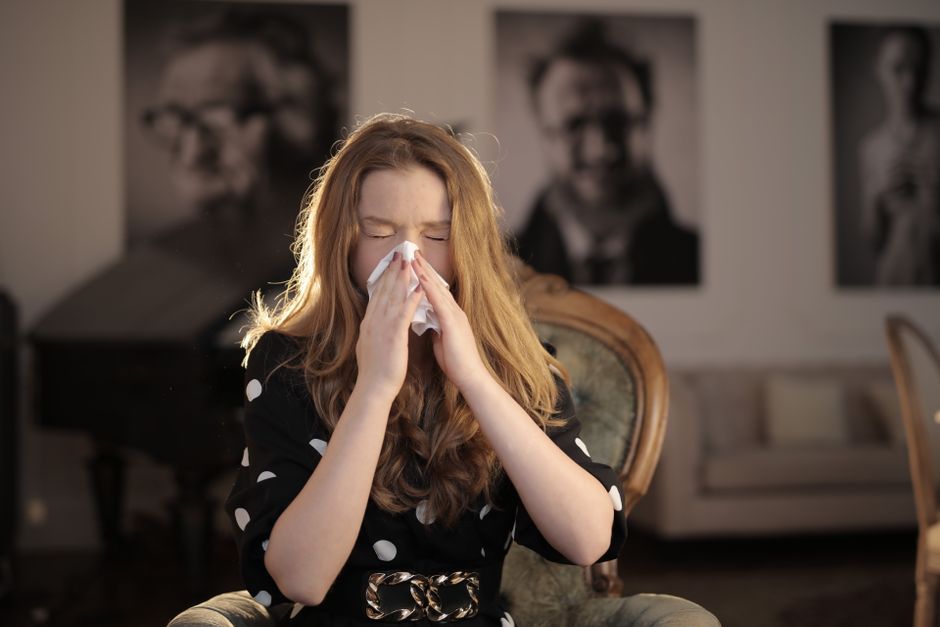
A sneeze is a reflex, and like all reflexes it has a job to do. When something irritates the lining of your nose, your body responds with a sudden, forceful burst of air meant to clear the irritant out. The reason a sneeze can feel so violent is that it is not a single muscle movement. It is a coordinated chain reaction involving your brainstem, your diaphragm, your chest muscles, your throat, and your face — all firing in sequence within a fraction of a second. The force is real, but it is also normal. Understanding what drives that force explains why some sneezes rattle your whole body while others barely register.
Why Do I Sneeze So Hard The Science Explained?
The sneeze reflex starts when sensory nerve endings in your nasal lining detect an irritant. That signal travels to a control center in your brainstem, which then triggers a set pattern of muscle contractions. Your eyes close, your diaphragm contracts sharply, and your chest and abdominal muscles squeeze air upward through your airway.
The result is a rapid release of air. The speed and pressure vary a lot from person to person and from sneeze to sneeze. You may have seen a widely repeated figure that sneezes travel at around 100 miles per hour. That number is not supported by careful measurement. Research using high-speed imaging has found that the airflow and droplet spray from a sneeze are far slower and more variable than that old figure suggests. The honest answer is that sneeze speed varies widely and the famous 100 mph claim is a myth.
What makes a sneeze feel so powerful is the combination of muscles involved. A sneeze is not just your nose. It recruits your diaphragm, your intercostal muscles between the ribs, your abdominal wall, and muscles in your throat and soft palate. When they all contract together, the sensation is whole-body. That is why a hard sneeze can leave you briefly dizzy or with watering eyes.
What Actually Triggers a Sneeze?
The trigger is irritation of the nasal mucosa — the moist lining inside your nose. Almost anything that stimulates the nerve endings there can set off the reflex. Common triggers include dust, pollen, smoke, strong odors, and sudden changes in temperature or humidity.
There are also triggers that have nothing to do with the nose. Bright light is a well-documented one. Some people sneeze when they step from a dark room into sunlight. This is called a photic sneeze reflex, and it appears to run in families. The exact mechanism is still debated, but the reflex is real and recognized.
Other triggers include:
- Viral infections that inflame and sensitize the nasal lining
- Allergens such as pollen, pet dander, or mold
- Physical irritants like pepper, perfume, or cleaning fumes
- Cold air hitting the face
- Eating certain foods, in some people
When your nose is already inflamed — during a cold or an allergy flare — the nerve endings become more sensitive. That is why you tend to sneeze more when you are already congested. The threshold for triggering the reflex drops.
Why Does a Sneeze Feel Like It Builds Up First?
That rising, tingling sensation before a sneeze is the reflex gathering itself. The signal has reached your brainstem, and your body is preparing the coordinated contraction. The buildup is sometimes called the sneeze “urge,” and it can last a second or two.
The urge phase matters because it is when the reflex can sometimes be stopped. If you catch the sensation early, you may be able to press your tongue to the roof of your mouth or breathe through your nose to head it off. This does not always work, and it is not a reliable method. The buildup is a genuine neurological event, not imagination.
Some people feel the urge and then the sneeze does not come. That is normal. The reflex can be triggered and then fade if the stimulus is removed or the signal does not reach the threshold needed to complete the response.
Is a Hard Sneeze Dangerous?
For most people, a forceful sneeze is harmless. The reflex is designed to clear the airway, and the body handles the pressure it generates. There is no evidence that a normal sneeze causes injury in a healthy person.
There are situations where the force matters more. People with certain eye conditions, such as a history of retinal detachment, are sometimes advised by their clinicians to be cautious. People with weakened blood vessels or recent surgery may also be given specific guidance by their doctor. These are individual clinical situations, not general rules for everyone.
One thing worth correcting: the idea that you should hold in a sneeze by pinching your nose and closing your mouth. Some clinicians have reported rare injuries from forcefully suppressing sneezes, including damage to the eardrum or throat. The evidence comes from case reports rather than large studies, but the general clinical advice is to let the sneeze out rather than force it back. Cover your mouth and nose, but do not clamp them shut.
Why Do Some People Sneeze Harder Than Others?
Sneeze force varies widely between people, and the reasons are not fully understood. Body size, lung capacity, and the sensitivity of your nasal nerve endings likely all play a part. Age matters too — children tend to sneeze with less force than adults, and the reflex can change as people get older.
Some of the variation is situational. A sneeze triggered by a large amount of irritant may be more forceful than one triggered by a faint odor. A sneeze during a cold, when the nasal lining is inflamed, can feel more explosive than a sneeze on a healthy day.
There is no evidence that sneezing hard is a sign of anything wrong. It is simply a reflection of how your body is responding at that moment. The reflex is not a measure of health or strength.
Can You Sneeze in Your Sleep?
You generally do not sneeze while you are asleep. The sneeze reflex requires a level of sensory processing and muscle coordination that is suppressed during deep sleep. The trigeminal nerve pathways involved in the reflex are less active during sleep, and the brainstem does not respond to nasal irritation the same way.
That said, people can sneeze as they are falling asleep or waking up, when the nervous system is in transition. And if you have a cold or allergies, you may sneeze more in the minutes after you wake, when irritants have had time to accumulate in your nose overnight.
How to Manage Frequent or Violent Sneezing
If you are sneezing often, the most useful step is to identify the trigger. Allergy testing, a review of your environment, and attention to when sneezing happens can all help. Reducing exposure to dust, pollen, smoke, and strong fumes is the most direct approach.
For allergy-related sneezing, some clinicians recommend antihistamines or nasal corticosteroid sprays. These are common clinical options, and their effectiveness varies by person and by cause. They are not a guarantee, and they work best when the underlying trigger is known. A pharmacist or doctor can help you choose based on your situation.
If sneezing is accompanied by other symptoms — persistent congestion, facial pain, nosebleeds, or a change in your sense of smell — that is worth discussing with a clinician. Those signs can point to conditions that need evaluation beyond simple irritation.
For most people, though, sneezing hard is just a loud, occasionally embarrassing, entirely normal part of having a nose that works.
Frequently Asked Questions
Why do I sneeze so hard?
A hard sneeze comes from the coordinated contraction of your diaphragm, chest, and abdominal muscles, which together push air out forcefully. The force varies by person and situation, and it is not a sign of a problem.
Is it bad to hold in a sneeze?
Forcefully suppressing a sneeze by pinching your nose and closing your mouth has been linked in case reports to rare injuries, including to the eardrum. The general clinical advice is to let the sneeze out and cover your mouth and nose instead.
Why do I sneeze when I look at the sun?
This is called a photic sneeze reflex, and it appears to run in families. The exact mechanism is still debated, but the reflex is real and recognized.
Can you sneeze with your eyes open?
Most people cannot keep their eyes open during a sneeze because the reflex triggers eyelid closure. It is not dangerous to try, and the closure is a normal part of the response.
