
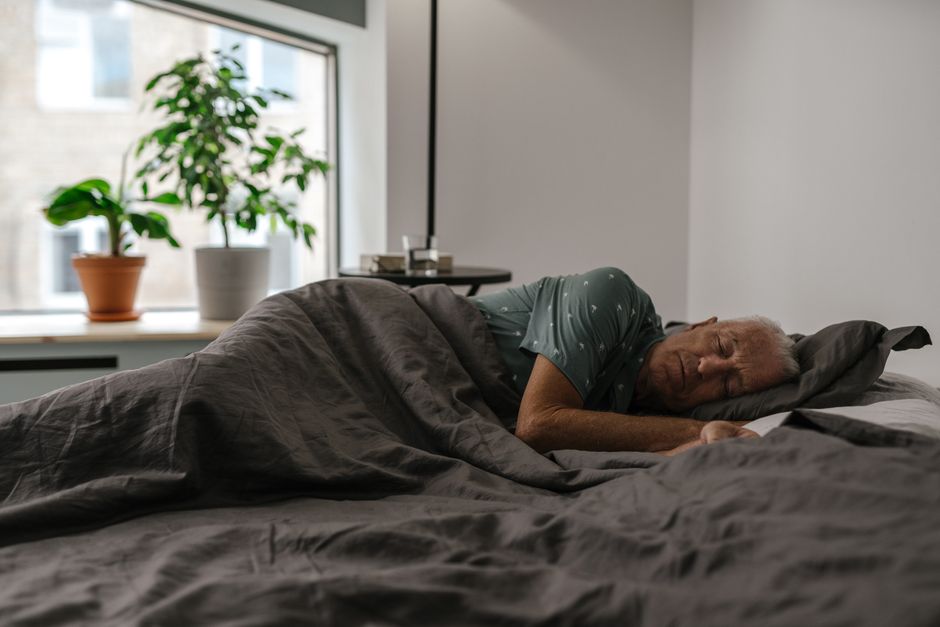
Sleepwalking and sleep talking are both parasomnias — unusual behaviors that happen during sleep. They are most common in children and tend to fade with age. In adults, they can still occur, and when they do, they are often linked to sleep deprivation, stress, fragmented sleep, or another sleep disorder. Most episodes are brief and harmless, though sleepwalking carries a real risk of injury because the person is not fully awake and will not remember it clearly.
Both behaviors happen when the brain does not complete its normal transition between sleep stages. Part of the brain is asleep and part is not. That partial wakefulness is why someone can walk, talk, or perform simple actions while remaining unaware of it.
Why Do I Sleepwalk And Talk In My Sleep?
Both happen because of a partial arousal from deep sleep. The brain does not wake up all at once. During an episode, the parts of the brain that control movement and speech can become active while the parts that handle awareness, memory, and judgment stay asleep. That split is the core mechanism behind both sleepwalking and sleep talking.
These events usually occur during non-REM sleep, especially the deepest stage, known as slow-wave sleep. This stage is concentrated in the first third of the night, which is why sleepwalking and sleep talking most often happen within the first few hours after falling asleep.
Sleep talking is far more common than sleepwalking. It can happen in any sleep stage and ranges from a few mumbled words to full sentences. The talker rarely remembers any of it. Sleepwalking is less common and involves actual movement — sitting up, walking around, or, in some cases, leaving the house or attempting complex tasks.
What is happening in the brain during an episode?
Normally, the brain keeps the body still during sleep through a system that relaxes the muscles. During sleepwalking, this system and the normal sleep-wake switch do not coordinate as they should. The result is a state that is neither full sleep nor full wakefulness. The person’s eyes may be open, and they may respond to simple cues, but they are not conscious in the usual sense.
What Causes Sleepwalking and Sleep Talking?
There is no single cause. These behaviors are best understood as a tendency that gets triggered. Some people are simply more prone to partial arousals, and certain conditions make those arousals more likely to turn into walking or talking.
Genetics plays a role. Sleepwalking tends to run in families, which suggests an inherited tendency toward these partial arousals. If a parent has a history of sleepwalking, a child is more likely to experience it too.
Common triggers include:
- Sleep deprivation or an irregular sleep schedule
- Stress and anxiety
- Fever or illness, especially in children
- Sleeping in an unfamiliar place
- Alcohol use in adults
- Certain medications, including some sleep aids and sedatives
- Another sleep disorder, such as obstructive sleep apnea or restless legs syndrome
One trigger that is often overlooked is another underlying sleep disorder. In adults who develop sleepwalking later in life, especially if episodes are frequent, clinicians often look for conditions like sleep apnea. When breathing repeatedly stops and restarts during sleep, the brain is pulled toward wakefulness over and over. Those repeated partial arousals can set off sleepwalking in someone who is prone to it. Treating the underlying breathing problem sometimes reduces the episodes, though the evidence for this varies between individuals.
Is Sleepwalking Dangerous?
Most episodes are not dangerous, but the risk is not zero. Because the sleepwalker is not fully conscious, they can trip, fall, walk into objects, or in rare cases leave the home. Injuries do happen, and the risk rises with certain behaviors.
Risk is higher when a person:
- Walks near stairs, windows, or balconies
- Attempts to cook, drive, or use tools during an episode
- Sleeps in an unfamiliar environment
- Has frequent or prolonged episodes
The most important safety step is to make the sleeping environment safer. That means keeping doors and windows secure, clearing floors of clutter, and using gates at the top of stairs if a child sleepwalks. For adults with frequent episodes, some clinicians recommend locking doors and keeping car keys out of reach. These are practical precautions, not a treatment.
It is also worth being clear about what sleepwalking is not. It is not a sign of a serious mental illness in most people. It is not acting out a dream. And a sleepwalker is not dangerous to others in the way movies suggest — most episodes involve simple, quiet movement.
How Common Is Sleepwalking at Different Ages?
Sleepwalking is common in childhood and much less common in adulthood. It is most frequent in children, and most children who sleepwalk grow out of it by their teenage years as their sleep patterns mature.
Sleep talking is common across all ages. It affects a large share of people at some point, and many people do it occasionally without ever having a full sleepwalking episode. Because it is so common and usually harmless, it rarely needs medical attention on its own.
In adults, new or frequent sleepwalking is less typical. When it first appears in adulthood, it deserves a closer look, because it is more likely to be linked to another sleep disorder, a medication, or a medical condition than childhood sleepwalking is.
How Are Sleepwalking and Sleep Talking Diagnosed?
Most cases are diagnosed from the history alone. A doctor will ask about the episodes, when they happen, how often, and what the person does during them. Since the sleepwalker usually does not remember the event, accounts from a bed partner or family member are often the most useful information.
When episodes are frequent, unusual, or begin in adulthood, a doctor may recommend a sleep study, also called polysomnography. This test records brain activity, breathing, muscle activity, and movement during sleep. It can reveal whether another sleep disorder — such as sleep apnea — is triggering the episodes. A sleep study is not needed for every case, but it is reasonable when the cause is unclear or the behavior is complex.
There is no blood test or scan that diagnoses sleepwalking. The diagnosis is clinical, based on the pattern of behavior and its timing during sleep.
What Helps Reduce Sleepwalking and Sleep Talking?
The first step is protecting sleep itself. Because sleep deprivation and irregular schedules are common triggers, keeping a consistent sleep and wake time and getting enough sleep can reduce episodes in people who are prone to them. This is the most reliable general measure, and it rests on a clear understanding of how sleep pressure drives partial arousals.
Reducing known triggers also helps. That can mean managing stress, limiting alcohol in the evening, and reviewing medications with a doctor if a drug seems to be involved. For children, ensuring a calm, consistent bedtime routine is often enough.
When an underlying sleep disorder like sleep apnea is found, treating it may reduce episodes. This connection is well recognized, though how much improvement each person sees can vary.
Medical treatment is rarely needed for sleepwalking or sleep talking alone. When episodes are frequent, risky, or cause distress, some clinicians recommend specific approaches, but the evidence base for medication is limited and it is generally reserved for serious cases. No medication is approved specifically for sleepwalking, and any decision about treatment should come from a clinician who has evaluated the individual case.
One simple measure many families use is gently guiding a sleepwalker back to bed without waking them abruptly. Waking a sleepwalker is not dangerous, despite the common belief that it is — but a calm redirection is usually easier on everyone and lowers the chance of confusion or agitation.
When Should You See a Doctor?
Occasional sleep talking or a rare sleepwalking episode in a child usually does not need medical attention. Certain situations do warrant a conversation with a doctor.
- Episodes are frequent or getting more intense
- Sleepwalking causes injury or comes close to it
- Episodes first appear in adulthood
- There are signs of another sleep disorder, such as loud snoring, gasping during sleep, or excessive daytime sleepiness
- The behavior involves unsafe actions like leaving the house or attempting to drive
These signs do not mean something is seriously wrong. They simply point to a need for a proper evaluation, because the right next step depends on what is actually driving the episodes.
Frequently Asked Questions
Is it dangerous to wake a sleepwalker?
No, waking a sleepwalker is not dangerous, though they may be briefly confused or disoriented. Gentle guidance back to bed is usually easier than a sudden wake-up.
Can stress cause sleepwalking?
Stress is a recognized trigger, especially in people already prone to partial arousals during sleep. It tends to raise the chance of an episode rather than cause sleepwalking on its own.
Do people remember sleepwalking or sleep talking?
Usually not. Most people have little or no memory of an episode because the brain regions involved in memory and awareness are not fully active during it.
Does sleep talking mean I have a sleep disorder?
Not necessarily. Sleep talking is common and usually harmless on its own, but frequent talking alongside other symptoms may be worth discussing with a doctor.
