
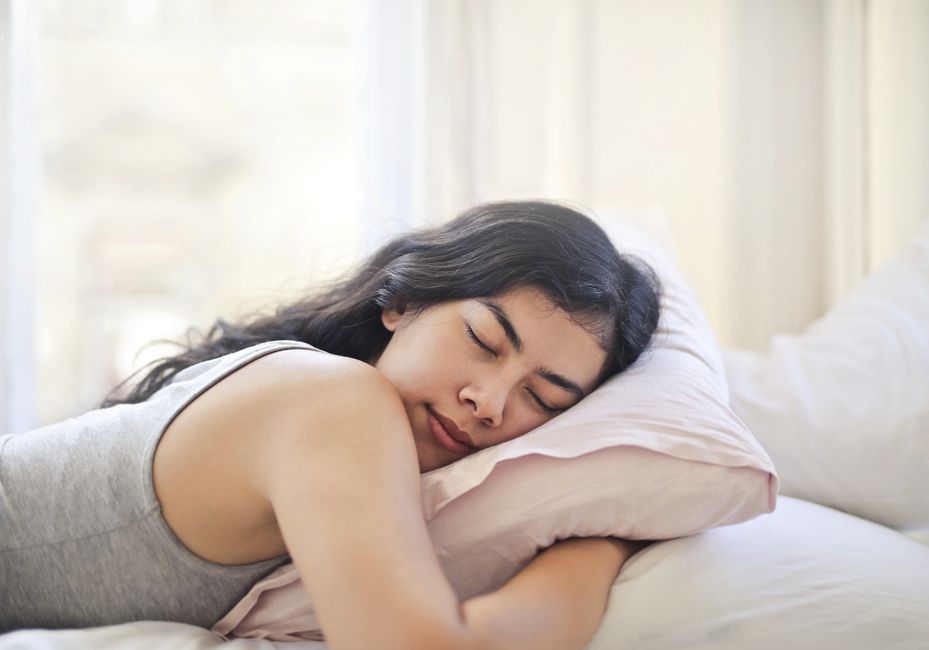
If you wake up most mornings with your face inches from the wall, you are not doing anything strange. Sleeping turned toward a wall is one of the most common positions people settle into, and it usually comes down to two things working together: a deep-seated pull toward feeling protected, and the way anxiety makes the brain seek a boundary it can trust.
The instinct part is old and simple. A wall behind you or beside you means one less direction something can approach from. The anxiety part is more personal. When the mind is on alert, it scans for safety, and a solid surface feels safer than open space. For most people this is harmless. For some, it is a quiet signal worth paying attention to.
Why Do I Sleep Facing The Wall Instinct And Anxiety?
Two forces are usually at work, and they overlap more than people realize. The first is a protective reflex. The second is the way an anxious brain tries to lower its own alarm level at night.
Human beings are wired to notice what is behind them. In sleep, the brain does not fully switch off its watchfulness. It still processes sound, movement, and changes in the environment. Sleeping with your back to a wall removes a blind spot. Nothing can come from that direction without you knowing. That is the instinct.
The anxiety piece is about what the brain does with uncertainty. When someone is stressed or anxious, the nervous system stays in a more guarded state. A wall acts like a physical edge to the space around you. It narrows the area you have to monitor. For a mind that feels unsafe, that narrowing can feel like relief.
This is not a diagnosis. Sleeping against a wall is not a recognized symptom of any specific anxiety disorder. It is better understood as a common behavior that shows up more often in people who are feeling on edge. Many people who sleep this way are not anxious at all. They simply found a position that felt right years ago and never changed it.
Is Sleeping Facing a Wall a Real Instinct?
The instinct to put something solid at your back is well established in human behavior, even if the specific act of sleeping against a wall has not been studied as its own phenomenon. The general pattern is real.
People tend to feel more secure when they can see an entrance and are not exposed on all sides. Anyone who has ever chosen a seat in a restaurant with a view of the door knows the feeling. It is not a coincidence. The brain treats open, unmonitored space as a mild source of vigilance, and it treats a protected position as a chance to relax.
At night this tendency gets stronger for a simple reason. Sleep is a state of reduced awareness. You cannot watch your surroundings while you are asleep. So the sleeping brain reaches for whatever setup lets it stand down. A wall does that job well. It is fixed, predictable, and impossible to surprise you from.
There is also a practical layer. Walls are often the coolest surface in a room. Some people turn toward one because it feels cooler, or because it blocks light from a window or a doorway. What looks like an emotional habit is sometimes just comfort and temperature.
How Anxiety Changes the Way You Sleep
Anxiety does not just affect how you fall asleep. It affects where and how you position yourself once you are there.
When someone is anxious, the body stays in a more alert state. Heart rate and muscle tension can remain slightly elevated. The brain is more likely to treat ordinary sounds as potential threats. In that state, the sleeping position becomes part of a safety strategy. Facing a wall can feel like creating a small, controlled zone in a world that feels unpredictable.
This shows up in a few common ways:
- Turning toward the wall when stressed, even if you did not sleep that way before
- Feeling uneasy when the bed is in the middle of a room or facing an open doorway
- Needing the same position every night to feel settled
- Waking more easily when something changes in the room
None of these on their own mean anything is wrong. They become worth noticing when they come with other signs, like trouble falling asleep most nights, racing thoughts at bedtime, or a level of worry that carries into the daytime.
One detail that often gets missed: the position itself usually is not the problem. It is a symptom of a nervous system that has not fully powered down. Fixing the position will not fix the anxiety. Understanding the anxiety can change the position over time.





What Sleeping Position Says About Your State of Mind
Sleep positions have been studied, though the research is not as clean as headlines suggest. What the evidence does support is a general link between how people sleep and how they feel, not a one-to-one map where a position equals a condition.
People who feel more guarded often choose positions that limit exposure. Sleeping on your side, curled slightly, with your back to something solid fits that pattern. It is a closed posture. It reduces the surface area you present to the room.
People who feel more at ease tend to spread out. They may sleep on their back or stomach, limbs loose, facing whatever direction the bed allows. The difference is not about courage or weakness. It is about how much the brain feels it needs to defend.
What matters more than the position is whether it is flexible. If you can sleep well in more than one spot, your nervous system is likely settling on its own. If you can only relax facing a wall, and any change keeps you awake, that rigidity is the more useful thing to look at.
When Facing the Wall Is Just Comfort
Most people who sleep facing a wall are not anxious. They are comfortable. It is worth saying plainly, because it is easy to read too much into a habit.
There are ordinary reasons this position sticks:
- It blocks light from a window, a door, or a hallway
- It muffles sound from the rest of the house
- It feels cooler against the face
- It supports the neck and shoulder in a way that reduces strain
- It became a habit in childhood and simply stayed
If you sleep well, wake rested, and do not feel on edge during the day, there is nothing here to fix. A sleep position is only worth examining when it is tied to poor sleep or ongoing worry.
Does Sleeping Against a Wall Affect Sleep Quality?
The wall itself has little effect on sleep quality. What affects sleep quality is what the position is doing for you, and whether it is helping you relax or keeping you alert.
If facing the wall lets your mind settle and you sleep through the night, the position is doing its job. If you are turning to the wall because you feel unsafe, but still lying awake, the position is not solving the underlying problem. It is just a small comfort on top of it.
Sleep quality depends far more on things like a consistent sleep schedule, a dark and quiet room, limiting screens and caffeine close to bedtime, and getting anxiety treated when it is present. Those factors carry much more weight than which way you face.
One caution worth stating: if poor sleep is ongoing, the position is not the place to focus your effort. Persistent insomnia and persistent anxiety both respond to proper treatment, and neither is solved by rearranging a bed.
What to Do If Anxiety Is Behind It
If you suspect anxiety is driving your sleep position, the useful move is to look at the anxiety, not the wall.
Start with the basics that support sleep and calm a nervous system. Keep a regular sleep and wake time. Get some daylight early in the day. Move your body regularly. Cut back on caffeine, especially later in the day. These are not cures, but they are the foundation everything else builds on.
If worry is showing up at night in a way that is hard to control, that is a good reason to talk to a doctor or a mental health professional. Anxiety that interferes with sleep is common and treatable. Therapy approaches such as cognitive behavioral therapy have solid evidence behind them for both anxiety and insomnia. A clinician can help you figure out what fits.
You do not need to force yourself to sleep facing a different direction. That is not the goal. The goal is a nervous system calm enough that the position stops mattering.
Frequently Asked Questions
Why do I sleep facing the wall?
Most people do it because a wall feels protective and removes a blind spot, so the brain can relax. It is often a mix of instinct and a wish to feel secure in the space around you.
Is sleeping facing the wall a sign of anxiety?
Not on its own. It is more common in people who feel on edge, but plenty of calm sleepers do it too, often for reasons like light, sound, or temperature.
Can sleep position affect your mental health?
No, your sleep position does not cause or fix mental health conditions. It can reflect how settled or guarded you feel, but it is not a treatment for anxiety or any other condition.
Should I change my sleep position if I have anxiety?
There is no need to force a change, since the position is not the cause. If anxiety is disrupting your sleep, focus on treating the anxiety and talk with a doctor or therapist.
