
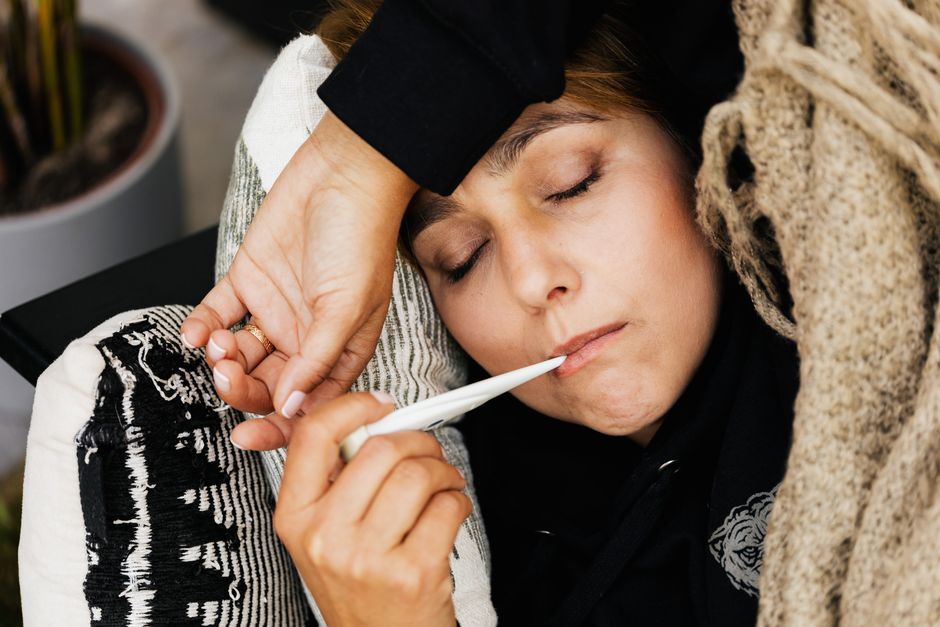
If your temperature climbs in the evening, you are probably not imagining it. Body temperature is not a fixed number. It follows a daily rhythm controlled by your internal clock, and for most people it runs lower in the early morning and higher in the late afternoon and evening. A mild evening rise can be normal. A true fever that appears mainly at night is different, and it is worth understanding what separates the two.
The short answer: a real fever at night usually means your immune system is responding to an infection or another inflammatory trigger, and that response is layered on top of your normal daily temperature swing. The evening peak of that swing can make a fever more noticeable after dark. In some cases, night fever is a clue to a specific condition that needs medical attention.
Why Do I Run A Fever At Night?
Your body temperature is regulated by the hypothalamus, a small region at the base of the brain that acts as a thermostat. Throughout the day, that thermostat is set slightly higher or lower by your circadian rhythm — the internal 24-hour clock that governs sleep, hormone release, and many other functions.
In healthy people, core temperature typically bottoms out in the early morning hours during sleep and reaches its highest point in the late afternoon to early evening. This is a well-documented pattern. So when an infection or inflammation raises your set point, the added elevation tends to be most visible when your natural temperature is already at its daily peak.
There is a second reason night fever stands out. During the day, movement, drinking, and eating all affect measured temperature, and you are distracted. At night you are still, often lying in bed, and more likely to notice chills, sweating, or feeling hot. The fever may have been there all day — you just feel it more clearly when everything else is quiet.
One clarification that surprises people: a fever is not the infection itself. It is a controlled rise in the body’s temperature set point, triggered by chemicals called pyrogens that your immune cells release in response to invaders. The fever is part of the immune response, not a sign that your body is failing.
What Counts As A Fever?
A fever is generally defined as a core body temperature of 100.4°F (38.0°C) or higher. Normal body temperature is often cited as 98.6°F (37.0°C), but that number is an average, not a rule. Normal temperature varies between people and across the day.
How you measure matters. Rectal temperature is considered the most accurate for core temperature, especially in young children. Oral readings are close but slightly lower. Ear and forehead thermometers are convenient but less precise, and their readings can vary with technique. If you are tracking a possible night fever, measure at the same time and by the same method each evening so you are comparing like with like.
A mild elevation that stays below 100.4°F is not technically a fever, even if it feels like one. Many people run slightly warmer in the evening and mistake this for illness.
What Causes A Fever That Shows Up Mainly At Night?
Most night fevers come from common infections. But the pattern of fever — when it appears, how high it goes, and what comes with it — can point toward different causes.
Infections
Viral and bacterial infections are the most common reason for fever at any time of day. Colds, flu, COVID-19, strep throat, urinary tract infections, and pneumonia can all produce fever that seems worse in the evening. Some infections, like certain types of pneumonia or abscesses, are known for producing fevers that spike at night.
Inflammatory and autoimmune conditions
Conditions such as rheumatoid arthritis, lupus, and inflammatory bowel disease can cause low-grade fevers, sometimes with an evening pattern. In these cases the fever reflects ongoing inflammation rather than an infection.
Medications
Some drugs can cause fever as a side effect. This is called drug fever, and it can appear at any time, including at night. If a fever started after beginning a new medication, that timing is worth mentioning to a clinician.
Less common causes
Persistent night fever with drenching night sweats, unexplained weight loss, or swollen lymph nodes can be a sign of something more serious, including certain cancers and chronic infections. These causes are uncommon, but a fever that keeps returning night after night without an obvious explanation deserves medical evaluation rather than watchful waiting.
When Night Fever Comes With Night Sweats
Night sweats are episodes of heavy sweating during sleep that soak your clothing or bedding. They are not the same as feeling warm because the room is hot. A true night sweat happens even in a cool room.
Fever and night sweats often travel together because both are part of the same immune and inflammatory response. The fever raises your set point, and when it breaks — often during sleep — the body cools itself by sweating heavily.
Night sweats on their own have many possible causes, from infections and hormonal changes to some medications. They are a symptom, not a diagnosis, and the underlying cause is what matters. Persistent night sweats with fever should be checked by a clinician.
Is A Night Fever Always A Sign Of Something Serious?
No. Most fevers, including ones that seem worse at night, come from common, self-limited infections that resolve on their own. A short-lived fever with other typical symptoms — sore throat, cough, congestion, body aches — is usually not a cause for alarm.
What matters is the pattern and the company the fever keeps. The table below contrasts features that are usually reassuring with features that warrant a medical visit. This is general guidance, not a diagnostic tool.
| Usually less concerning | Worth a medical visit |
|---|---|
| Fever with clear cold or flu symptoms | Fever with no obvious cause |
| Resolves within a few days | Keeps returning night after night for weeks |
| Temperature under 100.4°F | High fever, or fever with confusion or stiff neck |
| Feeling otherwise stable | Unexplained weight loss or drenching night sweats |
| No new medications | Fever that started after a new drug |
Seek urgent care for a fever with a stiff neck, severe headache, confusion, difficulty breathing, a rash that does not fade when pressed, or a fever in a very young infant. These are red flags that need prompt assessment.
How To Track A Night Fever
If you are trying to understand a recurring fever, a simple log helps your clinician more than a vague memory. Record your temperature at the same times each day — for example, morning and evening — using the same thermometer and method.
Note what else is happening: chills, sweating, how you slept, any new medications, and how you felt during the day. Patterns that seem random often become clear when written down. Bring the log to your appointment.
Do not take fever-reducing medication just to keep the number down unless you are uncomfortable or advised to. The fever itself is information, and masking it can make the pattern harder to read. If you do take medication, note when you took it so the reading is interpreted correctly.
Frequently Asked Questions
Is it normal to have a higher temperature at night?
Yes. Core body temperature naturally peaks in the late afternoon and early evening and dips in the early morning. A mild evening rise below 100.4°F (38.0°C) is not a fever.
Why does my fever get worse at night?
Your circadian rhythm already raises your temperature in the evening, so an infection-driven fever is added on top of that natural peak. Being still and quiet at night also makes fever symptoms easier to notice.
Can stress cause a fever at night?
Stress can raise body temperature slightly through changes in heart rate and circulation, but it does not typically produce a true fever of 100.4°F or higher. A recurring fever should be evaluated for a physical cause.
When should I see a doctor for a night fever?
See a clinician if a fever keeps returning for more than a few days, has no clear cause, or comes with night sweats, weight loss, or swollen lymph nodes. Seek urgent care for fever with a stiff neck, confusion, or trouble breathing.
