
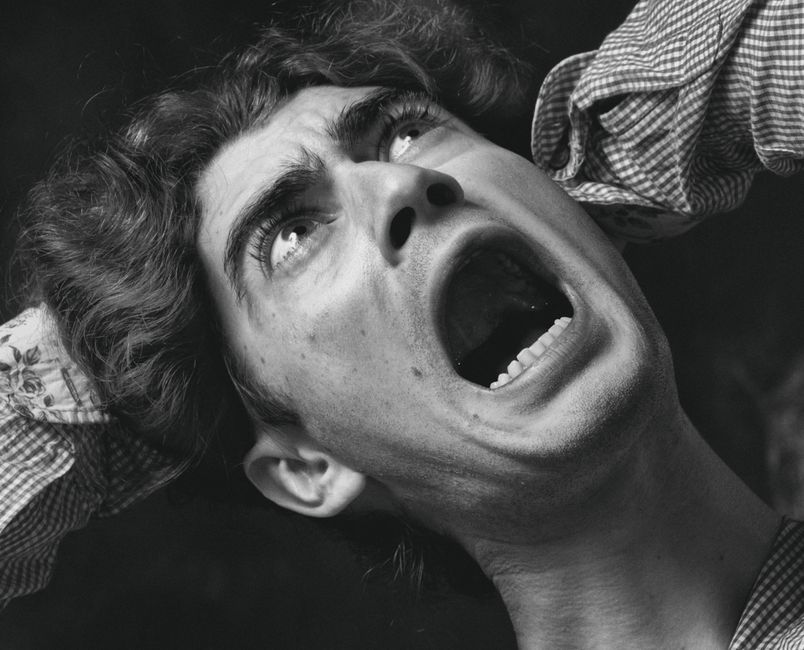
You see the question coming. Your heart starts to pound. Your mouth goes dry. Your mind goes completely blank. It feels like every thought you had just vanished. This is not something you can simply “get over” by trying harder to relax. It is a real physical and mental response, and it has a name. This reaction is often a form of performance anxiety or a symptom of social anxiety disorder. Your brain perceives the question as a threat, triggering a fight-or-flight response that shuts down your higher-level thinking. Understanding exactly why this happens in your body is the first step to managing it.
What Happens in Your Body When You Panic?
When you are asked a question and feel that surge of panic, your autonomic nervous system is taking over. This is the system that controls your heart rate, breathing, and digestion without you thinking about it. It has two main modes: the “rest and digest” mode and the “fight or flight” mode. When you feel threatened, your brain’s alarm center, the amygdala, signals the fight or flight mode to engage.
Your body releases stress hormones, primarily adrenaline and cortisol. Adrenaline makes your heart beat faster to pump blood to your muscles. Your breathing becomes faster and shallower to take in more oxygen. This is why you might feel dizzy or lightheaded. Blood flow is diverted away from your stomach and skin toward your large muscle groups. That is why your hands might get cold and clammy, and you might feel a knot in your stomach. This entire process is designed to help you fight a predator or run away from danger. It is not designed to help you answer a question about quarterly sales figures or your weekend plans.
Why Does Your Mind Go Blank?
The most frustrating part of this panic is the mental blankness. You know you know the answer, but you cannot access it. This is not a memory problem. It is a brain resource problem. When your amygdala detects a threat, it sends a signal to your prefrontal cortex. The prefrontal cortex is the part of your brain responsible for complex thinking, reasoning, and working memory. It is the “CEO” of your brain. Under stress, the amygdala essentially hijacks the brain’s resources. It tells the prefrontal cortex to stand down so that all energy can be used for survival.
The result is that your working memory—the system that holds information in your mind for short periods—is temporarily offline. You cannot retrieve information. You cannot form coherent sentences. You are not stupid. Your brain has just temporarily blocked the pathways you need to think clearly. This is a well-documented neurological response to acute stress. It happens to almost everyone at some point, but it is more frequent and intense for people with anxiety disorders.
Is This a Sign of Social Anxiety Disorder?
Occasional panic when put on the spot is normal. If it happens once in a while during a high-stakes meeting or a difficult conversation, it is likely just a normal stress response. However, if this happens frequently in everyday situations—like talking to a cashier, answering a phone call, or speaking in a team meeting—it may be a symptom of social anxiety disorder.
Social anxiety disorder is not just being shy. It is an intense, persistent fear of being watched, judged, or scrutinized by others. The fear is often out of proportion to the actual situation. People with this condition often fear they will show anxiety symptoms, like blushing or shaking, and that others will notice. This fear can be so strong that it interferes with work, school, and relationships. If your panic is frequent, causes you to avoid situations, or lasts for six months or more, it may be worth discussing with a healthcare provider. They can assess whether you meet the diagnostic criteria for an anxiety disorder.




What Is the Difference Between a Panic Attack and Panic?
It is important to distinguish between feeling panicky and having a panic attack. A panic attack is a sudden, intense surge of fear that peaks within minutes. It involves physical symptoms like a racing heart, sweating, trembling, shortness of breath, chest pain, nausea, or a feeling of impending doom. Panic attacks can happen out of the blue, even when you are not in a stressful situation.
The panic you feel when asked a question is usually a milder, situational response. It is tied to a specific trigger. It might feel just as intense, but it is generally shorter and directly linked to the social stressor. Some people with severe social anxiety do experience full panic attacks during social interactions. If you experience what you believe is a panic attack, it is worth getting evaluated. There are effective treatments, including cognitive behavioral therapy (CBT), which is highly effective for anxiety disorders.
What Can You Do in the Moment to Stop the Panic?
When the panic hits, you cannot think your way out of it. Your logical brain is offline. You need to use physical and sensory techniques to signal to your brain that you are safe. The goal is to activate your parasympathetic nervous system—the “rest and digest” system—to counter the fight-or-flight response.
Here are some strategies that have a strong evidence base for calming acute anxiety:
- Slow your exhale. Your inhale is linked to the sympathetic (fight or flight) system. Your exhale is linked to the parasympathetic (rest) system. Try breathing in for a count of four and out for a count of six or eight. Focus on making the exhale longer than the inhale. This directly stimulates the vagus nerve, which helps lower your heart rate.
- Ground yourself physically. Press your feet firmly into the floor. Feel the chair against your back. Hold a cold glass of water. Physical sensations bring your awareness back to the present moment and away from the internal panic.
- Buy time. You do not have to answer immediately. It is acceptable to say, “Let me think about that for a second.” This gives your prefrontal cortex time to come back online. Taking a slow sip of water also works.
- Use a script. Have a prepared phrase for when your mind goes blank. Something like, “I have the information, but I need a moment to find it,” or “Can I get back to you on that in a few minutes?” This reduces the performance pressure.
These techniques do not stop the anxiety from happening in the first place. They manage the symptoms in the moment. They are coping skills, not cures.
How Can You Prevent This Panic Long-Term?
Managing the panic in the moment is important, but long-term change requires addressing the underlying anxiety. The most effective treatment for social anxiety is cognitive behavioral therapy. CBT helps you identify the negative thought patterns that fuel the anxiety. For example, you might believe “If I hesitate, they will think I am incompetent.” CBT helps you challenge and reframe those thoughts.
Exposure therapy is a specific type of CBT that involves gradually facing the feared situation in a safe, controlled way. This helps your brain learn that the situation is not actually dangerous. Over time, the fear response diminishes. This is not about forcing yourself into terrifying situations. It is a structured process done with a trained therapist.
Mindfulness-based stress reduction (MBSR) also has evidence supporting its use for anxiety. It teaches you to observe your thoughts and physical sensations without judgment. Instead of panicking about the panic, you learn to notice it and let it pass. Some research suggests that regular mindfulness practice can reduce the reactivity of the amygdala over time.
Medication is another option. Selective serotonin reuptake inhibitors (SSRIs) are commonly prescribed for anxiety disorders. They are not a quick fix; they take several weeks to work. They are often used in combination with therapy. Beta-blockers, like propranolol, are sometimes used for situational anxiety, like a presentation or a big meeting. They work by blocking the physical effects of adrenaline, reducing the racing heart and shaking. These are prescription medications and should only be taken under the supervision of a doctor.
Why Do I Panic When Someone Asks Me A Question?
The core reason you panic is that your brain has learned to associate being questioned with danger. This could stem from past experiences—perhaps being publicly embarrassed, humiliated, or harshly criticized when you gave a wrong answer. Your brain stored that memory and now flags similar situations as threats.
It can also be related to perfectionism. If you hold yourself to an impossibly high standard, you will feel intense pressure to give the “perfect” answer. The pressure itself creates the anxiety that makes a perfect answer impossible. This creates a vicious cycle. You panic, you stumble, and you feel like you failed, which reinforces the belief that the next question is dangerous. Breaking this cycle requires changing your internal rules. You must practice accepting that a less-than-perfect answer is acceptable. The goal is progress, not perfection.
Frequently Asked Questions
Why does my mind go blank when I am put on the spot?
Your brain’s threat response, the fight-or-flight reaction, temporarily shuts down your working memory. This is a physical response to stress, not a sign of low intelligence.
Is panicking when asked a question a sign of a mental illness?
Occasional panic is a normal stress response, but frequent and intense panic that causes you to avoid situations may be a symptom of social anxiety disorder. A healthcare provider can make an accurate diagnosis.
What is the fastest way to stop a panic response in a conversation?
Use a slow, extended exhale to activate your relaxation response. You can also buy time by saying, “Let me think about that for a moment,” which gives your brain time to recover.
Can therapy really help with this type of anxiety?
Yes. Cognitive behavioral therapy (CBT) is the most effective, evidence-based treatment for social anxiety. It helps change the thought patterns that trigger the panic response.
