
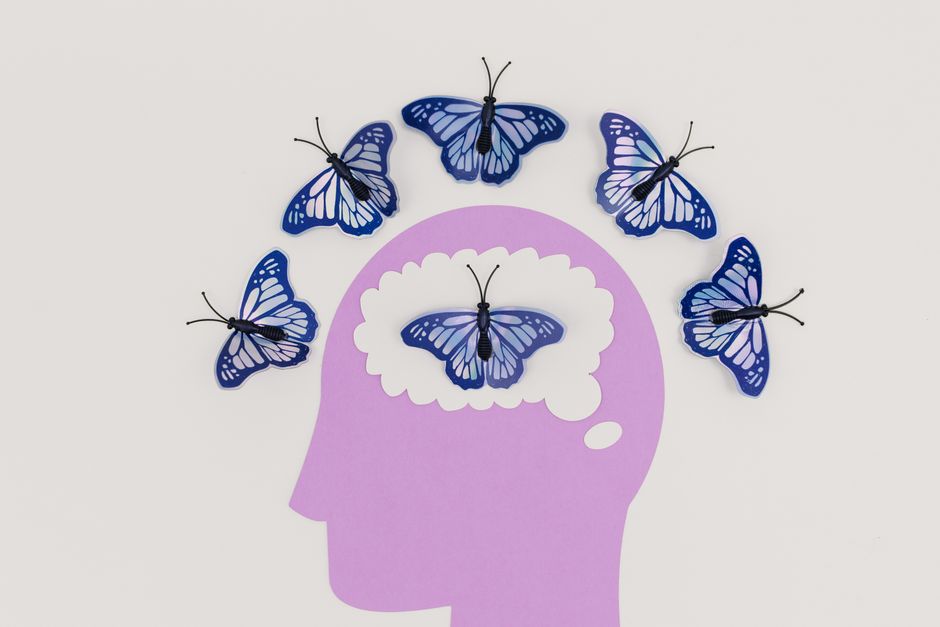
You are not broken, and you are not alone. Making up scenarios in your head is a universal human experience, and science has a clear name for it: simulation. Your brain is a prediction machine, constantly running mental models of possible futures to help you navigate the world. This isn’t a flaw; it is a core feature of how your mind works. The problem is not that you do it, but when these scenarios turn into a source of distress, they cross a line into something science identifies as maladaptive rumination or anxious forecasting.
Why Do I Make Up Scenarios In My Head What Science Says
The brain’s default mode network is the culprit. This is a network of brain regions that becomes active when you are not focused on the outside world. When you are daydreaming, showering, or lying in bed, this network fires up. Its job is to simulate social situations, recall the past, and project into the future. Neuroscience research consistently shows that this network is responsible for your internal mental theater. It is not a malfunction; it is the brain’s way of planning and problem-solving without requiring real-world consequences.
Psychologists call this mental time travel. You are not just recalling memories; you are constructing new, detailed scenarios. This ability is a cornerstone of human intelligence. It lets you rehearse a difficult conversation, anticipate a threat, or imagine a better future. The science is clear: this is a normal, adaptive function. The distress begins when the simulation becomes a loop, and you lose the ability to distinguish between a useful rehearsal and an endless, anxiety-producing film.
What Is the Difference Between Productive Planning and Unhelpful Rumination?
Productive planning is a problem-solving tool. You imagine a challenge, consider your options, and settle on a course of action. Once you have a plan, the thought stops. It has served its purpose. Unhelpful rumination, on the other hand, is repetitive and passive. You replay the same script, but you never reach a conclusion or a decision. The scenario does not generate a solution; it only generates more anxiety.
The key difference is the outcome. If your mental scenario ends with a concrete step, like “I will say this,” it is productive. If it ends with a physical sensation of dread and no plan, it is rumination. Cognitive behavioral therapy (CBT) identifies this distinction as central to managing anxiety. The goal is not to stop making up scenarios, which is impossible, but to shift the content of those scenarios from threat-based to solution-based.
Why Does My Brain Focus on Worst-Case Scenarios?
Your brain has a built-in negativity bias. This is a well-documented evolutionary adaptation. For your ancestors, missing a potential threat was far more dangerous than imagining one that never happened. The cost of a false alarm was low; the cost of a missed predator was death. Your brain is still running that ancient risk-assessment software, even when the “predator” is a difficult email or a social gathering.
This bias means your default simulations often skew toward the negative. When you are tired, stressed, or hungry, this tendency gets stronger. The brain’s amygdala, the threat-detection center, becomes more sensitive, and the prefrontal cortex, which handles logic and perspective, becomes less efficient. This is why worst-case scenarios feel more vivid and more real when you are depleted. It is not a personal failing; it is a physiological state that can be managed with basic self-care like sleep and nutrition.





Is Making Up Scenarios a Sign of a Mental Health Condition?
Not by itself. The scientific literature on anxiety disorders, depression, and obsessive-compulsive disorder (OCD) frequently mentions intrusive thoughts and catastrophic thinking, but the presence of these thoughts alone does not indicate a disorder. A diagnosis requires that the thoughts cause significant distress or impair your daily functioning. If you are missing work, avoiding relationships, or losing sleep because of your scenarios, that is when you should consider speaking with a mental health professional.
In the context of OCD, there is a specific phenomenon called mental compulsions. Here, a person might replay a scenario to “check” if they feel the right way or to neutralize a bad thought. This is different from general worry. If you feel compelled to run through a scenario over and over until it feels “just right,” that pattern is more consistent with OCD than with typical anxiety. The distinction matters because the treatment approaches differ.
What Techniques Actually Reduce Distressing Mental Scenarios?
Evidence-based treatments focus on breaking the loop, not on suppressing the thoughts. Suppression does not work; research shows that trying to push a thought away often makes it stronger. Instead, clinical psychologists recommend several specific strategies.
Cognitive defusion is one of the most effective. This technique, from Acceptance and Commitment Therapy (ACT), teaches you to see thoughts as just thoughts—words and images in your head—not as facts or commands. You learn to say, “I am having the thought that I will embarrass myself,” rather than “I will embarrass myself.” This small shift in language creates distance between you and the scenario.
Scheduled worry time is another proven method. You set aside 15 minutes each day to actively worry. When a distressing scenario pops up outside that window, you write it down and tell yourself you will address it during your scheduled time. This trains your brain to contain the worry, and it often reduces the frequency of intrusive scenarios.
Grounding techniques pull your attention back to the present moment. The 5-4-3-2-1 method is common: name five things you can see, four you can touch, three you can hear, two you can smell, and one you can taste. This physically shifts your brain’s activity away from the default mode network and back to the sensory processing regions.
When Should I Seek Professional Help?
You should consider professional help when the scenarios are interfering with your quality of life. This includes difficulty sleeping, avoiding social situations, or experiencing physical symptoms like a racing heart or chest tightness when you think about a specific future event. If you have thoughts of harming yourself or others, seek help immediately.
Therapy is not about “fixing” your brain. It is about learning skills to manage a natural process that has become unhelpful. Cognitive behavioral therapy and acceptance and commitment therapy have the strongest evidence base for this type of distress. A therapist can help you identify your specific thought patterns and practice the techniques that work for your situation. There is no shame in seeking this kind of support; it is a practical step toward gaining control over your mental environment.
Frequently Asked Questions
Is it normal to make up conversations in my head?
Yes, this is a normal function of the brain’s default mode network. Most people rehearse conversations or imagine future interactions regularly, and it is a sign of healthy social cognition.
Why do I imagine bad things happening to people I love?
This is often a manifestation of anxiety and the brain’s negativity bias. It is not a sign that something bad will happen; it is your brain’s overactive threat-detection system trying to prepare for worst-case outcomes.
Can making up scenarios be a sign of intelligence?
Yes, the ability to construct detailed mental simulations is a form of cognitive flexibility and planning. It is a sign of a highly active imagination and a brain that is good at considering possibilities.
Does medication stop intrusive scenarios?
Medication can reduce the anxiety that makes these scenarios distressing, but it does not stop the thoughts themselves. Therapy is typically the most effective way to change your relationship with these thoughts.
