
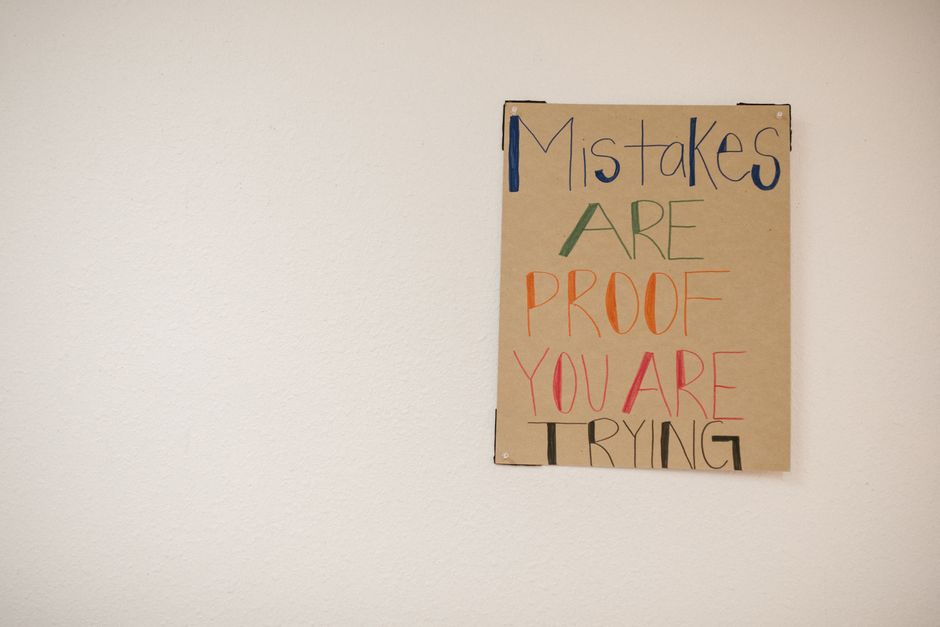
Everyone makes mistakes. But when errors pile up — missed deadlines, typos in important emails, forgetting appointments, or making the same misstep twice — it is natural to wonder if something is wrong. Most of the time, these mistakes are not a sign of low intelligence or laziness. They are the result of how your brain manages attention, memory, and stress. Understanding the specific cause behind your errors is the first step to fixing them.
Why Do I Keep Making Mistakes? Causes And How To Stop
You keep making mistakes because your brain is overloaded, distracted, tired, or stressed. These conditions reduce the mental resources needed for careful work. When your attention is split or your energy is low, your brain takes shortcuts. Those shortcuts are where errors are born. The good news is that most causes are temporary and manageable once you identify which one applies to you.
What Happens In Your Brain When You Make A Mistake
Your brain relies on a system called executive function. This system lives mostly in the frontal lobes. It helps you plan, focus, switch between tasks, and hold information in mind. When this system works well, you catch errors before they leave your hands. When it is strained, errors slip through.
Your brain also has an error-detection mechanism. It monitors your actions and flags when something goes wrong. This is why you sometimes notice a mistake a split second after making it. That “oops” feeling is your brain’s alarm system firing. When you are exhausted or overwhelmed, that alarm system becomes less sensitive. You simply do not notice the error until later, or not at all.
Attention is a limited resource. You only have so much of it at any given moment. Every notification, background thought, or competing demand draws from the same pool. When the pool runs dry, your brain prioritizes survival over precision. This is not a character flaw. It is basic brain economics.
The Most Common Cause: Attention Overload
Attention overload happens when you try to do too much at once. Multitasking is a myth in the scientific sense. Your brain does not process two complex tasks at the same time. It rapidly switches between them. Each switch costs time and increases the chance of error.
Research consistently shows that task-switching reduces accuracy. Even quick interruptions — like checking a text message — can disrupt your focus for several minutes afterward. The mistake you make after the interruption is not because you are careless. It is because your brain never fully returned to the original task.
Single-tasking is the direct solution. Give one task your full attention. Close unrelated browser tabs. Put your phone in another room. Set a timer for 25 or 45 minutes of focused work, then take a short break. This approach, often called time-blocking, gives your brain the space it needs to work accurately.





Mental Fatigue And Sleep Deprivation
A tired brain makes more mistakes. This is one of the most well-established findings in sleep research. Sleep deprivation impairs attention, working memory, and decision-making. These are the exact functions you need to avoid errors.
Even mild sleep loss matters. Consistently sleeping less than seven hours per night can slow your reaction time and reduce your ability to spot errors. The effects are similar to mild alcohol intoxication in some studies. You may feel awake, but your brain is not operating at full capacity.
Mental fatigue also builds during the day. The longer you work without a break, the more errors you tend to make. This is why mistakes often cluster late in the afternoon. Your brain’s energy reserves are depleted. Taking short, regular breaks helps restore accuracy. Even a five-minute walk or a moment of quiet can reset your focus.
Stress, Anxiety, And The Pressure To Perform
Stress changes how your brain processes information. When you feel threatened or pressured, your body releases cortisol and adrenaline. These hormones prepare you for immediate action. They are useful for physical danger, but they interfere with careful, deliberate thinking.
Under stress, your brain shifts toward habit-based responses. You rely on automatic patterns rather than thoughtful analysis. This is efficient but error-prone. You might misread a question, skip a step, or rush through a task because your brain is telling you to act fast.
Anxiety makes this worse. When you worry about making a mistake, you actually increase the chance of making one. This is sometimes called the choking effect. Your attention splits between the task itself and your fear of failure. Both compete for the same limited mental resources.
If stress is your main cause, the fix is not to try harder. The fix is to calm your nervous system first. Deep breathing, a short walk, or stepping away from the task for a few minutes can lower your stress response enough to think clearly again.
Habitual Errors And The Role Of Automatic Thinking
Some mistakes are not random. They are patterns. You might always misspell the same word, forget the same type of appointment, or make the same calculation error. These are habitual errors. They happen because your brain has created a routine that includes the mistake.
Automatic thinking is efficient. It lets you drive a familiar route without consciously thinking about every turn. But it also causes you to overlook details when conditions change. If your usual process has a flaw, you will repeat that flaw every time you run the process.
Breaking a habitual error requires making the unconscious conscious. Slow down deliberately. Write out your steps. Check your work against a checklist. The goal is to interrupt the automatic pattern long enough to insert a correction. Over time, the corrected pattern becomes the new automatic response.
One effective technique is to change your environment. If you always forget your keys on the same table, put a hook by the door. If you always make typos at the end of long documents, schedule a separate proofreading session. Small environmental changes disrupt old habits and support new ones.
Medical And Psychological Conditions That Cause Mistakes
Sometimes mistakes are a symptom of an underlying condition. This is not common, but it deserves attention if your errors are sudden, severe, or accompanied by other symptoms.
ADHD is one condition strongly linked to frequent mistakes. Adults with ADHD often struggle with inattention, impulsivity, and working memory. They may miss details, lose track of instructions, or rush through tasks. If you have always struggled with focus and organization, undiagnosed ADHD is worth discussing with a doctor.
Depression and anxiety disorders also affect concentration. The mental energy spent on worry or low mood leaves less available for careful work. Brain fog is a real symptom of these conditions, not a sign of weakness.
Thyroid problems can cause cognitive slowing. Hypothyroidism, in particular, can produce memory issues and difficulty concentrating. Other conditions, such as sleep apnea, can cause chronic fatigue that impairs attention even if you think you slept enough.
If your mistakes come with memory loss, confusion, personality changes, or physical symptoms, seek medical evaluation. A doctor can run basic blood tests and assess whether further testing is needed.
Age-Related Cognitive Changes
It is normal to notice more mistakes as you age. Processing speed slows slightly with each decade after your twenties. Working memory — the ability to hold several pieces of information at once — also declines gradually. These changes are part of normal aging, not early dementia.
Most people compensate automatically. You write things down more often. You double-check your work. You allow extra time for complex tasks. These strategies are effective. They work because your accumulated knowledge and experience offset the slower processing speed.
Sudden or dramatic changes are different. If you or your family notice a clear decline in your ability to function day-to-day, that warrants medical attention. But occasional forgetfulness — misplacing glasses, forgetting a name — is typically normal. It does not predict dementia.
Staying mentally active helps. Reading, learning new skills, and social engagement are associated with better cognitive performance in older adults. Regular physical exercise is also strongly linked to brain health. Neither prevents all age-related changes, but both support your brain’s ability to work accurately.
Practical Steps To Reduce Mistakes Starting Today
You can reduce mistakes without waiting to identify a single root cause. These strategies address the most common error sources simultaneously.
- Get enough sleep. Aim for seven to nine hours per night. Sleep is when your brain consolidates memories and clears metabolic waste. Skimping on sleep is the fastest way to increase error rates.
- Do one thing at a time. Close other tabs, silence notifications, and give the current task your full attention.
- Use checklists. For repetitive tasks, write out the steps. Check each one off as you complete it. This catches skipped steps.
- Build in a review step. Before sending an email, submitting a report, or hitting save, take a breath. Read it once from the reader’s perspective.
- Schedule your hardest work for your peak hours. If you are sharpest in the morning, do error-prone tasks then. Save routine work for the afternoon slump.
- Take breaks. Work in focused blocks of 25 to 50 minutes, then take a five to ten minute break. Step away from the screen.
- Stay hydrated and eat regularly. Dehydration and low blood sugar both impair concentration. Keep water nearby and do not skip meals.
Start with two or three of these strategies. Implementing everything at once is itself a recipe for mistakes. Choose the changes most likely to address your specific error pattern, and give them a few weeks to become habits.
Frequently Asked Questions
Is making mistakes a sign of low intelligence?
No. Mistakes are usually caused by attention, fatigue, stress, or habit — not intelligence. Highly intelligent people make frequent errors when their mental resources are depleted.
Can anxiety cause me to make more mistakes?
Yes. Anxiety splits your attention between the task and your worry about failing, which reduces accuracy. Calming your nervous system before important work can help.
When should I see a doctor about frequent mistakes?
See a doctor if mistakes are sudden, severe, or accompanied by memory loss, confusion, or physical symptoms. Also seek evaluation if you have always struggled with focus and suspect ADHD.
Does making more mistakes as I age mean dementia is starting?
Not necessarily. Mildly slower processing and more frequent forgetfulness are normal parts of aging. A clear decline in daily functioning is what warrants medical evaluation.
